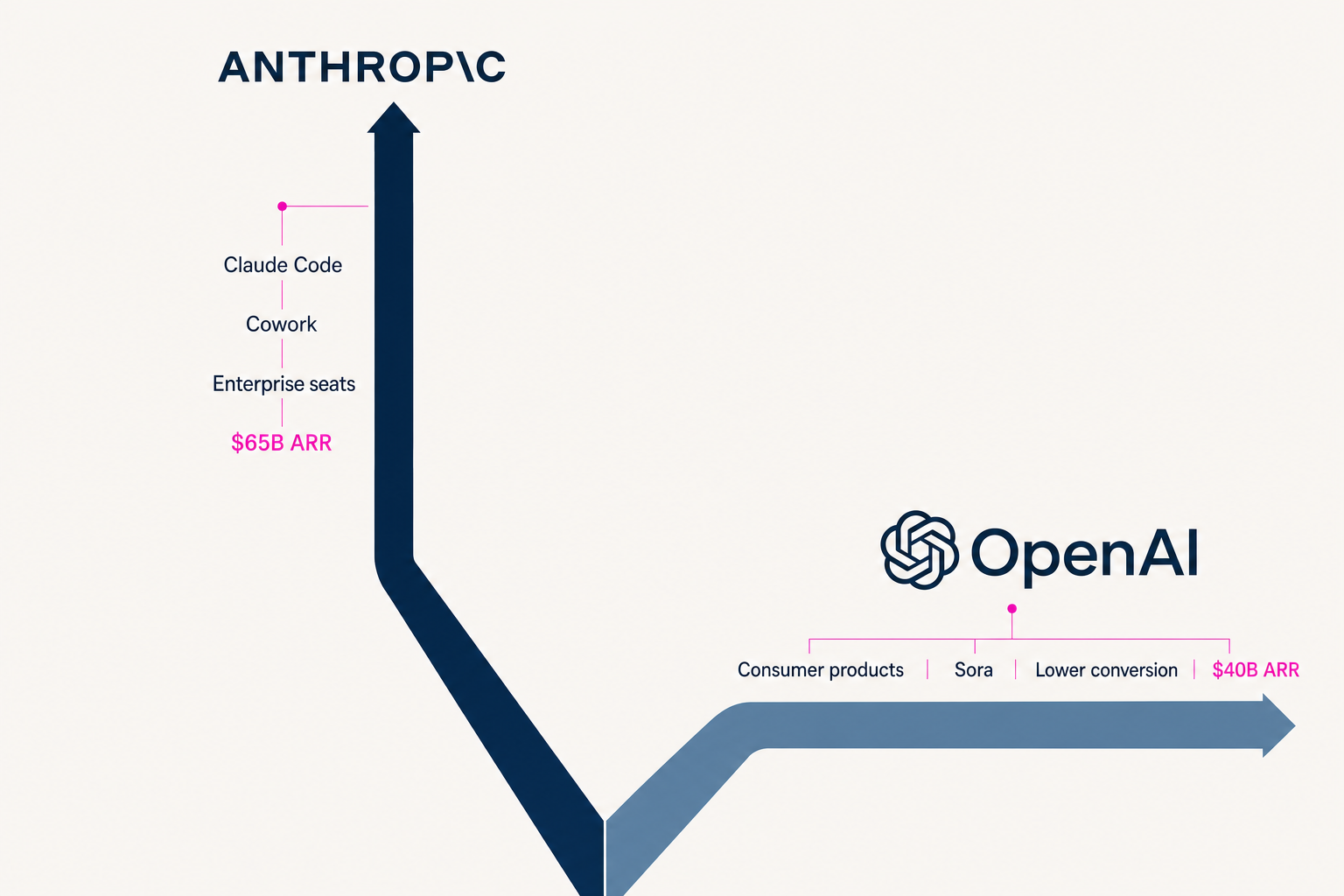
Anthropic's enterprise-agent strategy has delivered a stark commercial verdict. The company reached a $65 billion annualised revenue run rate by late July 2025—surpassing OpenAI's $40 billion—by focusing Claude Code and its non-programmer counterpart Cowork on high-value developer and business seats. OpenAI, by contrast, invested billions in consumer products like Sora that failed to convert casual users into paying customers, forcing a costly retreat to enterprise coding tools. The lesson is blunt: in AI's current market, narrow, vertical monetisation beats horizontal consumer reach.
Behind these headline winners sits a far broader competitive ferment. Global AI investment hit $243.9 billion in 2025, with seven well-funded labs—from Mistral AI ($4.01 billion) to newer entrants like AMI Labs and Ineffable Intelligence—pursuing divergent technical paths toward more advanced systems. Europe's sovereignty-focused labs now compete alongside research-automation platforms and teams betting on reinforcement learning or safety-first approaches. Meanwhile, Wispr raised $280 million at a $2 billion valuation to embed voice as infrastructure, cutting word error rates from 30 per cent to 5–10 per cent in noise. The startup's bet: speech becomes plumbing, not a feature.
The picture emerging is one of consolidation around enterprise use cases, geographic fragmentation, and renewed focus on foundational infrastructure—not consumer novelty. The winners are those solving specific, repeated, high-margin problems for organizations willing to pay.