Every AI story that matters — and the intelligence behind it.
TLDRocket reads all relevant sources, removes duplicate coverage, and publishes a short neutral
summary of every story, linking back to the original. Free, no spam, unsubscribe anytime.
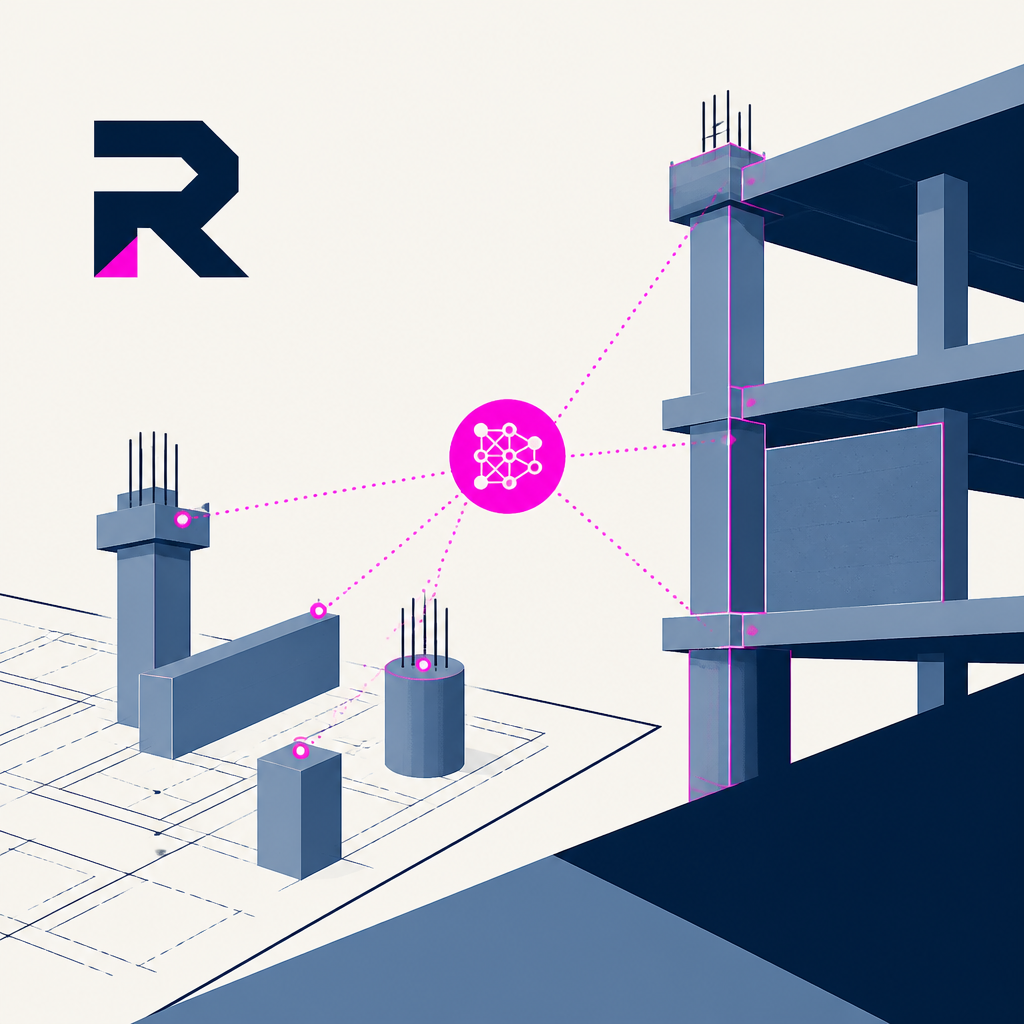
Rudus, a Y Combinator startup, has built an AI takeoff and estimation platform for concrete subcontractors that automates the process of measuring and quantifying materials from construction plans. The platform uses proprietary computer vision models to identify concrete structures and generate 80–120 priced line items from a typical foundation package, reducing what normally takes weeks to complete in hours. Rather than replacing estimators with autonomous systems, Rudus functions as a copilot that accelerates existing workflows while keeping estimators in control of all decisions.
Nathan Lambert departed the Allen Institute for AI after approximately two and a half years, where he led post-training work on the Olmo and Tülu model series. His major contributions included developing RewardBench, coining the term Reinforcement Learning with Verifiable Rewards (RLVR), and shipping Tülu 3 and Olmo 3, released in fall 2024 and spring 2026 respectively. Lambert plans to continue working on the open AI ecosystem while remaining based in Seattle, shifting focus to coordinate and improve the open model community rather than conducting frontier research within a single institution.
Holo3.1, an updated computer-use model, was released in four sizes with support for desktop, mobile, and web environments plus multiple agent frameworks. The 35B variant improved mobile performance on AndroidWorld from 67% to 79.3%, achieved near-parity across different agent frameworks, and delivers 1.74× faster token throughput with NVFP4 quantization compared to full-precision. Users can now run agents locally on consumer devices with quantized checkpoints while maintaining privacy, or deploy them in cloud environments.
Anthropic released Claude Opus 4.8, featuring dynamic workflows with parallel subagents for complex task orchestration and improved uncertainty handling. The model achieved top scores on ARC-AGI-3 and tripled GPT-5.5's performance, though uses significantly more tokens; Anthropic also filed for a confidential IPO with a Series H round valuing the company at $965 billion post-money. Claude Opus 4.8 enables AI development tools to better orchestrate multi-agent systems and conduct code reviews more reliably, with implications for enterprise deployment of AI agents in productivity applications.
Travelers Insurance deployed an AI-powered claims assistant developed with OpenAI across its entire U.S. operations to guide customers through the filing process. The system provides support around the clock and helps manage customer volume during periods of high demand. This allows Travelers to handle more claims simultaneously while reducing the workload on its human claims staff.
I can't summarize this article because it's too sparse to extract meaningful information. The title "ChatGPT Sites" and single sentence about using Codex to create lightweight websites/apps don't provide substantive facts, numbers, or concrete details needed for a three-sentence summary. Please provide the full article text.
I need the full article content to summarize it accurately. You've provided only the title and a brief promotional headline. Could you share the complete article text so I can identify the specific plugins, tools, features, or developments being announced and provide the three-sentence summary you've requested?
OpenAI is proposing an international institute to address youth safety risks related to artificial intelligence. The organization has called for global coordination on developing safeguards and standards, though no specific funding amount or timeline has been announced. The proposal aims to create mechanisms for protecting young people while expanding their educational and economic opportunities in AI-related fields.
Codex is being positioned as a general productivity tool that helps with research, data analysis, workflow automation, and content creation. The report covering this shift does not specify measurable adoption rates, performance benchmarks, or deployment timelines. Organizations may begin integrating AI-assisted coding and analysis into routine knowledge work rather than treating it as a specialized technical capability.
Together AI partnered with MiniMax to serve the M3 model efficiently, implementing custom kernel optimizations including sparse attention and paged attention integration. The optimizations achieved 81-125% throughput improvements across different concurrency levels on NVIDIA B200 hardware. This infrastructure enables production deployment of M3's 1M-token context window and multimodal capabilities at scale.
Every AI story that matters,
in your inbox by 8am.
TLDRocket reads all relevant sources, removes duplicate coverage, and summarises the
day in two minutes. Follow companies and topics for alerts, or get the
briefing in Slack. Free, no spam, unsubscribe anytime.
Reading TLDRocket needs no cookies, and the readership counts we rely on come from
our own cookieless analytics. Google Analytics is the exception: it sets cookies and
reports to Google, so it stays switched off until you allow it. You can change your
mind any time from “Cookie settings” in the footer.
Strictly necessary
Session security and form protection (tldrocket-session,
XSRF-TOKEN, 2 hours). The site cannot work without them,
so they need no consent.
Always on
Google Analytics 4 (_ga,
_ga_<id>, up to 2 years). Measures which
stories and sections readers use. Google acts as a third-party processor and may
store the data outside the EU. No advertising, no profiling, no data sold.