Opus 4.8
Ben's Bites ● Covered by 2 sources
Anthropic dropped Claude Opus 4.8 with a new orchestration trick: it writes a script, then spins up subagents to tackle complex tasks in parallel. Reviews are split—Simon Willison calls it a modest upgrade, Every calls it a big jump—but everyone agrees the Claude app itself still lags behind Codex.
Based on reporting by Ben's Bites — read the original for the full story.
Summary, retelling and take written by AI under human oversight; images are AI-generated illustrations. How we work · Report an error
Anthropic pushed out Claude Opus 4.8 this week, and the headline feature isn't raw smarts but workflow. Inside Claude Code, the model now drafts its own orchestration script and then farms pieces of a complex task out to parallel subagents. It's a shift from one model doing everything sequentially to something closer to a manager delegating to a small team of copies of itself.
The reception is all over the map. Simon Willison, never one to overhype, called it a modest but genuinely useful step forward — mainly because Opus 4.8 seems more willing to admit when it's unsure and catches more of its own bugs before shipping them to you. Every's testers were far more enthusiastic, describing a real leap over 4.7 in coding, writing, and knowledge work, and putting it roughly on par with GPT-5.5 on their internal senior-engineer benchmark. But even Every's fans flagged the same complaint: the model is strong, yet Claude's app wrapper still feels clunkier than OpenAI's Codex.
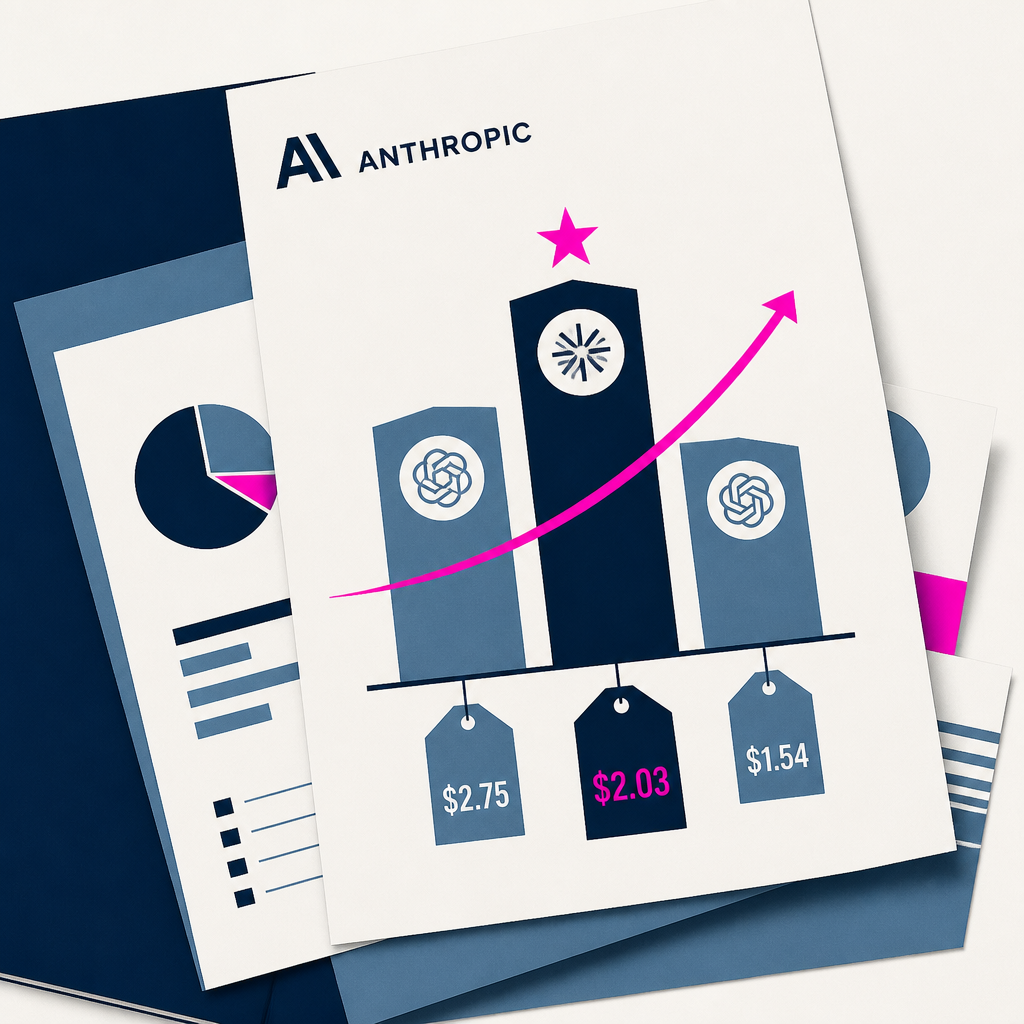
Benchmarks tell a messier story than the marketing would suggest. Opus 4.8 topped ARC-AGI-3, tripling the score Claude 5.5 posted there — a genuinely striking number. Yet on Datacurve's newer benchmark, it actually landed below GPT-5.5 and only barely ahead of 5.4, while burning through noticeably more tokens to get there. Translation: it's not a clean win across the board, and the cost of running it isn't trivial.
All this is unfolding against a backdrop of serious money. Anthropic quietly filed a confidential S-1 and closed a $65 billion Series H at a $965 billion post-money valuation, fueling speculation about an IPO before the year is out. Meanwhile Nvidia and Microsoft are betting the next PC upgrade cycle is about local AI agents, not spreadsheets — the new RTX Spark packs a petaflop of compute and up to 128GB of unified memory into a Windows machine that can run a 120-billion-parameter model locally, paired with fresh Windows security primitives built specifically for agents. Microsoft's Surface Laptop Ultra is the first device built around that pitch.
My take — AI-written commentary, not fact-checked reporting
The token-cost gap between Opus 4.8's ARC-AGI-3 win and its middling Datacurve showing is the real story here, not the marketing headline. We keep grading these models on raw capability while quietly ignoring what it costs to squeeze that capability out, and that's the same trap the whole industry fell into with scaling laws before anyone asked who's paying the compute bill. A $965 billion valuation buys a lot of patience for that question to stay unasked, but not forever.
Read more about this at: Ben's Bites