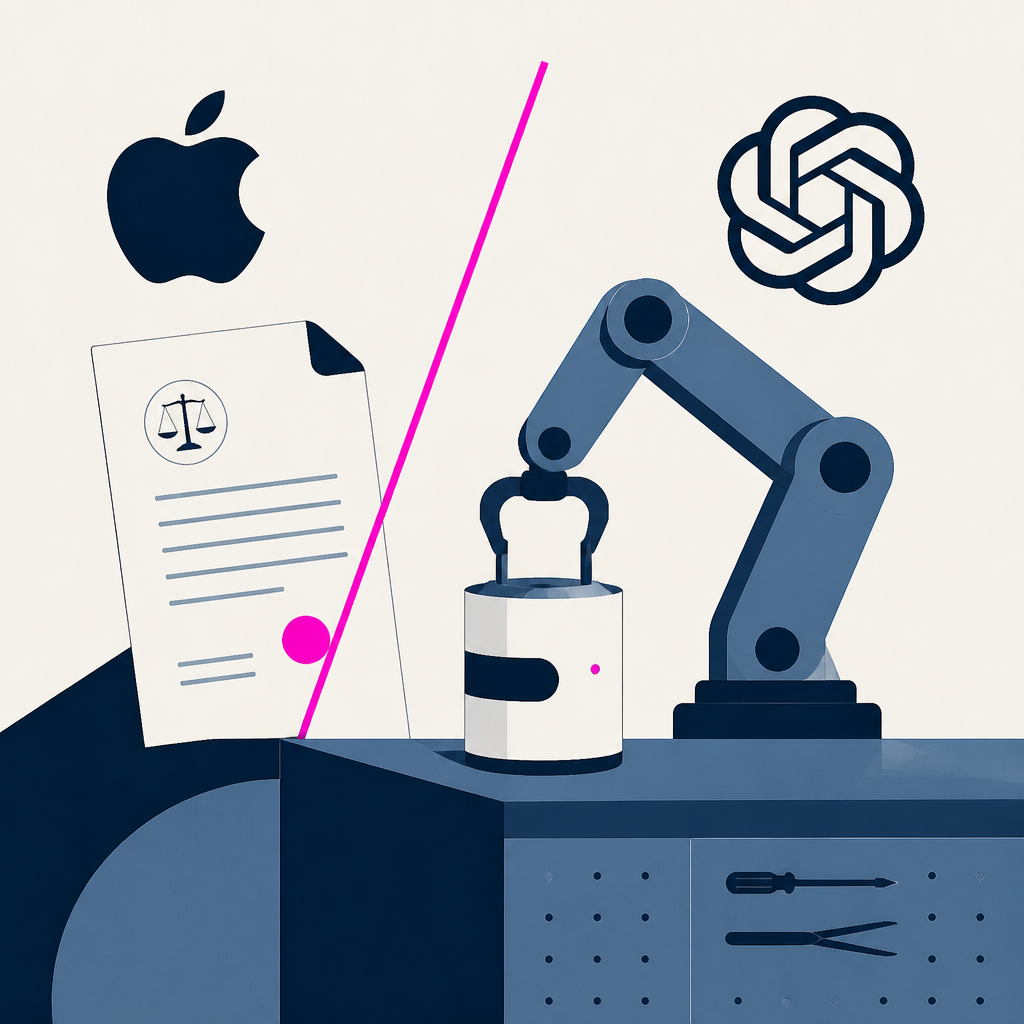
OpenAI described incidents where third-party cybersecurity evaluations of its models revealed vulnerabilities and outlined new safeguards for future testing procedures. The company did not disclose specific numbers of incidents or affected systems in the announcement. OpenAI's new evaluation framework aims to improve coordination between external testers and the company to prevent unauthorized access or data leaks during security assessments.
OpenAI released ChatGPT Work, an agent product that connects to services like Slack, email, and Drive to complete knowledge work tasks, reaching 10 million users in three weeks. The agent runs on cloud computers with 8–14GB of RAM depending on subscription tier, maintaining persistent working directories and accessing context through ChatGPT's existing product layer rather than direct file system access. Work previews how OpenAI's billion weekly users will interact with agents as the company merges Work and Chat modes by year-end, shifting from reactive prompting to suggested and scheduled tasks.
OpenAI's internal Astra model generated machine-verified proofs for 10 long-standing mathematical and theoretical computer science problems. The company estimated the inference cost at approximately $2,000 in GPT-5.6 Sol API tokens, marking the first time it quantified the cost of frontier reasoning work. This pricing framework could enable smaller research teams to access frontier AI reasoning through APIs rather than building their own models, shifting from training costs to inference budgets as the relevant planning metric.
Apple is seeking a preliminary injunction against OpenAI in a trade secrets case and has identified 11 additional former Apple employees who may have been involved in transferring confidential data beyond the two originally named defendants. The filing reveals specific incidents including former employees sharing Apple proprietary information about unannounced products and taking screenshots of confidential documents before interviewing at OpenAI. OpenAI denies possessing any Apple trade secrets and has disputed Apple's claims, pointing to procedural errors Apple made during its investigation.
OpenAI organized its first brand trip, inviting influencers on an all-expenses-paid vacation to promote the company. The trip took place over a weekend and generated social media posts from multiple influencers. The initiative drew criticism for projecting frivolousness and triggering negative reactions from both uninvited influencers and the public.
OpenAI published a blog post denying Apple's lawsuit allegations that it stole trade secrets related to hardware designs for AI devices, calling the suit careless and personal. Apple filed the lawsuit last month claiming OpenAI misappropriated confidential information as OpenAI prepares to launch consumer AI hardware. The dispute marks an ongoing escalation in competitive tensions between the two companies over AI product development.
OpenAI published a blog post responding to Apple's trade secret theft lawsuit, characterizing it as careless and oddly personal while sharing iMessage and email exchanges to challenge Apple's allegations. OpenAI did not file a formal legal response but instead attempted to sway public opinion by highlighting contradictions in Apple's case. The public airing of communications and counter-narrative may influence how the dispute is perceived outside the courtroom.
Every AI story that matters,
in your inbox by 8am.
TLDRocket reads all relevant sources, removes duplicate coverage, and summarises the
day in two minutes. Follow companies and topics for alerts, or get the
briefing in Slack. Free, no spam, unsubscribe anytime.
Reading TLDRocket needs no cookies, and the readership counts we rely on come from
our own cookieless analytics. Google Analytics is the exception: it sets cookies and
reports to Google, so it stays switched off until you allow it. You can change your
mind any time from “Cookie settings” in the footer.
Strictly necessary
Session security and form protection (tldrocket-session,
XSRF-TOKEN, 2 hours). The site cannot work without them,
so they need no consent.
Always on
Google Analytics 4 (_ga,
_ga_<id>, up to 2 years). Measures which
stories and sections readers use. Google acts as a third-party processor and may
store the data outside the EU. No advertising, no profiling, no data sold.