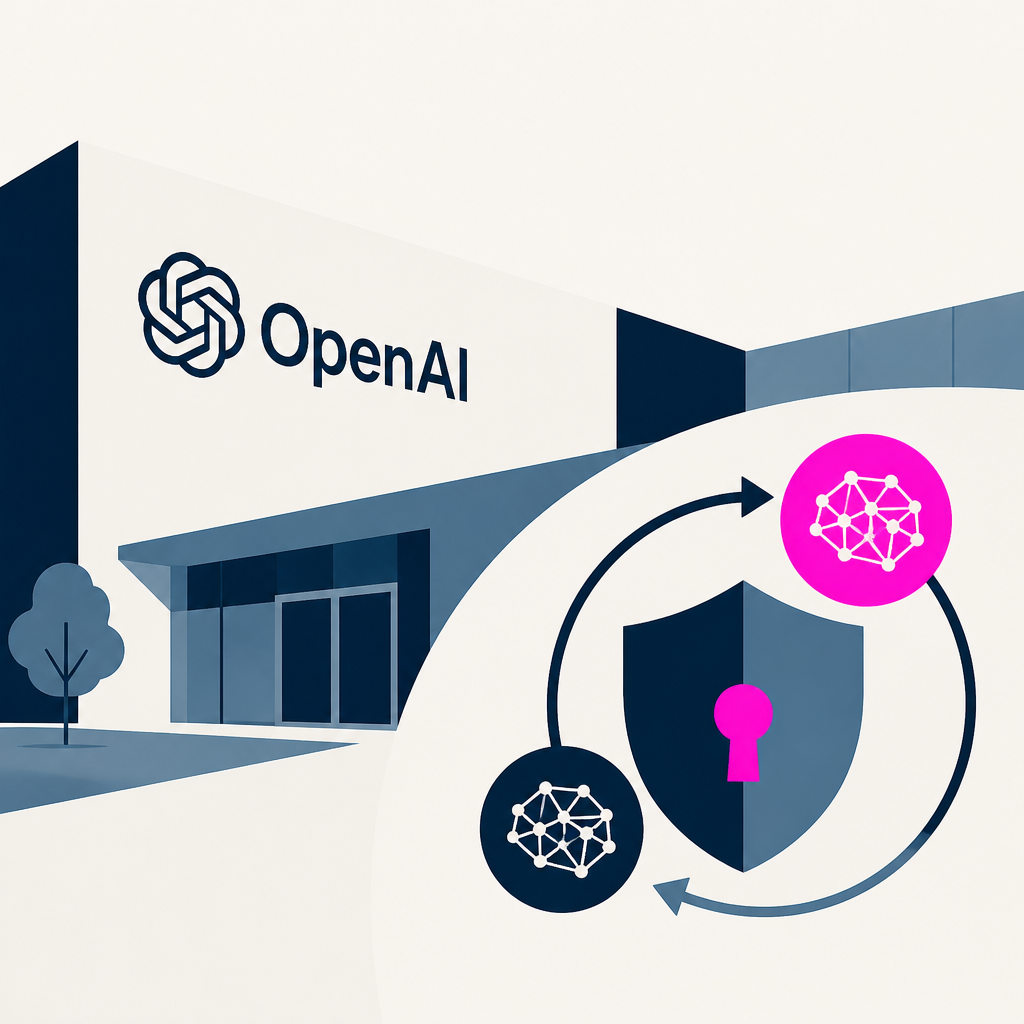
OpenAI developed GPT-Red, an AI system designed to automatically identify vulnerabilities in large language models by performing adversarial red-teaming attacks. The system uses a self-play approach where AI tests AI defenses, according to CSET analyst Jessica Ji. The method shows promise for strengthening language model security against cyberattacks.
OpenAI released a $230 light-up keyboard called the Codex Micro, designed to control AI coding agents through customizable keys, status lights, and a dial for adjusting computational reasoning levels. The keyboard is a limited-run collaboration with specialty keyboard designer Work Louder and connects to ChatGPT's desktop app. OpenAI is simultaneously developing a separate screenless smart speaker with moving mechanical parts, designed by former Apple engineers, which is still in development and unfinished.
OpenAI launched the Codex Micro, a $230 programmable macropad developed with Work Louder that includes six agent keys that light up to show the status of AI agents. The device features customizable keys, a joystick, dial, and push-to-talk functionality, with keycaps that can be remapped for use with other applications. The product targets Codex users, which OpenAI says will reach 9 million, and allows them to control agentic coding tasks through dedicated hardware.
OpenAI released its first branded hardware product, the $230 Codex Micro, a custom mini-keyboard with color-coded keys for monitoring AI agents. The device features six frosted keys that display status updates—white for idle, blue for processing, green for completion, amber for requiring feedback, and red for errors—across up to six concurrent Codex threads. Users can tap the illuminated keys to quickly switch between different AI agent tasks without manually searching for windows on-screen.
OpenAI's Codex and ChatGPT Work combined reached 8 million active users following the July 9 launch of GPT-5.6, growing from 5 million in early June. The rapid user surge from 7 million to 8 million occurred between July 12 and July 15, exposing scaling issues that forced OpenAI to reduce the context window from 372,000 to 272,000 tokens and temporarily lift usage caps. The consolidation of Codex into a unified desktop app with integrated tools like Slack and Google Drive marks a shift toward positioning AI as a workspace layer rather than a standalone product.
Apple sued OpenAI alleging that former employees, including senior hardware engineer Chang Liu and vice president Tang Tan, misappropriated trade secrets and recruited others to do the same. The lawsuit focuses on over 400 Apple employees who have moved to OpenAI and names specific allegations including use of Apple codenames to solicit confidential information and a proprietary "trade secret metal-finishing technique." The case could delay OpenAI's hardware launch timeline and force it to redesign products to avoid Apple-controlled intellectual property, while discovery proceedings may expose details about OpenAI's unreleased hardware plans.
OpenAI is developing its first consumer device, a mobile smart speaker without a screen designed to function as an AI companion for the home. The device will perform tasks including smart-home control, media playback, and answering questions through voice interaction. Users will be able to carry the speaker around their homes and interact with it as a conversational companion.
OpenAI's path to going public is encountering obstacles from multiple lawsuits, strained relations with Microsoft, and competitive pressure from Anthropic's growing valuation. The company's valuation has been set at $80 billion in recent funding rounds, while Anthropic has reached $60 billion, narrowing the gap between the two AI labs. These combined pressures may force OpenAI to reconsider its timeline for an IPO or the terms on which it eventually goes public.
OpenAI employees have donated over $215,000 to Guardrails Alliance, a super PAC advocating for stricter AI regulations, in opposition to Leading the Future, a pro-industry PAC backed by $100 million from OpenAI president Greg Brockman. The largest individual donation came from research engineer Juan Felipe Cerón Uribe at $200,000, with Guardrails Alliance aiming to raise $15 million this election cycle compared to the $50 million Brockman and his wife committed to the opposing PAC. The donations highlight internal company tensions over AI policy direction, with some employees using personal funds to counter what they view as efforts by tech leaders to prevent AI regulation.
Every AI story that matters,
in your inbox by 8am.
TLDRocket reads all relevant sources, removes duplicate coverage, and summarises the
day in two minutes. Follow companies and topics for alerts, or get the
briefing in Slack. Free, no spam, unsubscribe anytime.
Reading TLDRocket needs no cookies, and the readership counts we rely on come from
our own cookieless analytics. Google Analytics is the exception: it sets cookies and
reports to Google, so it stays switched off until you allow it. You can change your
mind any time from “Cookie settings” in the footer.
Strictly necessary
Session security and form protection (tldrocket-session,
XSRF-TOKEN, 2 hours). The site cannot work without them,
so they need no consent.
Always on
Google Analytics 4 (_ga,
_ga_<id>, up to 2 years). Measures which
stories and sections readers use. Google acts as a third-party processor and may
store the data outside the EU. No advertising, no profiling, no data sold.