
OpenAI's First Device Will Be Movable, Screenless Speaker Built as AI Companion
Bloomberg ● Covered by 3 sources
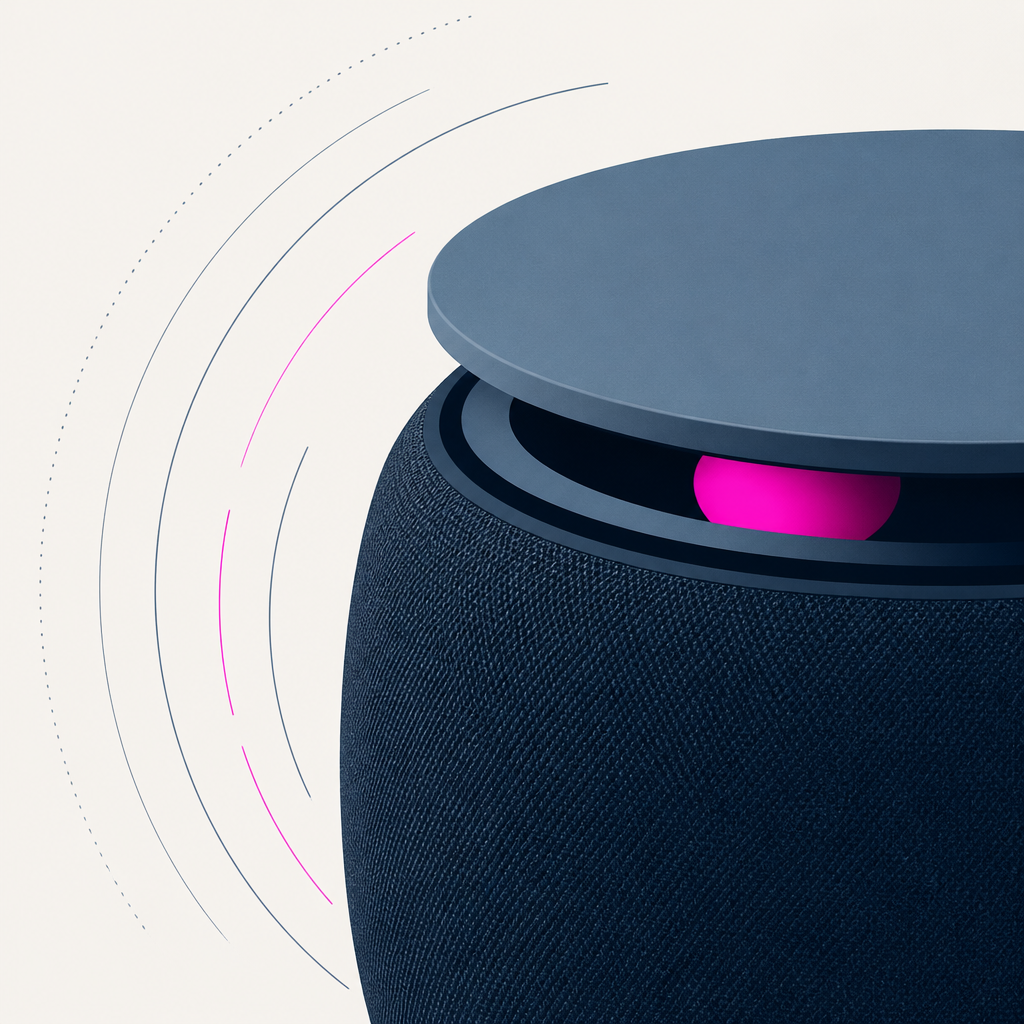
OpenAI's building its first gadget: a screen-free speaker that actually moves around your house and talks like a companion, not a command line. Forget another Alexa clone — this is a bet that voice and presence beat screens for AI you live with.
Based on reporting by Bloomberg — read the original for the full story.
Summary, retelling and take written by AI under human oversight; images are AI-generated illustrations. How we work · Report an error
OpenAI is finally stepping off the software side of the business and into your living room. The company's first piece of hardware, according to details now circulating, will be a smart speaker with no screen at all — and, more unusually, one that can move. Not roll around like a Roomba with ambitions, necessarily, but shift position within a room, which is a small detail that says a lot about what OpenAI wants this thing to feel like.
The pitch is straightforward on paper: control your smart-home gear, play your music and podcasts, answer whatever you throw at it. Amazon and Google have been doing versions of that for a decade. What's different here is the framing. OpenAI isn't selling a utility box that sits on a shelf and waits for a wake word. It's selling companionship — a device meant to feel less like a control panel and more like something you talk to the way you'd talk to a person.
That's a deliberate design choice, and a risky one. Screens are easy. They let you show information, correct misunderstandings, give users a fallback when voice fails. Stripping that away means the entire experience rides on the model's ability to hold a natural, humanlike conversation without stumbling — exactly the kind of task GPT-style models have gotten good at, but haven't had to sustain inside a physical object sitting in someone's kitchen for months at a time.
And the mobility angle raises its own questions. A speaker that can reposition itself is a different proposition than one bolted to a countertop — it implies OpenAI wants the device present in more of the home, more of the time, which pushes further into territory Amazon and Google have circled but never quite committed to. Whether that translates into something people actually want living in their space, following them room to room, is the part nobody can answer from a spec sheet.
What's clear is that OpenAI no longer wants to be just the API everyone else builds products on top of. Hardware is a statement of intent — a sign the company thinks the real prize isn't powering someone else's smart speaker, but owning the relationship between a person and their AI directly, in their own home, on their own device.
My take — AI-written commentary, not fact-checked reporting
I'll believe the
Read more about this at: Bloomberg
Related stories
 OpenAI’s expensive smart speaker will use moving parts to seem “more alive”
Ars Technica · 1 month ago ·
14
Jony Ive’s first OpenAI gadget is reportedly a hockey puck-sized smart speaker
The Verge · 1 month ago ·
19
OpenAI’s expensive smart speaker will use moving parts to seem “more alive”
Ars Technica · 1 month ago ·
14
Jony Ive’s first OpenAI gadget is reportedly a hockey puck-sized smart speaker
The Verge · 1 month ago ·
19