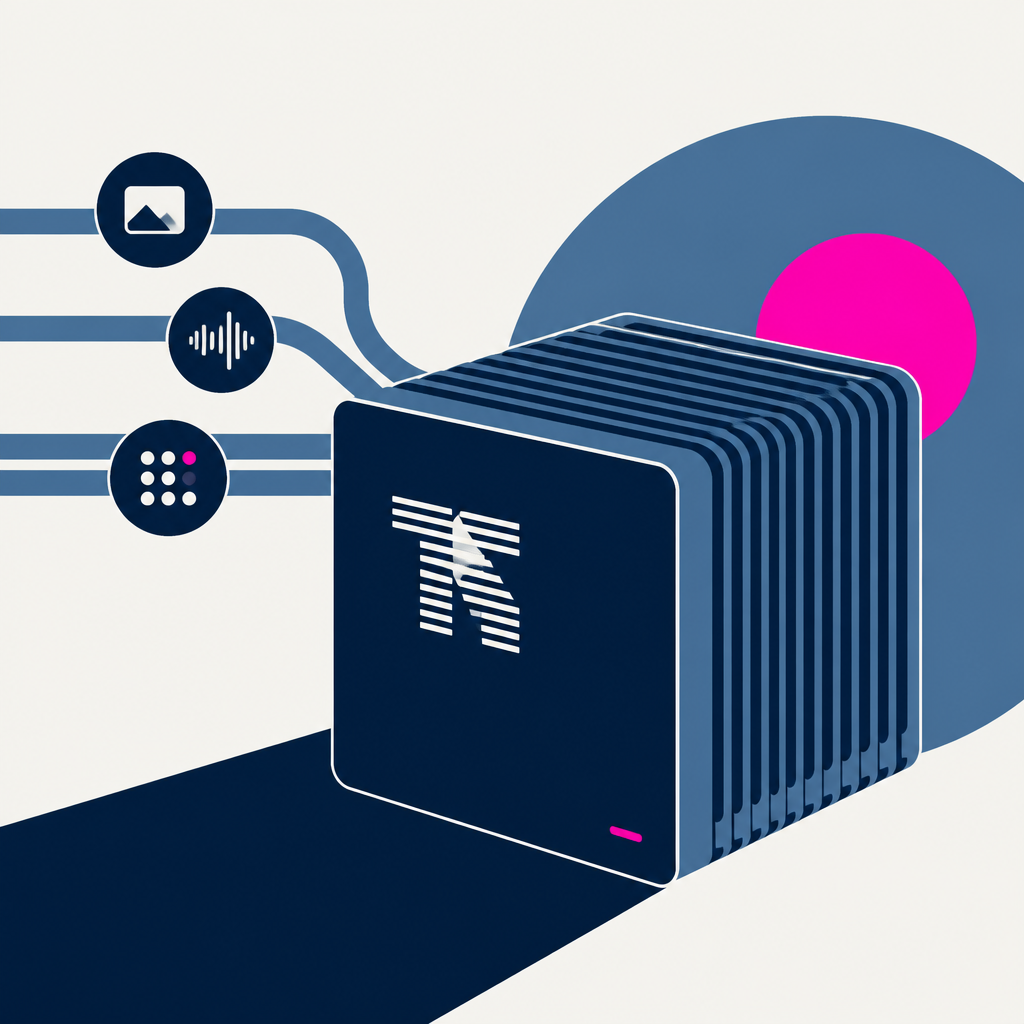
Thinking Machines Lab released Inkling-Small, an open weights multimodal Mixture-of-Experts model with 276B total parameters and 12B active under Apache 2.0 license. The NVFP4 quantized checkpoint requires 180GB of aggregated VRAM, deployable on a single NVIDIA B300 GPU or two H200s, making it accessible to startups and mid-size enterprises. The smaller model surpasses its 975B-parameter teacher Inkling on reasoning and coding benchmarks including SWE-bench Verified (80.2% vs 77.6%) and ARC-AGI-2 (40.1% vs 36.5%), while regressing on factual recall tasks.
Multiple AI companies are releasing competitive open-weight models despite predictions of industry consolidation, including Thinking Machines' Inkling (975B parameters), Poolside's Laguna S2.1, and Moonshot's Kimi K3. Open model releases have accelerated in 2025 with companies from the U.S., China, Korea, and Switzerland all contributing, with Kimi K3 being the largest release in some time though restricted by a noncommercial license requiring commercial agreements. The shift toward open models and token-generation revenue streams suggests the industry is moving toward sustained competition and adoption rather than consolidation, with open models increasingly claiming market share across performance tiers.
Jensen Huang backed an industry letter defending open-weight AI models as essential to American competitiveness, while Moonshot released Kimi K3, a 2.8-trillion-parameter open model, and Google DeepMind showed Gemini Robotics 2 controlling physical robots. Leopold Aschenbrenner's $20 billion AI hedge fund collapsed after concentrated losses, forcing a sale to Citadel, illustrating that correct long-term AI predictions can still fail with poor timing and leverage. Tech companies now face investor scrutiny on converting massive capital spending into revenue, with Microsoft and Amazon rewarded for AI monetization while Meta faced skepticism despite strong core business growth.
Simon Willison's Weblog·2 months ago·
27
● 75 sources
Three open letters about AI development emerged in late July, with Microsoft-backed signatories arguing against bans on open-weight models for safety reasons, Anthropic countering with concerns about misuse and distillation, and 1,324 AI company employees calling for international efforts to pace automated AI research. The Microsoft letter gathered 235 signatures including NVIDIA and OpenAI, while Anthropic's separate response emphasized risks from authoritarian governments and cyberattacks. These competing positions reflect tension between those favoring open development for safety through transparency and those prioritizing governance controls over rapid capability advancement.
Every AI story that matters,
in your inbox by 8am.
TLDRocket reads all relevant sources, removes duplicate coverage, and summarises the
day in two minutes. Follow companies and topics for alerts, or get the
briefing in Slack. Free, no spam, unsubscribe anytime.
Reading TLDRocket needs no cookies, and the readership counts we rely on come from
our own cookieless analytics. Google Analytics is the exception: it sets cookies and
reports to Google, so it stays switched off until you allow it. You can change your
mind any time from “Cookie settings” in the footer.
Strictly necessary
Session security and form protection (tldrocket-session,
XSRF-TOKEN, 2 hours). The site cannot work without them,
so they need no consent.
Always on
Google Analytics 4 (_ga,
_ga_<id>, up to 2 years). Measures which
stories and sections readers use. Google acts as a third-party processor and may
store the data outside the EU. No advertising, no profiling, no data sold.