
Latest open artifacts (#23): Laguna S2.1, Inkling, & Kimi K3 show the utility of open models on the Pareto frontier
Interconnects Florian Brand ● Covered by 13 sources
Thinking Machines dropped Inkling, its first open model, alongside a stacked week of releases from Tencent, Poolside, DeepSeek, and Moonshot's Kimi K3. Open models keep getting stronger and more numerous, proving the 'consolidation is coming' predictions wrong again.
Based on reporting by Interconnects, Florian Brand — read the original for the full story.
Summary, retelling and take written by AI under human oversight; images are AI-generated illustrations. How we work · Report an error
Everyone with a chart and a podcast has been calling for consolidation in AI labs for two years now. The logic seemed airtight: training costs balloon every generation, so eventually only a handful of well-funded giants could afford to play. Except that's not what's happening. More organizations than ever are training frontier-adjacent models and, notably, giving them away.
The clearest proof point is Thinking Machines, the company that shipped its first open model, Inkling, this week. When Thinking Machines launched back in February 2025, almost nobody pegged them as an open-weights outfit. Now their Tinker fine-tuning service is reportedly pulling in hundreds of millions annually, and Inkling — a 975-billion-parameter mixture-of-experts model with a 41-billion active parameter footprint, handling text, image, and audio input — puts them ahead of Nvidia's Nemotron and Arcee's Trilogy among US-built open models. It's not the strongest model in its weight class globally, but it's built to be a fine-tuning base, which is exactly the business Thinking Machines is running.
China isn't slowing down either. Tencent's Hy3, a 295B-A21B MoE, upgraded across the board from its predecessor and switched from a restrictive custom license to Apache 2.0 — a meaningful shift in openness that's easy to overlook next to the model's claim of solving a 50-year-old math problem (a claim that leans on a custom evaluation harness, so take it with some salt). Poolside, a company that's now shown up in three consecutive monthly roundups, released Laguna-S-2.1, a 118B-A8B model that fits on a single DGX Spark box, adopting the OpenMDW license and publishing full evaluation trajectories — a level of transparency that's rare even among open-model releases.
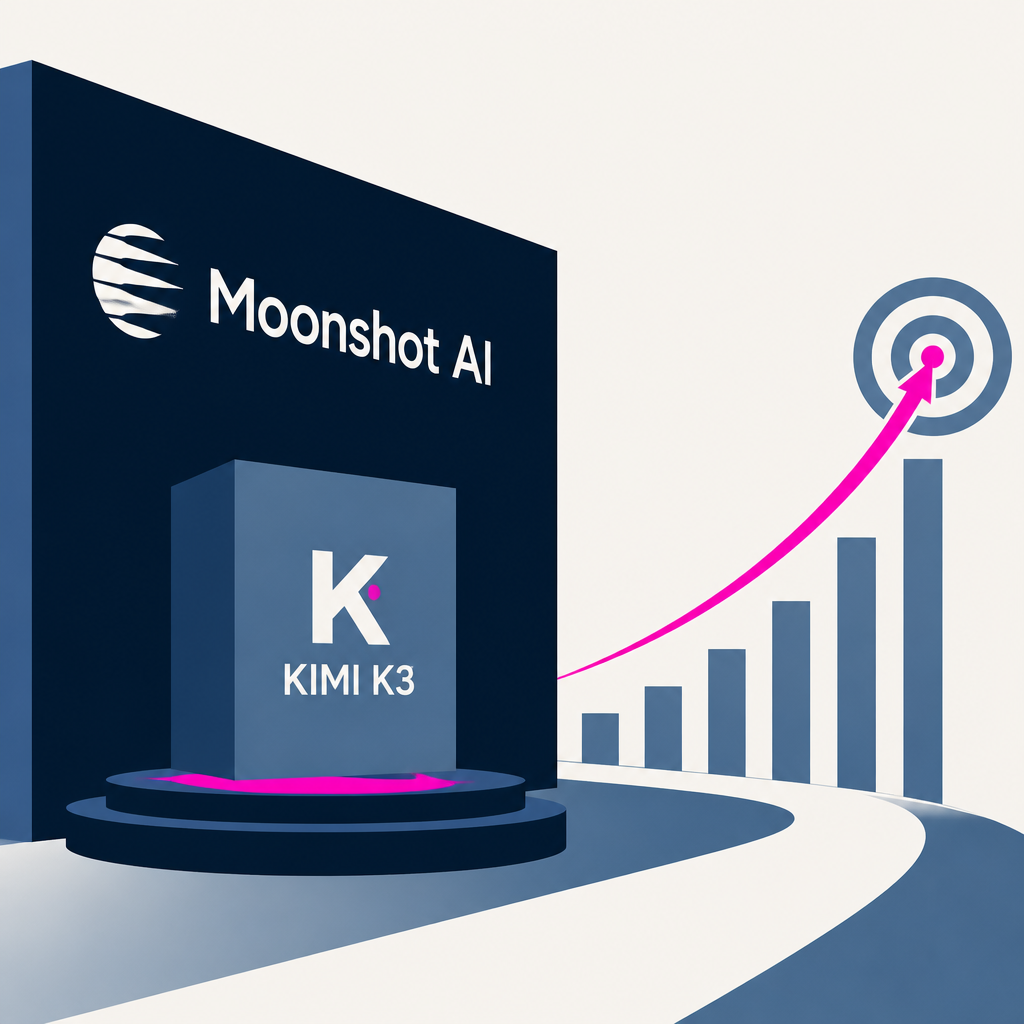
Then there's Kimi K3 from Moonshot AI, arguably the biggest open release in months. It ships under a noncommercial license that forces any inference or fine-tuning provider into a direct commercial agreement with Moonshot. Kevin Xu and Graham Webster have pointed out this structure isn't just a licensing quirk — it creates a contractual dependency that could become a lever for US policy action against American companies doing business with Chinese AI firms, since those firms would need an actual agreement with Moonshot to serve K3's tokens.
DeepSeek, meanwhile, quietly dropped V4-Flash-0731 one day after OpenAI cut prices on its smallest model by 80%, and the update reportedly beats Luna on the performance-per-parameter frontier. The full V4 Pro model hasn't been refreshed yet, so where the flagship lands is still an open question. Add in Meituan's LongCat-2.0, an eyebrow-raising 1.6-trillion-parameter MoE trained entirely on Huawei's Ascend 910 chips rather than Nvidia silicon, plus smaller entries from Motif, Swiss AI, and AMD, and you get a picture of an ecosystem that's getting wider, not narrower.
My take — AI-written commentary, not fact-checked reporting
I called consolidation years ago and I was wrong, and I'll say it plainly: the token-demand curve is steep enough that basically anyone with capital and talent can find a profitable niche building open models, and that's great news for anyone who doesn't want three companies controlling how AI gets built. The part that should worry policymakers more than model quality is licensing — Kimi K3's noncommercial terms aren't just a business model, they're a geopolitical lever, and I don't think Washington has fully clocked that yet.
Read more about this at: Interconnects
Related stories
 [AINews] Much ado about Open Weights
Latent Space · 1 month ago ·
33
Open Models are the United Front of AI
ChinaTalk · 1 week ago ·
30
[AINews] Much ado about Open Weights
Latent Space · 1 month ago ·
33
Open Models are the United Front of AI
ChinaTalk · 1 week ago ·
30