DeepSeek V4 Pro 0813 (on OpenRouter)
Simon Willison’s Weblog 2 months ago 4
DeepSeek V4 Pro 0813 was made available via API through OpenRouter, with no clear public announcement page from DeepSeek identified by the author.
347 summarised stories about Open-Weight Models, each linking back to the original source. Browse all topics →
Simon Willison’s Weblog 2 months ago 4
DeepSeek V4 Pro 0813 was made available via API through OpenRouter, with no clear public announcement page from DeepSeek identified by the author.
TechCrunch 2 months ago 44 ● 4 sources
Three top AI researchers argued at Ai4 that AI should stay open despite safety concerns, warning about who controls progress and access to models. Geoffrey Hinton said the “battle” against open-weight models is over because the barrier created by the cost of training foundation models has disappeared. They concluded that openness should be paired with regulation and a nuanced mix of open and closed approaches rather than an all-or-nothing stance.
MarkTechPost 2 months ago 44
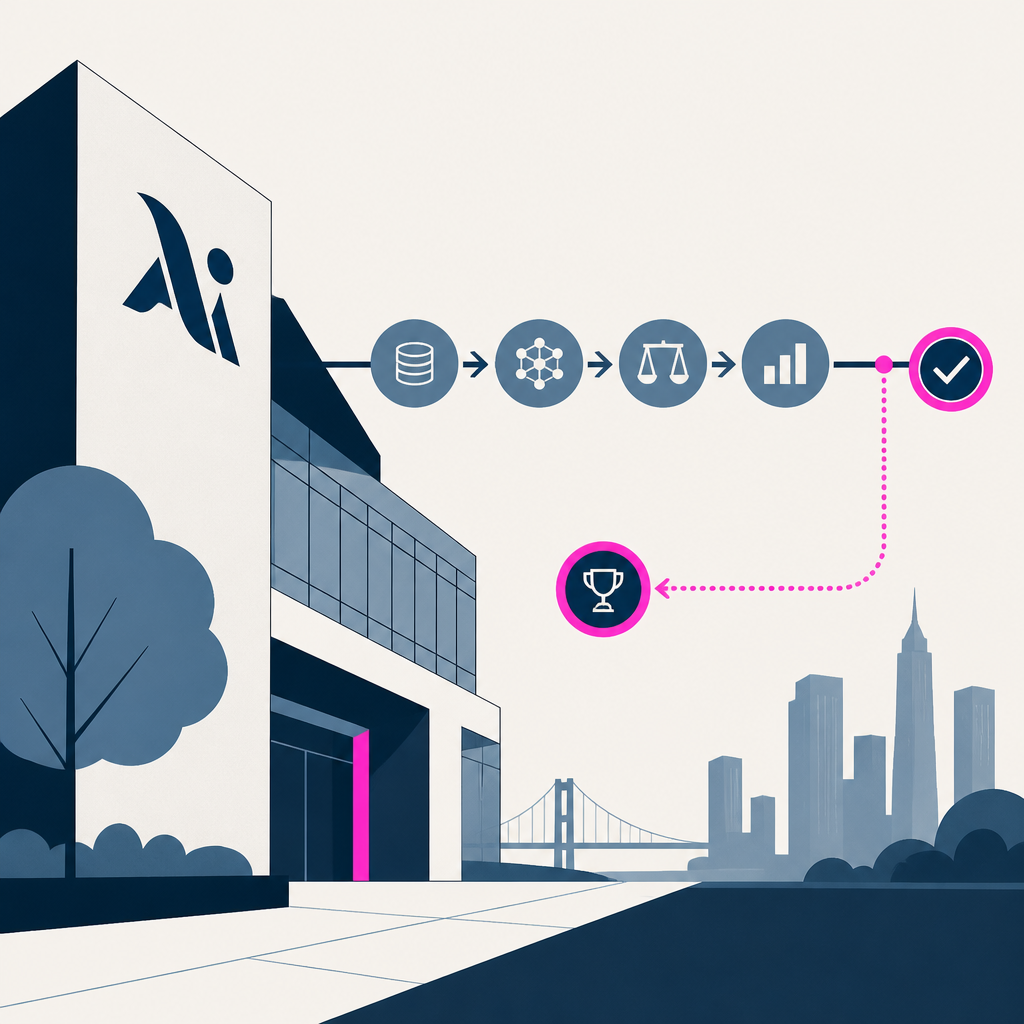
AllenAI’s tutorial shows how to run an end-to-end post-training pipeline for a compact instruction-tuned language model on the Open Instruct framework, covering SFT, DPO, and GRPO with verifier-based evaluation for math answers. It adapts the original multi-GPU Tulu 3 setup to fit within a 16 GB runtime. As a result, the workflow keeps Open Instruct’s optimization logic while swapping out distributed training pieces (vLLM/Ray/DeepSpeed/async queues) for lightweight Hugging Face and PyTorch code suited to Colab.
The New Stack 2 months ago 46 ● 4 sources
Meta released Muse Glimmer, a 30-billion-parameter open-weight model distilled from Muse Spark and shipped as a complete distillation pipeline with licensing and deployment artifacts. It is designed to fit on a 24GB machine. This makes enterprise model management shift toward tracking both the upstream “teacher” and downstream “student” refresh cadence, quantization, paired speculative decoding artifacts, and licenses rather than treating distillation as a single generic technique.
Substack 2 months ago 6 ● 2 sources
Chris Alexiuk discussed NVIDIA’s Nemotron development, including model scaling, agent systems, and how routing/specalization and multimodal upgrades fit into production AI workflows. Nemotron 3 ships in three tiers with active parameter counts of about 3B, 12B, and 50B. The focus shifts from chatbots to long-running agent execution, enabled by smaller, cheaper models like Nemotron 3.5 Lightning and by evolving model routing toward broader orchestration layers for end users.
MarkTechPost 2 months ago 10 ● 2 sources
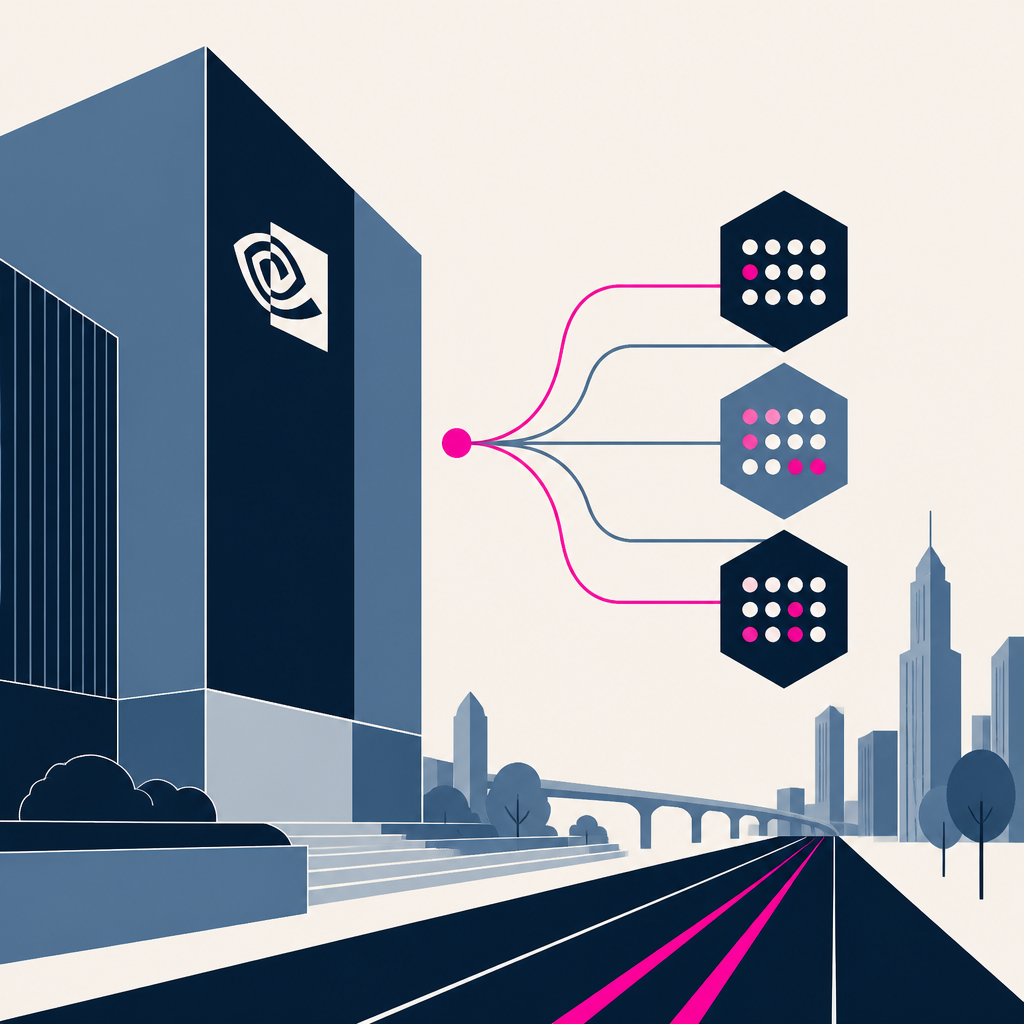
NVIDIA released Nemotron 3.5 Lightning, an open Mixture-of-Experts model for always-on agent execution, alongside NeMo Switchyard, an open-source router for sending each agent step to the most suitable model. Nemotron 3.5 Lightning is a 30B model with 3B active parameters and a 1M-token context window. The tooling enables cheaper, lower-latency agent workflows by routing tool calls and validations away from frontier models, with Switchyard reported to cut LangChain benchmark cost by 74% at about a 6-point accuracy drop.
Tech Funding News 2 months ago 35 ● 3 sources
River AI raised $1.1 billion two months after leaving stealth to build an open stack for training, owning, and running custom AI models. The funding round closed with $1.1 billion at the startup level, and River plans to invest it into training infrastructure, personalization software, and eventually dedicated hardware. The company can now scale its LoRA fine-tuning and reinforcement-learning API offering and pursue broader control over the hardware stack behind enterprise “personal AI.”
The daily briefing
TLDRocket reads all relevant sources, removes duplicate coverage, and summarises the day in two minutes. Follow companies and topics for alerts, or get the briefing in Slack. Free, no spam, unsubscribe anytime.
 TLDRocket
24 October 2026
AI’s center of gravity keeps shifting from “chat” to action, and today that shows up in the places people actually talk: texts and voices. Instinct, which just raised $1 billion and is now valued at $10 billion, is pushing AI agents that live inside SMS and iMessage/RCS and then do chores—scheduling, shopping, research—without asking users to install yet another app. Under the hood, developers are getting more serious about state. Letta’s agentic engineering copilot leans on “Core Memory” and shared, updatable state blocks, plus semantic retrieval and custom tools; in the tutorial, it bulk-loaded six knowledge passages into archival memory so the system can persist project context across turns and coordinate among agents.
Read the full briefing →