space ocr
Product Hunt 2 months ago 39
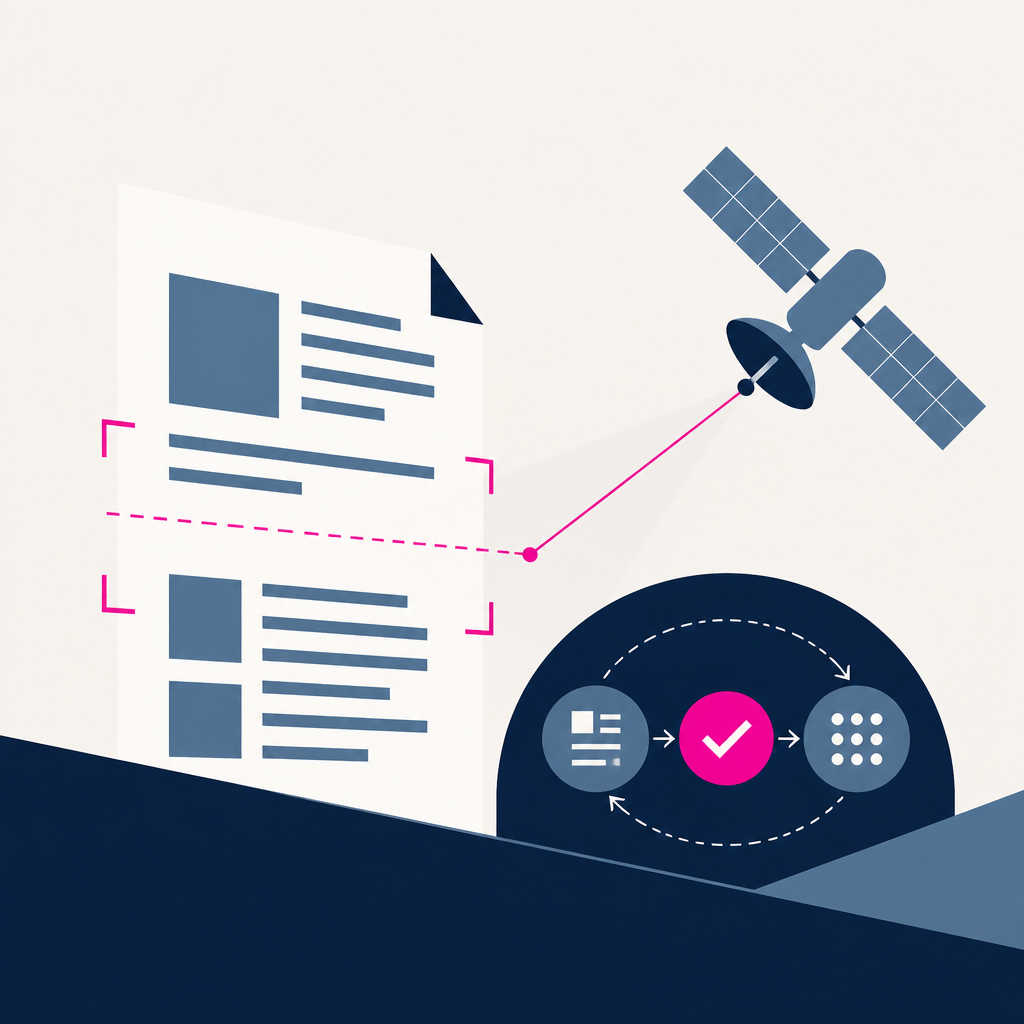
A new OCR system was developed that validates its own outputs by cross-checking results, available as both a standalone application and API service.
288 summarised stories about Open Source, each linking back to the original source. Browse all topics →
Product Hunt 2 months ago 39
A new OCR system was developed that validates its own outputs by cross-checking results, available as both a standalone application and API service.

The Register 2 months ago 46
A design studio released ShieldFont, an open-source font that uses glyph substitution to replace words with grammatically equivalent alternatives, making raw HTML appear as gibberish to AI scrapers while remaining readable to humans. The technique creates about 250 grammatical word pools and replaces roughly a quarter of words in text, with web font files compressed to around 800 KB. The poisoned approach aims to introduce uncertainty into training data rather than simply blocking scrapers, though it can be defeated by OCR, targeted AI, and may cause SEO penalties.

Simon Willison's Weblog 2 months ago 49 ● 7 sources
A new plugin called llm-chat-completions-server version 0.1a0 was released that lets users run a local server exposing LLM models via an OpenAI Chat Completions compatible API endpoint. The server runs on port 9001 and uses the content-addressable logs feature from LLM 0.32rc1 to deduplicate conversation messages through hashing. This allows existing OpenAI-compatible clients to work with locally installed language models without modification.
The daily briefing
TLDRocket reads all relevant sources, removes duplicate coverage, and summarises the day in two minutes. Follow companies and topics for alerts, or get the briefing in Slack. Free, no spam, unsubscribe anytime.
 TLDRocket
18 October 2026
DeepSeek kept one foot on the gas. Its updated DeepSeek-V4.1-Flash-1017 went live across web, mobile, and the existing deepseek-flash API model ID, with the same pricing while it improves performance: DeepSWE v1.1 resolution rises to 77% of tasks from 74.2%, and DeepSeek says it finishes work faster. It also bundled something more practical than another benchmark brag—an accompanying developer search API backed by its own engine, with Terminal-Bench 4.0 moving from 31.2 to 42.3 and billing that stays at $0.30 per million input tokens and $1.20 per million output tokens. The subtext for builders is familiar: as agent workflows spread, retrieval cost and reliability matter as much as raw model IQ.
Read the full briefing →