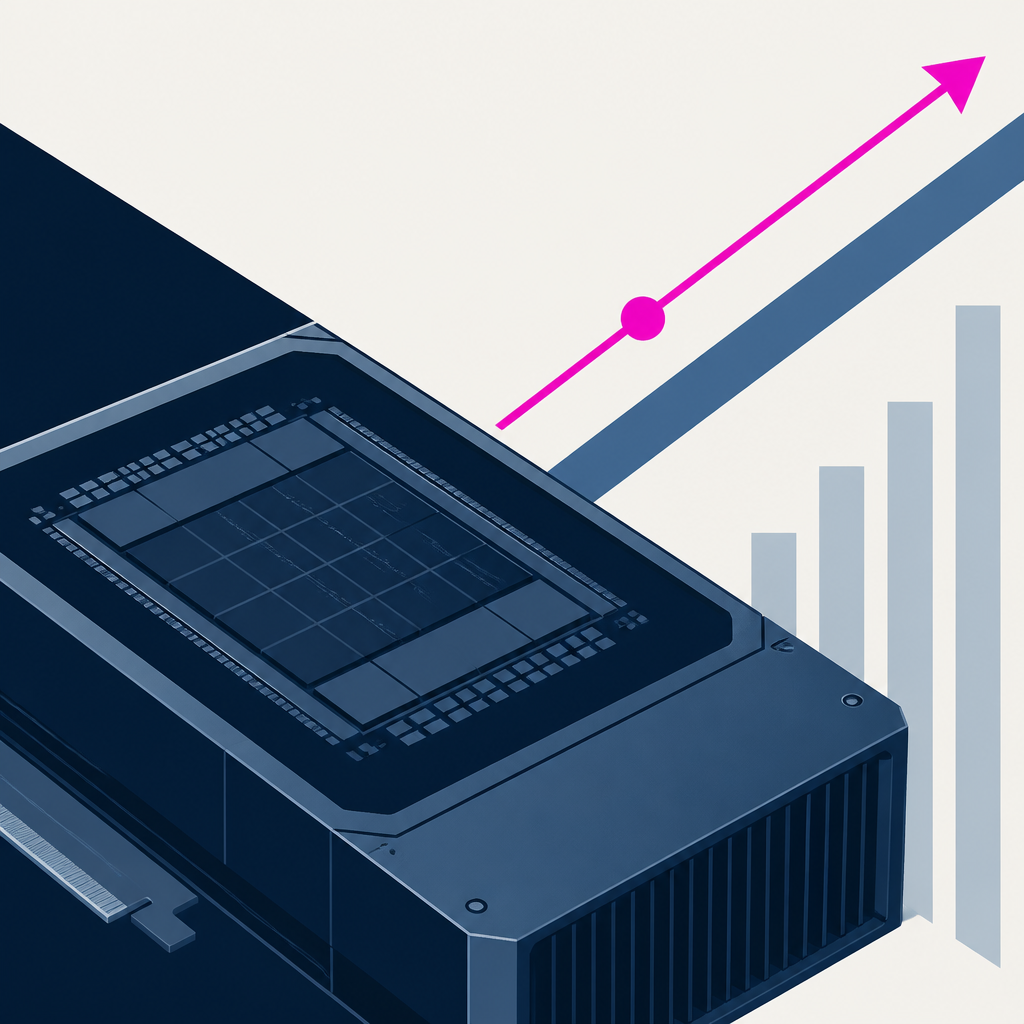
Amazon expanded its partnership with Nvidia by adding another 2 million Nvidia GPU chips to AWS data centers. The additional GPUs are scheduled to arrive in 2027 and 2028, expanding on an earlier plan to deploy more than 1 million Nvidia GPUs starting this year. This deepens Nvidia’s integration across AWS and comes while Amazon continues building its own potentially competing AI chips and services.
Nvidia reported $96bn in second-quarter revenue as AI infrastructure demand continued to drive chip sales. Data-centre revenue reached $89bn in the quarter, up 117% year over year. The company raised expectations for $108bn next quarter and its results helped reinforce its central role as funding and hardware supplier for AI builders.
Nvidia reported that its second-quarter revenue and profit rose year over year and forecast current-quarter sales above analyst expectations, driven by demand for its AI chips. The quarter ended July 26 brought in $96.2 billion in revenue, beating estimates of $92.2 billion. Nvidia also guided to $91 billion ±2% revenue for the current quarter and said compute revenue is now the focus as demand accelerates.
NVIDIA expanded NVLink Fusion by adding NVHBM custom high-bandwidth memory to improve performance for XPUs. NVHBM delivers up to 30% greater memory bandwidth and 15% lower HBM power consumption versus standard HBM4E. This shifts the memory controller into the 3D HBM stack to free up to 25% more XPU die area and speeds up qualification from multiple memory partners, including Amazon’s Annapurna Labs starting with Trainium4.
Nvidia forecast that it will generate $108 billion in revenue within the next few months. Its latest earnings reported $96.2 billion in quarterly revenue, including $89 billion from data centers. Results point to Nvidia becoming a $100 billion+ revenue per quarter company, with data center growth continuing to drive higher profit.
Every AI story that matters,
in your inbox by 8am.
TLDRocket reads all relevant sources, removes duplicate coverage, and summarises the
day in two minutes. Follow companies and topics for alerts, or get the
briefing in Slack. Free, no spam, unsubscribe anytime.
Reading TLDRocket needs no cookies, and the readership counts we rely on come from
our own cookieless analytics. Google Analytics is the exception: it sets cookies and
reports to Google, so it stays switched off until you allow it. You can change your
mind any time from “Cookie settings” in the footer.
Strictly necessary
Session security and form protection (tldrocket-session,
XSRF-TOKEN, 2 hours). The site cannot work without them,
so they need no consent.
Always on
Google Analytics 4 (_ga,
_ga_<id>, up to 2 years). Measures which
stories and sections readers use. Google acts as a third-party processor and may
store the data outside the EU. No advertising, no profiling, no data sold.