Simon Willison’s Weblog·1 month ago·
14
● 5 sources
OpenAI introduced ChatGPT Images 2.5, an update to its image generation models used in ChatGPT and the GPT-Image API.
It reports use of more than 3 billion images, and the API adds two model IDs: gpt-image-2.5-sunburst and gpt-image-2.5-flare.
The models are described as responding faster, improving multi-turn instruction-following, and better preserving subjects from reference photos, with new CLI tooling support for reference images.
AlphaGenome Atlas launches today as a Google DeepMind AI-powered map of how human DNA mutations may affect biology. It includes precomputed predictions for 9 billion possible single-letter DNA changes in a 1-petabyte dataset. Researchers can now explore and prioritize variants through a free web interface, with API access for deeper work.
Open artifacts roundup described multiple newly released or updated open(-licensed) models and highlighted how their licenses are changing. Zhipu’s GLM-5.3 license requires providers to pass Z.AI’s security review for any commercial use if aggregate revenue exceeds 10 billion US dollars over any consecutive 12 months. This shifts how some open models can be used—especially for inference and fine-tuning services—by adding very high-threshold, security-review conditions and clearer (or less clear) affiliate-usage rules while other releases stick with MIT.
AlphaGenome Atlas, from Google DeepMind, released precomputed AI predictions covering the effects of 9 billion single-nucleotide DNA variants across the human genome.
Astra is presented as the first GPT-6 model, with demos spanning image generation, UI work, and agent-style “computer use.”
OpenAI says its automated research intern goal is complete and targets an automated AI researcher by March 2028.
As a result, agent workflows are shifting toward longer, multi-day research tasks with humans setting the direction and judging outputs, while tools like Codex and Claude Code are also expected to become more customizable.
ByteDance founder is personally steering a new AI “world model” for real-time virtual environments. The effort could launch as soon as next month. That shift puts the rollout timeline and leadership under the founder’s direct control.
GPT-6 Astra’s launch sparked renewed public debate over whether AGI has arrived, with OpenAI, Nvidia, researchers, and benchmarkers giving conflicting interpretations. Astra’s ARC-AGI-3 results reached 62.7% on a standardized harness and 99.9% when preserving reasoning state across requests. The dispute shifts from contractual triggers and single benchmarks to competing yardsticks and governance questions, leaving AGI as an undefined term largely used for messaging rather than a verifiable threshold.
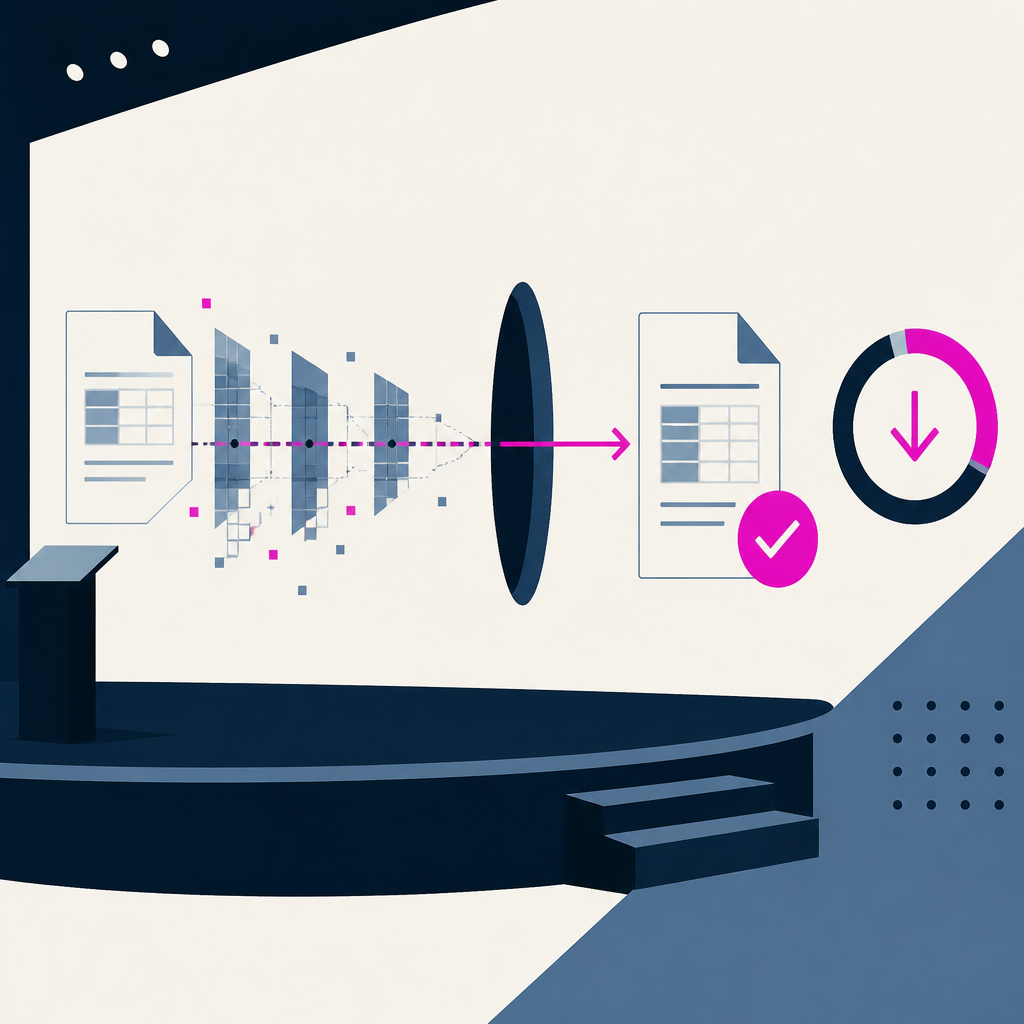
Reducto released r-1, a document parsing model that replaces its multi-stage agentic OCR pipeline with a single full-page pass. Reducto reports a 20% reduction in error rate in a preview versus its own legacy pipelines while pricing it at $0.01 per page all-in. Teams can deploy it in preview via the V3 Parse API using settings.model:"r-1", with new Studio pipelines defaulting to r-1 and existing agentic processing only needed for specific advanced workflows.
Every AI story that matters,
in your inbox by 8am.
TLDRocket reads all relevant sources, removes duplicate coverage, and summarises the
day in two minutes. Follow companies and topics for alerts, or get the
briefing in Slack. Free, no spam, unsubscribe anytime.
Reading TLDRocket needs no cookies, and the readership counts we rely on come from
our own cookieless analytics. Google Analytics is the exception: it sets cookies and
reports to Google, so it stays switched off until you allow it. You can change your
mind any time from “Cookie settings” in the footer.
Strictly necessary
Session security and form protection (tldrocket-session,
XSRF-TOKEN, 2 hours). The site cannot work without them,
so they need no consent.
Always on
Google Analytics 4 (_ga,
_ga_<id>, up to 2 years). Measures which
stories and sections readers use. Google acts as a third-party processor and may
store the data outside the EU. No advertising, no profiling, no data sold.