DeepMind CEO Demis Hassabis is stepping down from day-to-day leadership to take an oversight role at Alphabet, continuing a pattern of senior departures from Google's AI division. Hassabis cited his lifelong focus on achieving artificial general intelligence and stated he believes AGI is now within reach. The shift marks a significant restructuring at Google's flagship AI research unit as the company navigates its position in the competitive generative AI landscape.
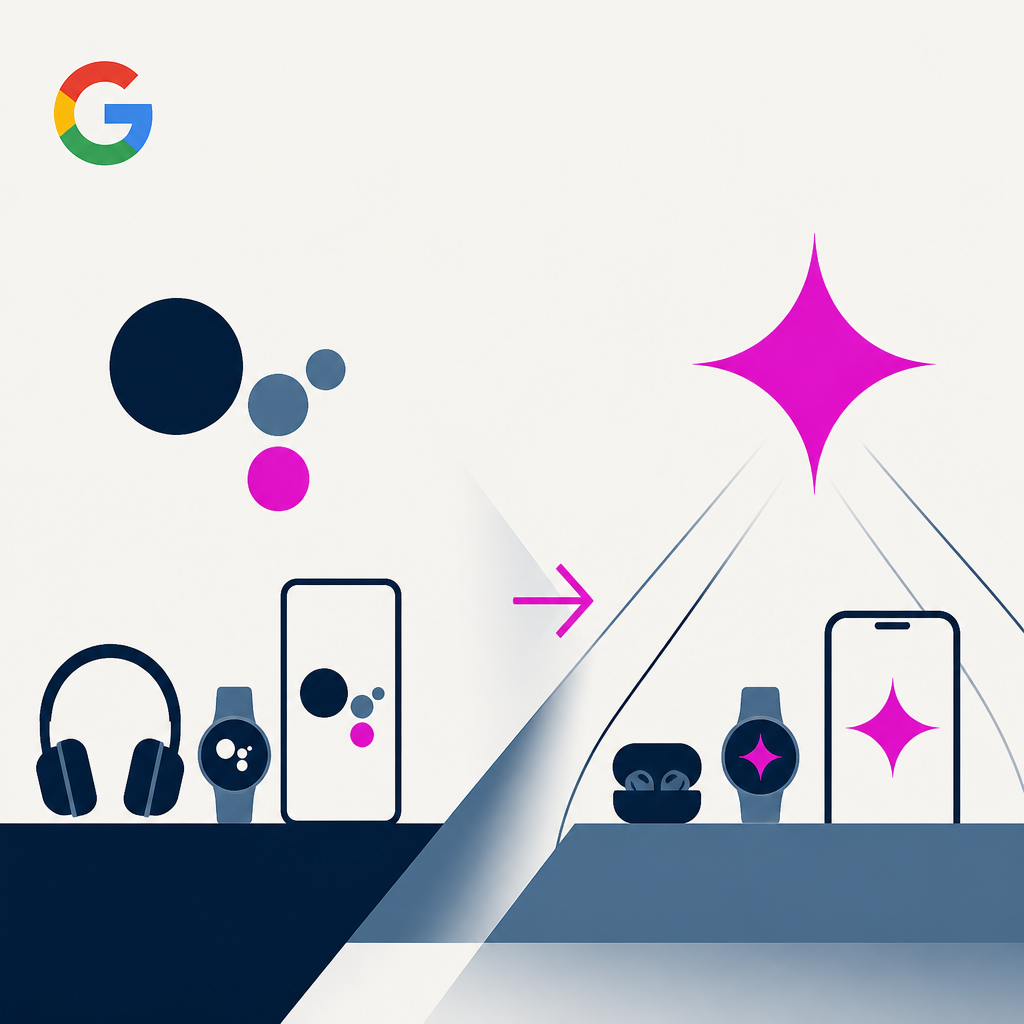
Google will shut down Assistant on Android phones starting September 4, forcing users to switch to Gemini. The retirement was originally planned for late 2025 but moved earlier as Gemini matured. The change will also affect Assistant on connected devices like smartwatches, headphones, and Android Auto vehicles.
Google announced leadership restructuring at DeepMind, moving founder Demis Hassabis to chair and chief scientist role while Koray Kavukcuoglu, formerly CTO, becomes senior vice president overseeing day-to-day operations. Hassabis will retain leadership of Isomorphic Labs, Google's AI drug discovery subsidiary. The shift concentrates strategic AI governance under Alphabet while giving Kavukcuoglu operational control of DeepMind's research efforts.
Google announced it will disable access to Google Assistant on Android phones, tablets, and paired devices like smartwatches on September 4th, removing the older virtual assistant as Gemini takes over. The shutdown applies to both phones and connected devices starting from 4 September. Users will need to transition to Gemini or alternative voice assistants for voice commands and tasks previously handled by Assistant.
Every AI story that matters,
in your inbox by 8am.
TLDRocket reads all relevant sources, removes duplicate coverage, and summarises the
day in two minutes. Follow companies and topics for alerts, or get the
briefing in Slack. Free, no spam, unsubscribe anytime.
Reading TLDRocket needs no cookies, and the readership counts we rely on come from
our own cookieless analytics. Google Analytics is the exception: it sets cookies and
reports to Google, so it stays switched off until you allow it. You can change your
mind any time from “Cookie settings” in the footer.
Strictly necessary
Session security and form protection (tldrocket-session,
XSRF-TOKEN, 2 hours). The site cannot work without them,
so they need no consent.
Always on
Google Analytics 4 (_ga,
_ga_<id>, up to 2 years). Measures which
stories and sections readers use. Google acts as a third-party processor and may
store the data outside the EU. No advertising, no profiling, no data sold.