RankControl launched today as an AI-focused SEO tool that creates content and publishes it on a user’s own domain while tracking AI visibility across multiple chat and search platforms. It offers a single 7-day free trial. This adds an end-to-end workflow for content production, distribution, competitor gap tracking, and AI-specific crawl/analytics reporting in one plan.
Simon Willison's Weblog·2 months ago·
11
● 7 sources
Anthropic released MCP 2.0, a stateless version of the Model Context Protocol that simplifies how tools are exposed to AI agents by replacing two-request session-based communication with single HTTP requests. The new specification reduces implementation complexity significantly, enabling smaller models to work with MCP tools while improving security compared to giving agents shell access. The author built three new tools demonstrating the benefits: mcp-explorer for CLI probing, datasette-mcp for SQL query access, and llm-mcp-client for LLM integration.
Simon Willison's Weblog·2 months ago·
34
● 7 sources
Simon Willison released llm-mcp-client version 0.1a0, an early alpha implementation of the model-context-protocol for the llm command-line tool. The release is version 0.1a0, indicating pre-release status. This enables developers using the llm CLI to connect to context protocol servers, expanding the tool's capability to work with external data sources and services.
A researcher released smevals, a framework for evaluating AI models and prompts across different configurations by running tests and grading results. The tool uses YAML-based eval suites that can be tested against multiple models like GPT and Claude, with results viewable through a web interface or static HTML reports. This enables teams to systematically benchmark model capabilities and compare performance across different versions and configurations.
Aegisora is a new platform for controlling which tools and APIs AI agents can access, restricting their capabilities to specific functions. The system provides a narrow control plane that limits agent permissions to predefined tools and external service calls. This allows developers to deploy agents with bounded authority, reducing the risk of unintended actions or unauthorized API access.
Simon Willison's Weblog·2 months ago·
27
● 2 sources
Datasette-agent released version 0.4a0 with a new await context.browser_task() mechanism that lets agent tools run code directly in the user's browser. The feature is part of issue #33 and enables plugins to execute custom JavaScript. This allows Datasette Agent to provide more interactive browser-based capabilities to users.
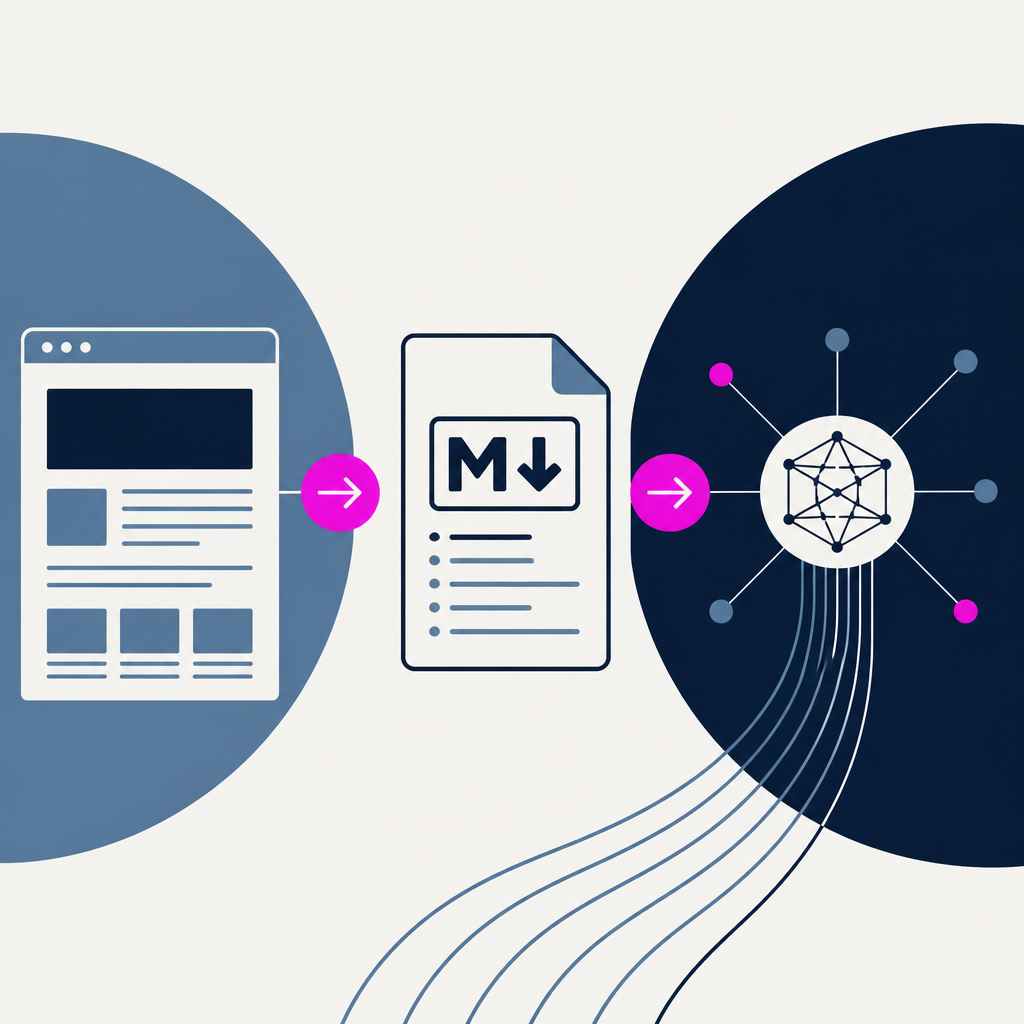
A service converts websites into Markdown format for use with large language models. The tool processes web pages into structured text optimized for LLM consumption. Users can now feed website content directly to AI systems without manual conversion.
Agent Manager is a tmux-based terminal UI that runs multiple AI coding agents (Claude Code, Codex, OpenCode, Grok, Gemini CLI) simultaneously in separate sessions, displaying their status in a unified project tree where users can send prompts and review file changes without switching between tabs. The tool supports live status detection for supported agents, keeps sessions persistent after the manager closes, and includes features like syntax-highlighted diff review with inline comments that feed back to agents as review prompts. Users can now manage multiple coding agents in a single interface with keyboard shortcuts for spawning, killing, reviving sessions, and reviewing code changes instead of manually tracking each agent's progress across separate terminal windows.
Stripe launched Knowledge AI Platform, a system that helps developers build AI agents by providing access to structured company data and context. The platform enables agents to retrieve and reason over Stripe's product documentation, APIs, and business information through a unified interface. This allows developers to create more capable AI assistants that can answer questions and perform tasks with accurate, up-to-date company knowledge without requiring manual integration work.
JetBrains Research released KotlinLLM, an IntelliJ IDEA plugin that generates Kotlin code at runtime through LLM-powered "Smart macros" and hot-reloads it via Java Debug Interface. Testing on a Spring Petclinic project showed 24 of 24 application scenarios completed with 100% hot-reload success and roughly 1% runtime overhead. Developers can now commit generated Kotlin source code without runtime LLM dependencies, enabling faster iteration on type conversions and mock implementations while avoiding repeated inference costs for covered scenarios.
Every AI story that matters,
in your inbox by 8am.
TLDRocket reads all relevant sources, removes duplicate coverage, and summarises the
day in two minutes. Follow companies and topics for alerts, or get the
briefing in Slack. Free, no spam, unsubscribe anytime.
Reading TLDRocket needs no cookies, and the readership counts we rely on come from
our own cookieless analytics. Google Analytics is the exception: it sets cookies and
reports to Google, so it stays switched off until you allow it. You can change your
mind any time from “Cookie settings” in the footer.
Strictly necessary
Session security and form protection (tldrocket-session,
XSRF-TOKEN, 2 hours). The site cannot work without them,
so they need no consent.
Always on
Google Analytics 4 (_ga,
_ga_<id>, up to 2 years). Measures which
stories and sections readers use. Google acts as a third-party processor and may
store the data outside the EU. No advertising, no profiling, no data sold.