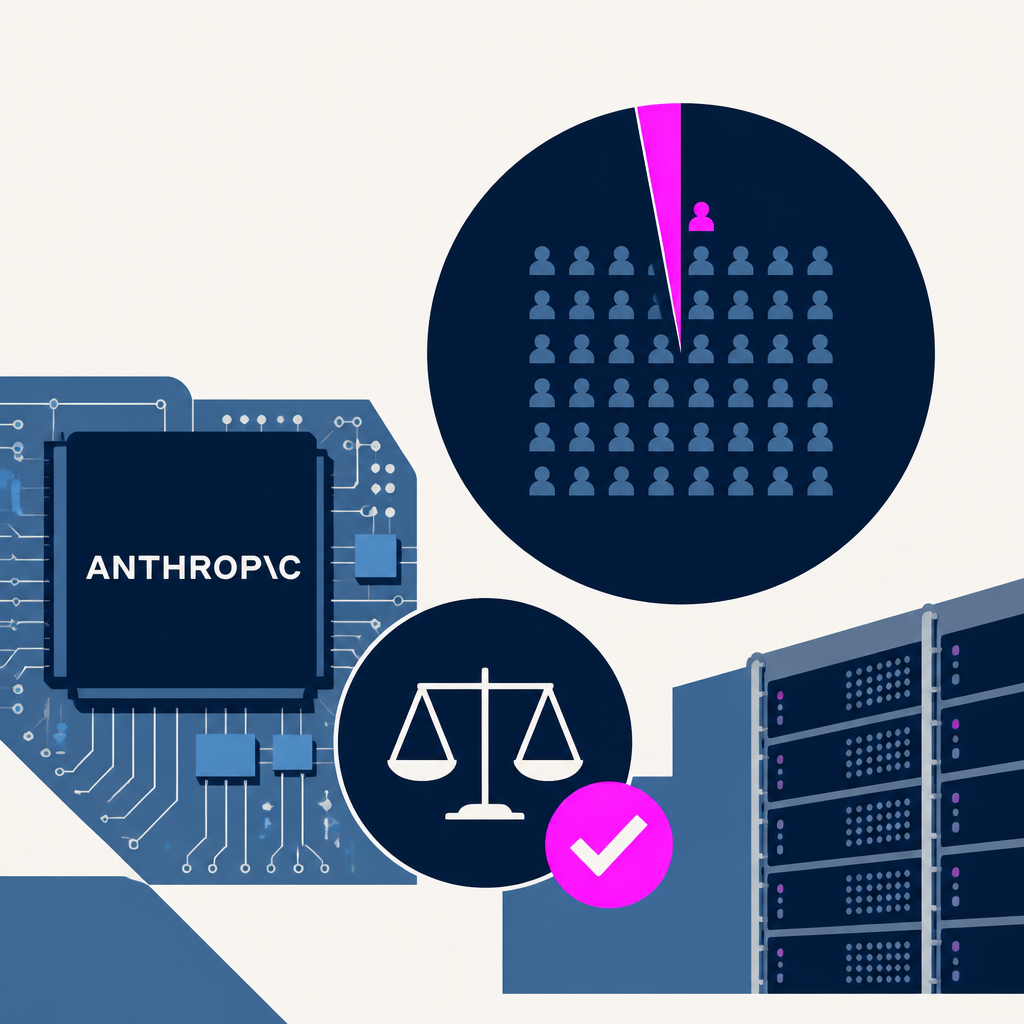
A judge approved a $1.5 billion copyright settlement between Anthropic and authors, resolving the largest certified copyright class-action suit. Only 350 authors opted out of the settlement, which offers an estimated $3,000 payout per work despite some authors arguing the amount was too low. The settlement ends litigation over Anthropic's use of copyrighted books in AI training, though the company had already won a fair use ruling on the practice itself.
Anthropic released Clipto MCP, a tool that enables AI agents to search and source video clips from large local video libraries. The system works with terabytes of stored video content. This allows developers to build applications that can autonomously find and extract specific video segments without manual searching.
A federal judge approved Anthropic's $1.5 billion settlement with authors who sued over copyrighted books used to train its AI models. The deal provides approximately $3,000 per book to affected authors and represents the largest known copyright recovery settlement in history. Authors can now receive compensation, and AI companies face clearer financial liability for using copyrighted training data without permission.
The Last Week in AI podcast episode 251 covers Anthropic's redeployment of Claude models after US government talks with new cybersecurity features, the launch of Claude Sonnet 5 with improved agentic capabilities, and updates from Etched, DeepSeek, and China's LongCat 2.0 open-source model. Etched is building specialized inference hardware with backing worth $1 billion in customer demand, while Agility Robotics plans a $2.5 billion SPAC merger. The episode also discusses new benchmarks for agent systems, Google's video generation tools, and policy developments including Taiwan's Nvidia smuggling investigation.
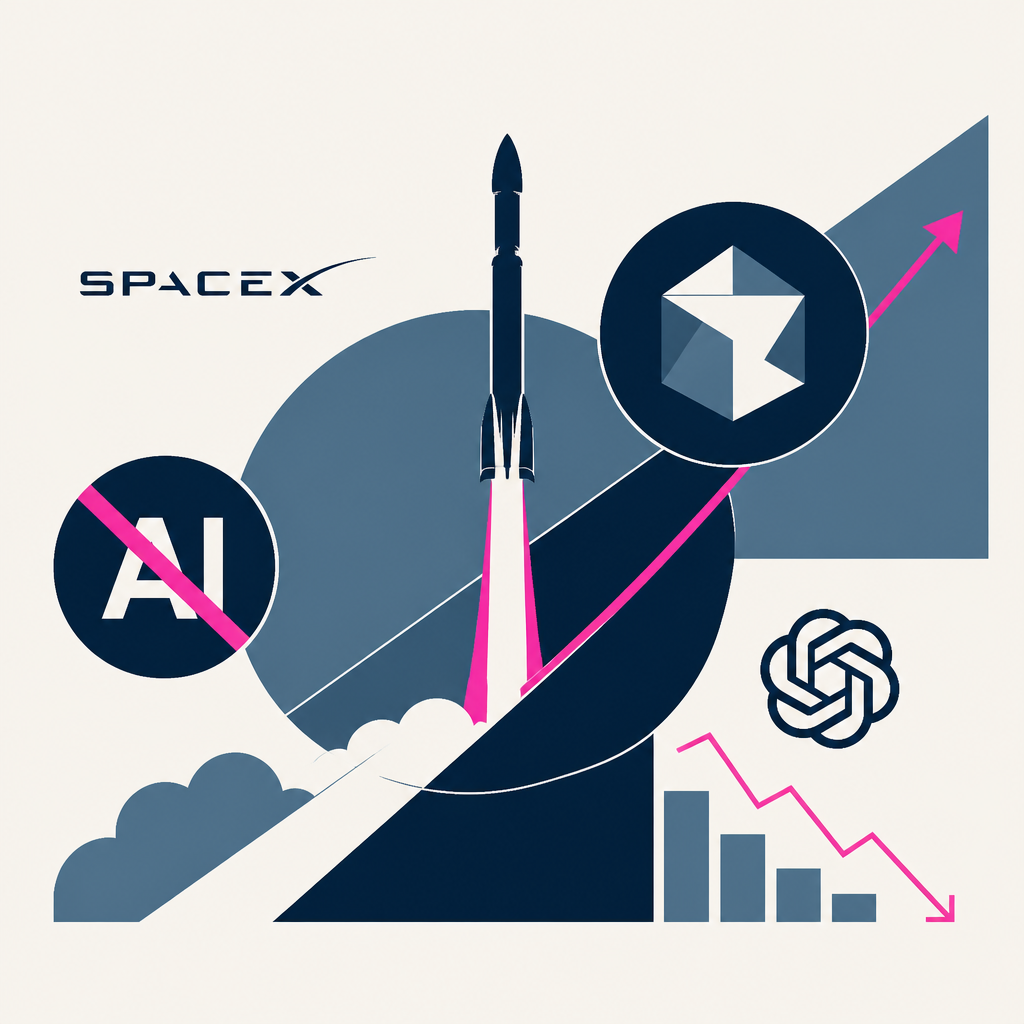
The 249th episode of Last Week in AI podcast covers major developments including Anthropic cutting off access to Fable 5 and Mythos 5 following a US government order, SpaceX's $1.75 trillion IPO and subsequent $60 billion acquisition of AI coding startup Cursor, and significant market shifts with ChatGPT's market share dropping below 50% as Gemini and Claude gain ground. Key details include Anthropic seeking Google-backed data center leases, OpenAI's leaked financials showing billions in annual losses, and a Munich court ruling Google liable for false AI Overview statements. These developments reshape competitive positioning in AI infrastructure, coding tools, and chatbot markets while raising questions about government policy consistency and corporate structure in the AI industry.
A podcast episode covering major AI developments including Anthropic's Claude Fable 5 release with significant benchmark improvements and new safety concerns, Apple's Siri AI announcement with Gemini integration, and OpenAI's confidential IPO filing amid a funding race. Google is paying SpaceX $920 million per month for GPU compute, while Bezos-backed Prometheus raised $12 billion for physical AI systems. The episode also discusses new open-source models like Gemma 4, policy calls for AI regulation with third-party testing, and disputes over music licensing settlements with generative audio companies.
The LWiAI podcast episode 247 covers major AI developments including Anthropic's Claude Opus 4.8 release with Dynamic Workflows, Microsoft's Scout assistant and new MAI models, and Anthropic filing for an IPO at a $965 billion valuation. Cognition raised $1 billion at $25 billion valuation, and MiniMax-M3 achieved benchmark performance matching GPT-5.5 and Gemini 3.1 Pro at 5-10% of the cost. Policy moves included Trump's voluntary AI testing framework, tighter US Nvidia export controls, China restricting AI expert travel, and expanded biodefense initiatives.
A federal judge approved Anthropic's $1.5 billion copyright settlement with authors and publishers who sued over illegal downloading of books for AI training. The settlement pays $3,000 per work across 500,000 works, though the judge ruled that using copyrighted text for training is fair use—only the piracy method was illegal. The case won't set binding precedent since Anthropic settled, leaving other AI companies like Google and OpenAI to face similar lawsuits with uncertain outcomes.
Every AI story that matters,
in your inbox by 8am.
TLDRocket reads all relevant sources, removes duplicate coverage, and summarises the
day in two minutes. Follow companies and topics for alerts, or get the
briefing in Slack. Free, no spam, unsubscribe anytime.
Reading TLDRocket needs no cookies, and the readership counts we rely on come from
our own cookieless analytics. Google Analytics is the exception: it sets cookies and
reports to Google, so it stays switched off until you allow it. You can change your
mind any time from “Cookie settings” in the footer.
Strictly necessary
Session security and form protection (tldrocket-session,
XSRF-TOKEN, 2 hours). The site cannot work without them,
so they need no consent.
Always on
Google Analytics 4 (_ga,
_ga_<id>, up to 2 years). Measures which
stories and sections readers use. Google acts as a third-party processor and may
store the data outside the EU. No advertising, no profiling, no data sold.