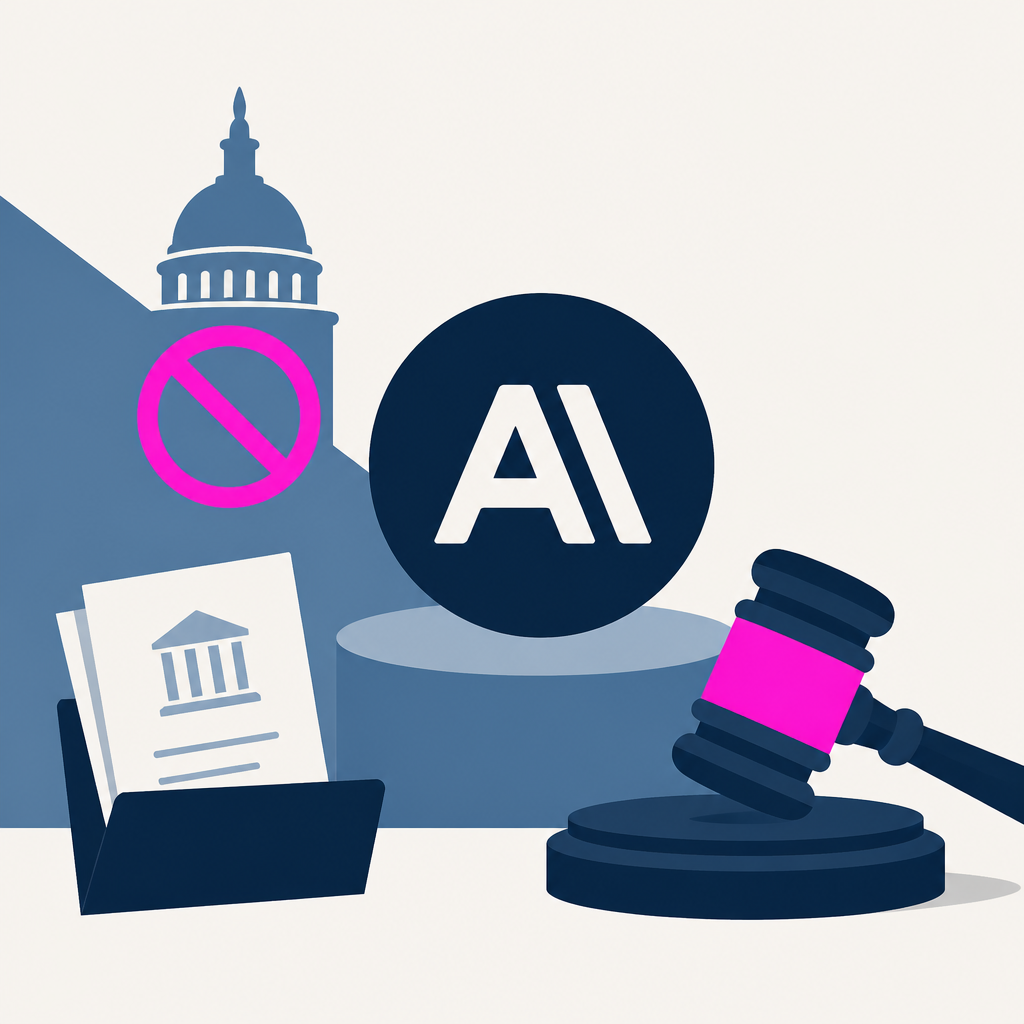
A federal court overturned the Defense Department’s ban on Anthropic’s Claude AI models. The ruling said Anthropic’s technology lacked any “backdoor access” that the Pentagon claimed. The Pentagon and defense contractors will be unable to enforce the ban and the court order reverses the restriction on Claude use.
Google is automatically expanding AI search summaries on some searches, pushing the normal results links farther down the page.
For affected searches, it shows a full AI Overview at the top plus an “Ask anything” box before the link list.
As a result, users may need more scrolling because the links appear lower than when they previously had a partial overview with a “Show more” button.
A federal judge ruled that the Trump administration’s blacklisting of Anthropic was illegal and vacated government directives barring use of the company’s AI technology. The order was issued by Judge Rita Lin on April 2025 (yesterday’s ruling referenced in the article). The government’s supply-chain risk designation and related directives were found unlawful retaliation for Anthropic refusing to lift restrictions, changing what agencies can do with Claude’s AI technology.
A federal judge ruled that the Pentagon acted illegally when it punished Anthropic for criticizing the DoD’s AI views after labeling the company a supply chain risk earlier this year. The decision was issued Thursday night by U.S. District Judge Rita Lin. The ruling blocks the government’s ability to impose penalties on that basis and is expected to be appealed, with the dispute further shaping how AI use in warfare and surveillance is debated.
Kevin Warsh used his July press conference/speech to emphasize that the Fed should avoid overcommitting to interest-rate paths and to stress price stability over employment in its mandate. He said inflation is running above target, citing the 12-month PCE measure at 3.7% (and 6-month at 4.1%). His remarks appear to have nudged markets slightly lower during the speech and framed AI as a new variable the Fed will analyze with a productivity-and-jobs task force, but the main policy takeaway is heightened focus on inflation data.
Gordon Saft returned from a China trip with media, tech, policy, and finance leaders and found the AI and robotics future there to feel familiar despite differing U.S.-China narratives. The trip was made to assess conditions 18 months after DeepSeek’s launch reshaped open-source AI. He came back saying China’s emphasis on deploying AI into the physical world and discussing AI safety in state security contexts looked more similar to U.S. debates about risks and strategy than expected, with optimism and dynamism standing out as the main change.
A federal judge ruled that the Trump administration’s supply chain risk designation of Anthropic was illegal retaliation against the company.
The ruling came from U.S. District Judge Rita Lin in California on Thursday evening.
The government designation and related restrictions lose legal force, while Anthropic’s ongoing disputes with the Pentagon continue.
South Korea’s Ministry of Science and ICT selected three consortia led by SK Telecom, KT, and Kakao to deliver free “AI for All” services to the entire population. The state will supply 512 Nvidia B200 GPUs in total for the three operators, with contracts to be signed next month and a full launch planned for later this year. The services are designed to be preinstalled across phones, messaging, and public-administration workflows with no token limits, and at least half of each system must run on domestic models while operators can monetize beyond the permanently free essential functions.
Chinese and U.S. military accounts are blending memes and slick, AI-assisted video edits into propaganda that makes warfare feel playful or game-like rather than solemn. The article cites that China’s WeChat has about 1.38 billion monthly active users and notes PLA and U.S. government teams distribute content across social platforms to amplify these remixes. As a result, military messaging increasingly uses animal/animation filters, viral soundtracks, and gamified montages—potentially accelerating the normalization and manipulation of how war is perceived online.
Matt Lucas, Hugh Bonneville, Nicola Coughlan and other performers wrote to the UK government asking for legislation to protect people’s voices from AI voice cloning. The letter asks Prime Minister Andy Burnham to introduce a legal right for every person in the UK to own their voice. The government said it will launch a consultation on addressing harms from digital replicas while protecting legitimate innovation.
Every AI story that matters,
in your inbox by 8am.
TLDRocket reads all relevant sources, removes duplicate coverage, and summarises the
day in two minutes. Follow companies and topics for alerts, or get the
briefing in Slack. Free, no spam, unsubscribe anytime.
Reading TLDRocket needs no cookies, and the readership counts we rely on come from
our own cookieless analytics. Google Analytics is the exception: it sets cookies and
reports to Google, so it stays switched off until you allow it. You can change your
mind any time from “Cookie settings” in the footer.
Strictly necessary
Session security and form protection (tldrocket-session,
XSRF-TOKEN, 2 hours). The site cannot work without them,
so they need no consent.
Always on
Google Analytics 4 (_ga,
_ga_<id>, up to 2 years). Measures which
stories and sections readers use. Google acts as a third-party processor and may
store the data outside the EU. No advertising, no profiling, no data sold.