Regard cofounders Nate Wilson and Eli Ben-Joseph traveled together for months before launching their $350 million business, after generating $150 million in revenue from the company. Their 10-month-long trip took them through China, the Philippines, and Colombia, including periods of being stranded and dealing with outages. The story frames that experience as a “boot camp” that helped validate their partnership and later supported Regard’s AI healthcare work analyzing medical records across hundreds of hospitals.
Healthleap raised $38 million to develop an AI platform that screens hospital inpatients’ records to flag potential undiagnosed conditions for further clinician review. The funding includes an $8 million seed round co-led by Sequoia Capital and First Round Capital and a $30 million Series A led by Hummingbird Ventures. The company will use the new cash to expand engineering, product, sales, and customer success as it broadens coverage beyond its initial malnutrition and delirium programs.
Rivercell, a Paris-based biotech, raised a $25m seed round to build an AI model aimed at understanding and predicting human cell behavior for drug discovery. The funding amount is $25m. The company will use the money to develop and refine its human-cell “world model” to support faster drug discovery.
Biohub, founded by Mark Zuckerberg and Priscilla Chan, received joint investment from Google DeepMind, Meta, and Isomorphic Labs. The partners put $300 million into the effort within a broader $1.8 billion initiative. The funding is meant to accelerate AI dataset creation for simulations and digital biological question-answering, supporting Biohub’s “virtual cell” research.
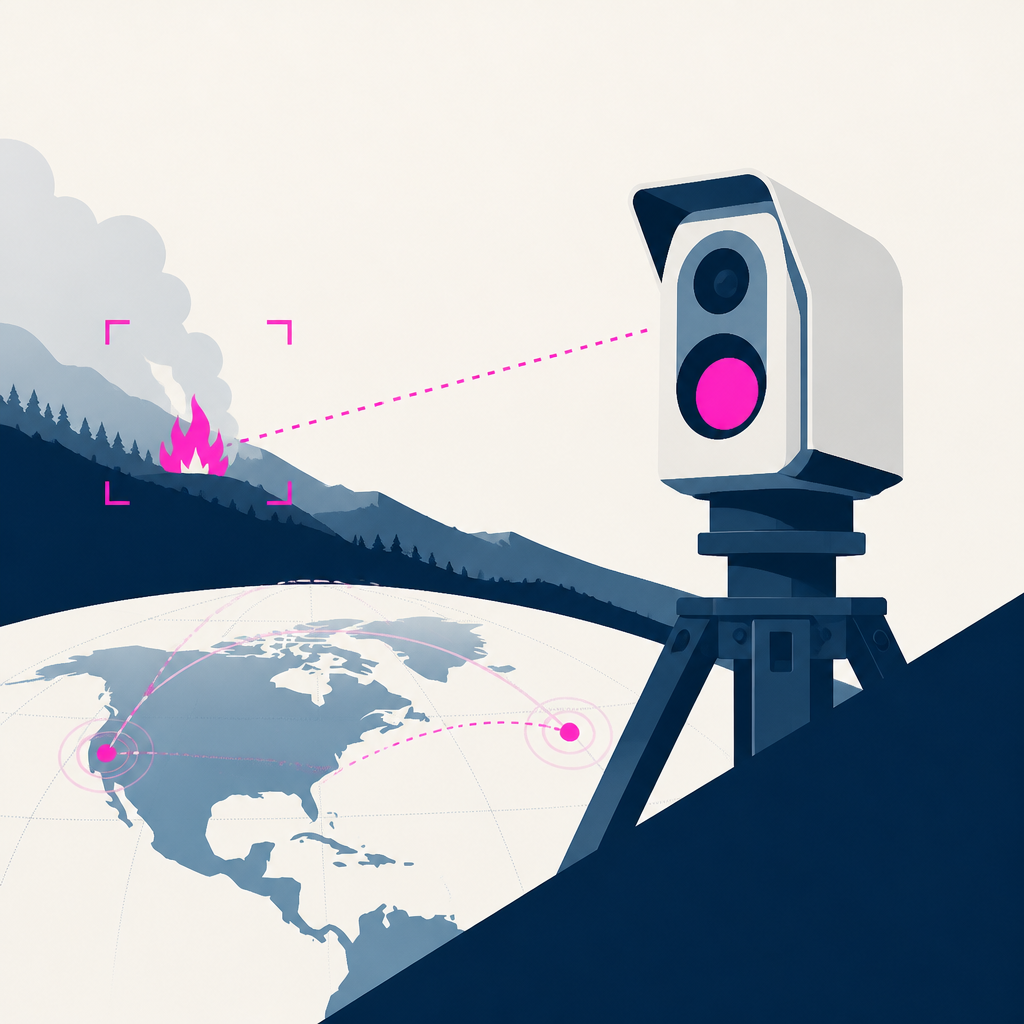
EmberEye, a Cambridge wildfire detection startup, secured £1.5 million to expand deployment of its ground-level infrared sensors and AI risk platform across the UK and US. In a California field trial with the Marin County Fire Department, its system detected a fire in under 60 seconds from more than 100 metres away. EmberEye will use the funding to scale deployments and pursue additional public-sector, conservation, and infrastructure trials ahead of the next wildfire season.
Cori Clinical raised $4 million in a seed round for its AI platform that consolidates prior trial knowledge with external regulatory and registry information to produce trial protocols and plans. The company estimates its approach can cut average clinical trial set-up costs by at least 33% and says an internal AI review identified 82% of protocol errors as avoidable. Cori will use the funding to expand delivery capacity, grow its team, and deepen its regulatory and clinical intelligence while building more CRO and pharmaceutical relationships.
Every AI story that matters,
in your inbox by 8am.
TLDRocket reads all relevant sources, removes duplicate coverage, and summarises the
day in two minutes. Follow companies and topics for alerts, or get the
briefing in Slack. Free, no spam, unsubscribe anytime.
Reading TLDRocket needs no cookies, and the readership counts we rely on come from
our own cookieless analytics. Google Analytics is the exception: it sets cookies and
reports to Google, so it stays switched off until you allow it. You can change your
mind any time from “Cookie settings” in the footer.
Strictly necessary
Session security and form protection (tldrocket-session,
XSRF-TOKEN, 2 hours). The site cannot work without them,
so they need no consent.
Always on
Google Analytics 4 (_ga,
_ga_<id>, up to 2 years). Measures which
stories and sections readers use. Google acts as a third-party processor and may
store the data outside the EU. No advertising, no profiling, no data sold.