The FAA is set to launch SMART, an AI software program intended to help manage air traffic controller workflows and reduce route conflicts. SMART will cost $875 million over a 12-year period and will first roll out in the Washington, D.C., metropolitan area. Controllers’ planning should shift toward predictions of traffic flows using inputs like airline schedules and weather, as the FAA expands the system to other regions.
Christie Kozlik, chief accounting officer at Accel Entertainment, said AI adoption in corporate finance depends on governance and trust rather than budget because AI outputs must be checked before they feed audited reporting. She cited a target of cutting the financial close from seven days to five. As a result, teams must define inputs and expected outputs, document review steps, and involve internal and external auditors early to ensure AI-produced numbers are filing-ready.
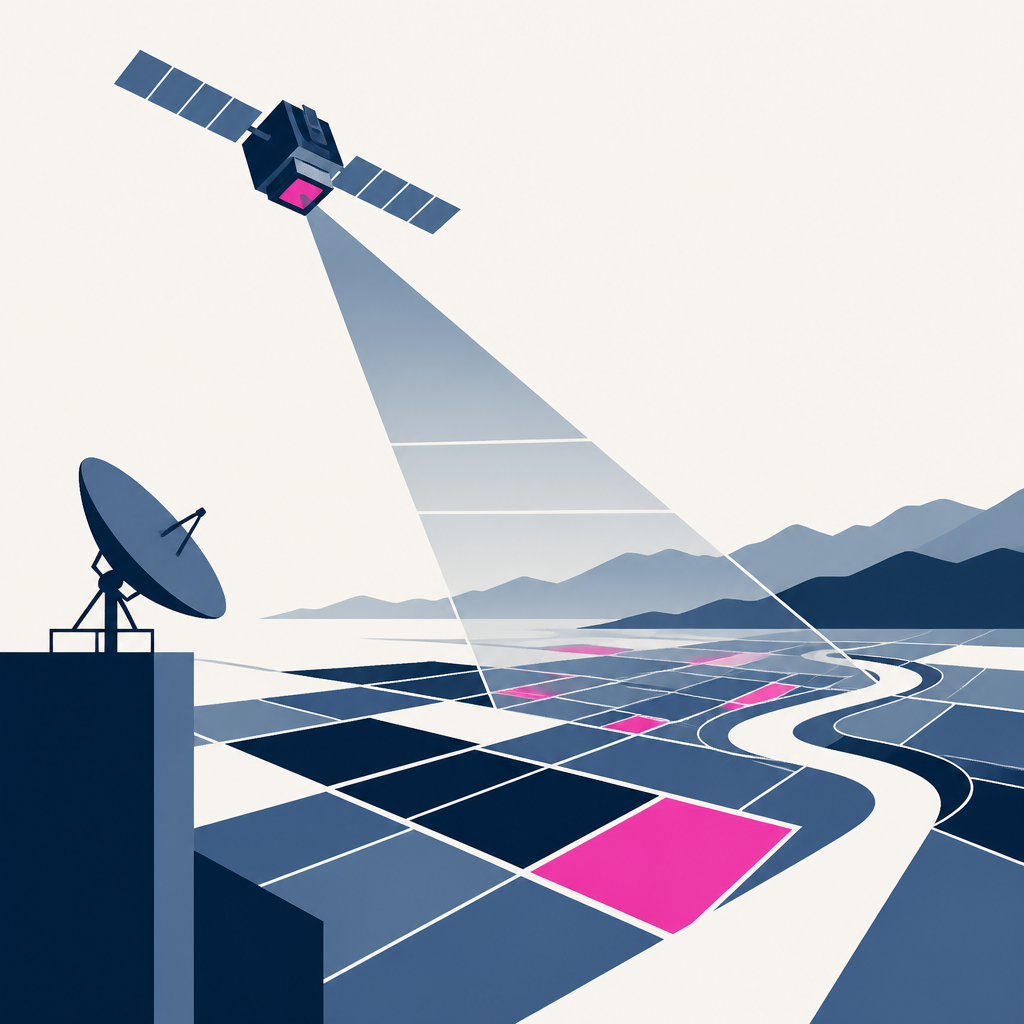
Kuva Space completed a pilot showing that combining its Hyperfield-1 hyperspectral satellite imagery with Sentinel-2 and AI can improve large-area monitoring of illicit opium poppy cultivation in Afghanistan. It flagged 8,835 of 248,889 agricultural fields in Helmand Province as likely poppy fields. The approach reduced false positives versus using Sentinel-2 alone and the company plans to raise accuracy toward at least 90% while moving from first-generation classification to field-by-field verification using more ground truth and future Hyperfield-2 data.
FaceHeart introduced the CardioMirror smart mirror at the Taiwan Innotech Expo to compute vital signs from a ~40-second camera scan of a person’s face. It says heart-failure screening using that scan reached an AUC of 0.90 (accuracy 89.71%) in a study of 68 participants. The product expands FaceHeart’s rPPG offering (including an SDK and smartphone app) while its FDA clearances currently cover only pulse rate and respiratory rate, leaving heart-failure and NT-proBNP estimates awaiting regulatory approval.
Apple Watch Series 12 adds truly continuous heart-rate monitoring while keeping the same overall look and hardware approach as prior models. The update specifically makes heart-rate tracking continuous. As a result, Apple positions the watch for future AI-focused health features that use more of a full day’s data.
Every AI story that matters,
in your inbox by 8am.
TLDRocket reads all relevant sources, removes duplicate coverage, and summarises the
day in two minutes. Follow companies and topics for alerts, or get the
briefing in Slack. Free, no spam, unsubscribe anytime.
Reading TLDRocket needs no cookies, and the readership counts we rely on come from
our own cookieless analytics. Google Analytics is the exception: it sets cookies and
reports to Google, so it stays switched off until you allow it. You can change your
mind any time from “Cookie settings” in the footer.
Strictly necessary
Session security and form protection (tldrocket-session,
XSRF-TOKEN, 2 hours). The site cannot work without them,
so they need no consent.
Always on
Google Analytics 4 (_ga,
_ga_<id>, up to 2 years). Measures which
stories and sections readers use. Google acts as a third-party processor and may
store the data outside the EU. No advertising, no profiling, no data sold.