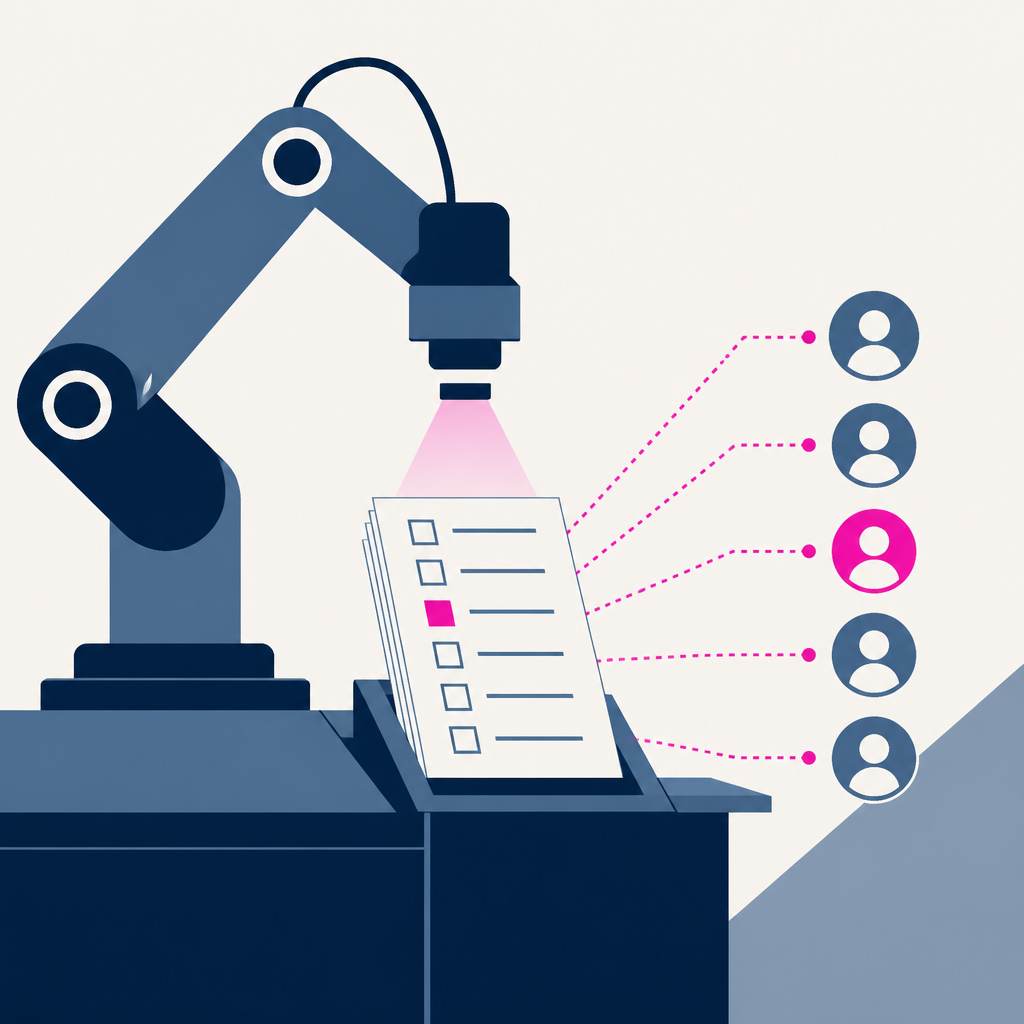
Security researchers warned that a Georgia voting-equipment flaw could let ballots be matched to voters after votes are cast without changing vote totals. The issue was discovered in 2022 and, they said, AI tools can make it easier to carry out the exploit by automating technical steps. Georgia election officials moved to limit public records and to scramble ballot-image/cast-vote order before release, while advocates pushed for applying software fixes or changing practices so ballots can’t be traced.
AI researchers and executives sparked a debate about whether advanced AI systems pose an existential threat after Anthropic’s alignment lead and former Anthropic researcher Jacob Coxon raised concerns and discussed odds of human extinction. The discussion centered on Coxon’s resignation and a stated chance of more than 10% within the next decade. The conversation shifts from doom narratives and their credibility to how such statements may be handled in Anthropic’s IPO filing and whether AI safety efforts can control near-term risks rather than focusing on hypothetical timelines.
AI leaders and researchers are pushing for a slowdown in AI development, with some staff describing fear about future risks and rival CEOs reportedly agreeing. A key concrete proposal is a three-point plan from Anthropic’s Dario Amodei that includes independent monitoring of models as they’re developed, plus industry-wide and global regulation. The debate shifts from whether to build faster to how (or whether) “slowdown” can be enforced, amid concerns it could benefit competitors and disrupt broader AI expansion plans.
AI 2040 Plan A describes a path where humanity avoids an early superintelligence outcome by delaying advanced AI development and changing how AI research and compute are governed. The plan aims to delay superintelligence until 2040. As a result, AI research becomes publicly available, multiple global companies are allowed to catch up to frontier systems, and the strategy moves toward mutually assured compute destruction to discourage escalation.
The AI doomer debate outlined a detailed “AI 2040” slowdown plan that aims to curb frontier AI development via compute limits, auditability, and restricted transfers of training systems and model weights. The proposal specifies that datacenters with more than 10k H100 equivalents (about $100m of hardware) would be limited to inference-only workloads verified by independent auditors. As a result, training and large R&D experiments would be paused or slowed toward an aimed capability timeline (including a roughly 5-year pause around 2035) while alignment and control work continues.
OpenAI asked US lawmakers for guidance on whether coordinating an industry-wide slowdown in frontier AI development would be legal under antitrust rules. The company’s chief scientist Jakub Pachocki argued for “coordinating to slow down future development” and expects voluntary slowdowns to become “commonplace,” while antitrust analysis depends on the precise agreement under the Sherman Act. As a result, lawmakers have introduced a bill that would explicitly allow AI labs to coordinate on security and safety work without antitrust risk, but it has not yet advanced from the Judiciary Committee.
Barack Obama urged Democrats to make artificial intelligence a central agenda and to develop a clear plan for safeguards in response to concerns about AI safety and economic effects. He said Democrats should put together the framework “once” they regain the House majority. The push is likely to shift Congress toward a more public, structured AI-safety conversation and cooperation with industry leaders, rather than letting AI developments proceed mainly in private hands.
Donald Trump downplayed artificial intelligence risk warnings after multiple experts urged slowing AI development, including concerns about catastrophic outcomes. The article cites Anthropic’s former researcher warning of a “strong chance” of dying in the “immediate future” if development continues at the current pace. The debate shifts to Trump’s emphasis on staying ahead of China while industry leaders and some researchers call for a coordinated slowdown.
Trump and House Speaker Mike Johnson said AI executives are overreacting about calls to slow AI development. Trump warned that a pause could let China outpace the US, adding that whoever wins AI wins, and he said the US is currently leading China in AI. As a result, they oppose a frontier slowdown while emphasizing maintaining US leadership against China.
The adoption of AI in workplaces is producing employees’ “grief” about lost professional identity, trust, and job prospects, which leaders are sometimes dismissing rather than addressing. A Gallup study in August 2026 found employees in organizations deploying AI extensively were significantly more likely to report a worsening workplace culture. Companies responding by listening to employees’ fears are shifting toward mentorship, clearer authorship and transparency norms, and transition support instead of forcing optimism.
Dario Amodei urged slowing the pace of increasingly capable AI systems, and Sam Altman, Elon Musk, and OpenAI agreed to more independent oversight after cyberattack concerns.
Altman said OpenAI would grant independent auditors access comparable to employees.
The proposal shifts toward tighter auditing, shared safety standards, and potential international agreements rather than an immediate blanket halt to training, with Anthropic committing to a permanently embedded external auditing team.
Every AI story that matters,
in your inbox by 8am.
TLDRocket reads all relevant sources, removes duplicate coverage, and summarises the
day in two minutes. Follow companies and topics for alerts, or get the
briefing in Slack. Free, no spam, unsubscribe anytime.
Reading TLDRocket needs no cookies, and the readership counts we rely on come from
our own cookieless analytics. Google Analytics is the exception: it sets cookies and
reports to Google, so it stays switched off until you allow it. You can change your
mind any time from “Cookie settings” in the footer.
Strictly necessary
Session security and form protection (tldrocket-session,
XSRF-TOKEN, 2 hours). The site cannot work without them,
so they need no consent.
Always on
Google Analytics 4 (_ga,
_ga_<id>, up to 2 years). Measures which
stories and sections readers use. Google acts as a third-party processor and may
store the data outside the EU. No advertising, no profiling, no data sold.