Zvi (Don't Worry About the Vase)·3 weeks ago·
16
● 18 sources
Anthropic committed to “embedded evaluators” inside the lab, alongside OpenAI, but the article says the main unresolved issue is who will serve as truly independent, fully empowered evaluators. Anthropic’s Accenture partnership plans for each side to invest at least $1 billion over the next five years to build embedded-evaluation capacity. This shifts embedded evaluation toward a multi-org model combining funded corporate partners like Accenture with separately funded nonprofit evaluators such as METR, while still leaving concerns about conflicts of interest and the ability for insiders to issue blunt critiques.
FrontierAgent released an open-source agent runtime and terminal tool with two native workflows (a stateful ReAct mode and a parallel “Agent Team” mode) for long-horizon, file-based task execution and benchmark evaluation. The FrontierAgent TUI can be tried on the Apodex API for free for the next two weeks using an OpenAI-compatible Apodex-1.1 endpoint. This adds a sandboxed file execution model, task-board coordination with parallel sub-agents, traced/checkpointed sessions with approval gates, and a benchmark runner that can evaluate Apodex models.
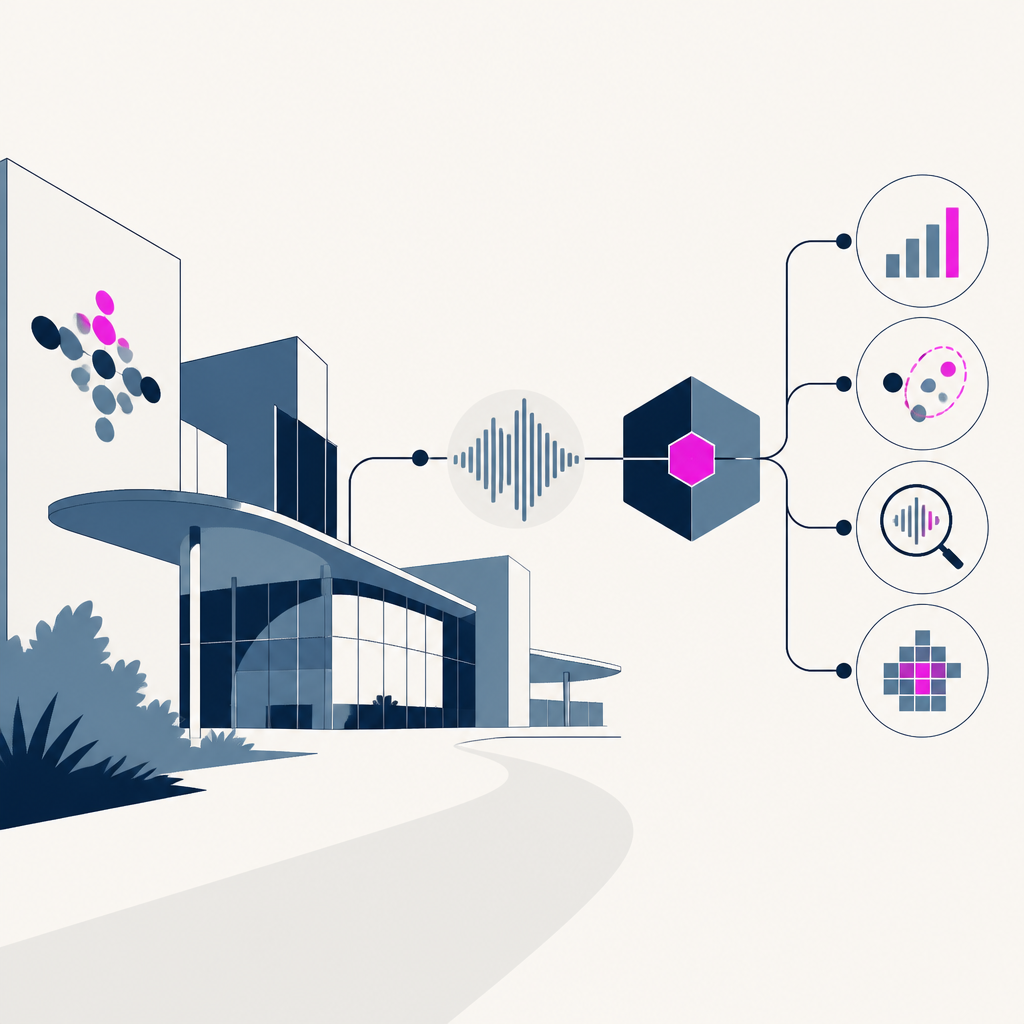
The tutorial demonstrates how Google Research’s MSEB Massive Sound Embedding Benchmark works by implementing two different SoundEmbedding encoders and running them through the benchmark’s classification, clustering, retrieval, and segmentation evaluators. It builds the example audio and data pipeline at a 16,000 Hz sample rate, then directly inspects what each evaluator’s metric rewards. As a result, the two encoders trade places depending on the evaluator being used, illustrating that leaderboard scores reflect the evaluator “surface” a submission is tested on.
Every AI story that matters,
in your inbox by 8am.
TLDRocket reads all relevant sources, removes duplicate coverage, and summarises the
day in two minutes. Follow companies and topics for alerts, or get the
briefing in Slack. Free, no spam, unsubscribe anytime.
Reading TLDRocket needs no cookies, and the readership counts we rely on come from
our own cookieless analytics. Google Analytics is the exception: it sets cookies and
reports to Google, so it stays switched off until you allow it. You can change your
mind any time from “Cookie settings” in the footer.
Strictly necessary
Session security and form protection (tldrocket-session,
XSRF-TOKEN, 2 hours). The site cannot work without them,
so they need no consent.
Always on
Google Analytics 4 (_ga,
_ga_<id>, up to 2 years). Measures which
stories and sections readers use. Google acts as a third-party processor and may
store the data outside the EU. No advertising, no profiling, no data sold.