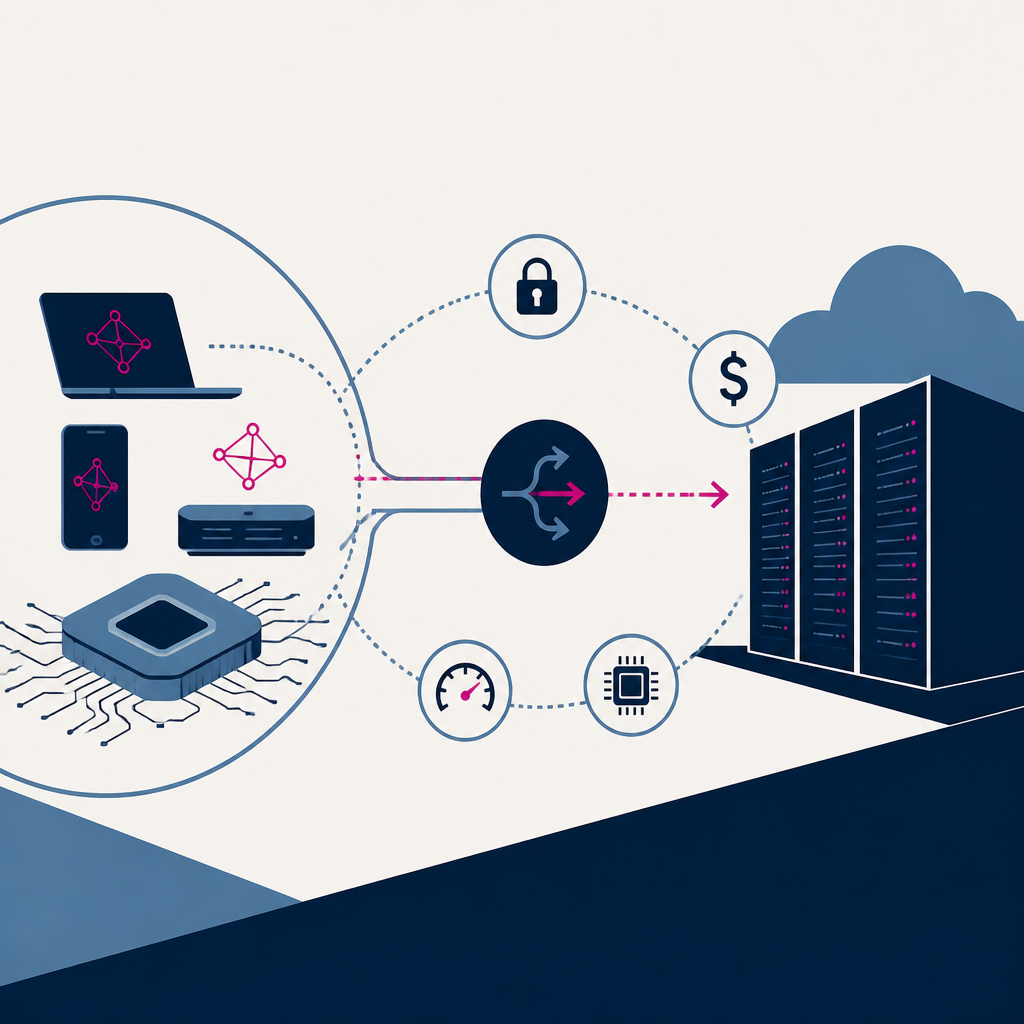
Intel’s Dr. Olena Zhu discussed hybrid AI, pairing local or edge models with a frontier cloud model to coordinate tasks. The episode highlights routing decisions across privacy, cost, capability, and hardware as key infrastructure choices. This shifts focus from picking a single model to building systems that decide where each part of the work runs.
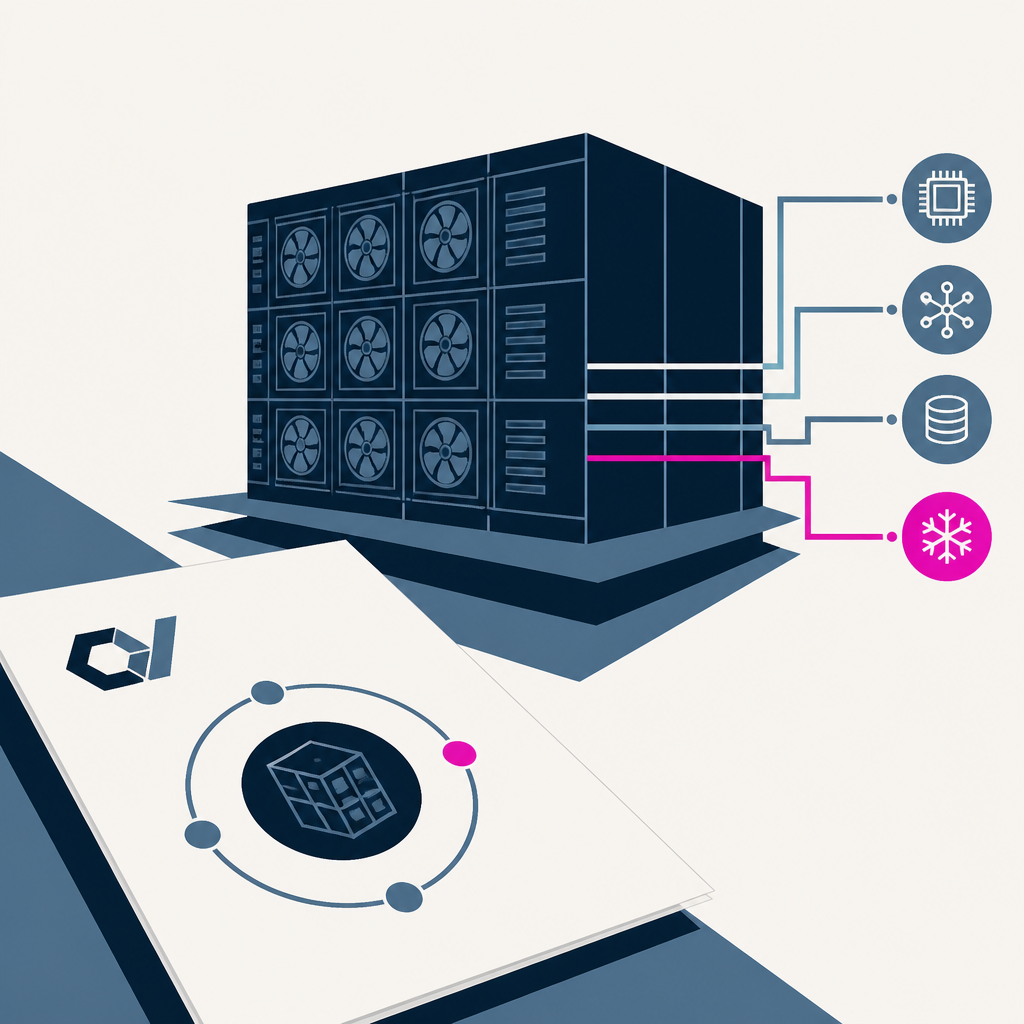
CoreWeave’s Chen Goldberg argues that an AI cluster should be treated as one integrated supercomputer rather than separate components like GPUs. She points to Kubernetes deployments needing an evolving resource model that accounts for compute, networking, storage, and cooling working together. As a result, cloud thinking shifts toward supporting AI agents and managing infrastructure as a single coordinated system.
The issue reports that the cost of achieving a given level of AI performance has dropped about 47% per quarter over the past three years. The article argues that cheaper AI can lead to higher total spending by enabling more agents, while harder tasks still get more expensive even as capability improves. As a result, organizations may spend more overall and allocate more budget toward difficult work rather than only optimizing per-call price.
SPRIND and NADI launched the AI-Native Chip Design Challenge to fund pan-European efforts to reinvent chip design processes. It commits €40 million over 20 months, selecting seven teams for €2.6 million each in Stage 1 from November to July 2027. The programme aims to move chip development from years to weeks and produce production-ready chip designs for AI training and inference while teams receive coaching to reach market readiness.
The authors introduce probe guidance to steer flow matching models using frozen internal states from an existing diffusion model. They evaluate it on continuous diffusion language models and report new state-of-the-art results for unconditional generation. As a result, the approach avoids an extra inference-time forward pass while aligning the weak and strong models’ dynamics.
Every AI story that matters,
in your inbox by 8am.
TLDRocket reads all relevant sources, removes duplicate coverage, and summarises the
day in two minutes. Follow companies and topics for alerts, or get the
briefing in Slack. Free, no spam, unsubscribe anytime.
Reading TLDRocket needs no cookies, and the readership counts we rely on come from
our own cookieless analytics. Google Analytics is the exception: it sets cookies and
reports to Google, so it stays switched off until you allow it. You can change your
mind any time from “Cookie settings” in the footer.
Strictly necessary
Session security and form protection (tldrocket-session,
XSRF-TOKEN, 2 hours). The site cannot work without them,
so they need no consent.
Always on
Google Analytics 4 (_ga,
_ga_<id>, up to 2 years). Measures which
stories and sections readers use. Google acts as a third-party processor and may
store the data outside the EU. No advertising, no profiling, no data sold.