Pocket FM doubled its annualized revenue run rate to $500 million while increasing its reliance on AI to produce audio storytelling at scale. AI now powers 93% of its overall catalog and is used to produce 99% of its new content. The company reports higher output (2.5 million hours a year) and improved 12-month revenue retention (76% vs 44% two years ago), and it is extending the AI-driven model into its microdrama app Pocket Saga and planned new formats.
Grimo AI launched today as an iOS app that converts one spoken or typed sentence into tasks, calendar events, and notes. It is free to start and is iOS-only. Users can add items hands-free and keep everything in one chat thread without switching between multiple apps.
Daniel Dines, CEO of UiPath, described using Claude and ChatGPT to co-author his 168-page book The Work That Remains over three years. He said the book at one point grew to almost 100,000 words before he cut it down. The approach shifted his and UiPath’s strategy as he refined the human-AI workflow model of AI proposing, humans deciding, and automation executing through iterative prompts and feedback.
The article argues that today’s debate over AI-assisted writing mirrors ancient Greek arguments about writing as both memory aid and forgetfulness. It points out that Associated Press automation in 2014 grew formulaic corporate earnings coverage from about 300 companies per quarter to 4,400. The change it describes is that newsrooms and other institutions now need to decide what they will give up—human judgment and disclosure—when they adopt generative AI tools.
ABrush launched as team collaboration software focused on generative media and AI characters to help artists apply advanced AI workflows in their existing production environment. It launched today. The product claims it reduces repetitive production work and costs by speeding iteration, aiming to keep artists in control of the final results.
Universal Music Group is launching an AI-powered platform that lets users create remixes, mashups, and new takes using music from its licensed catalog. The rollout is being developed under a multiyear licensing agreement with ElevenLabs. Artists will be able to opt in or not, and UMG’s existing AI platform work with other partners will add another AI music pipeline.
Apple introduced Apple Reference Image to help verify that iPhone photos reflect what the camera sensor captured rather than later edits or AI manipulation. The feature requires an iPhone 18 Pro or iPhone 18 Pro Max in Reference mode and signed sensor data is developed in Private Cloud Compute, with SynthID software support arriving later this year. It changes verification by adding an unalterable “digital negative” reference image in Photos (and via APIs) while limiting availability at launch in China and not providing capture in the EU for iPhone 18 Pro models.
ChatHop lets users move an AI conversation to another assistant mid-thought with context included. It offers 20 free uses every month. The listing also promotes a Free option for copying the chat as plain text or Markdown.
Clay raised a $115M Series D to push its go-to-market platform toward AI agents for sales execution. The round values Clay at $7.1B, after a $3.1B Series C closed just over a year ago. It also launched a $1M fund to train “GTM engineers,” expanding its focus from GTM data and campaigns to agents that decide and run next-step sales actions.
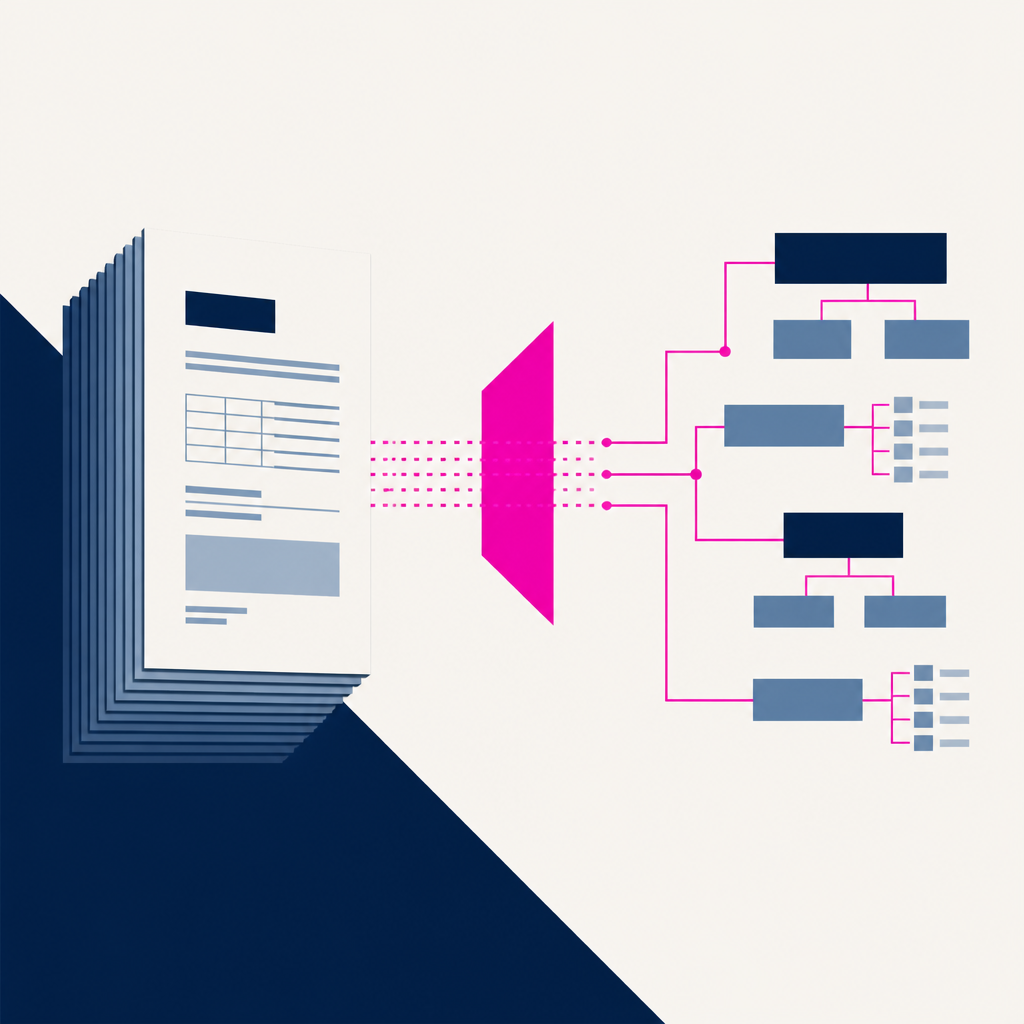
LandingAI released Agentic Document Extraction (ADE) Gen2, rebuilding its document intelligence stack around the DPT-3 model family and Gen2’s tree-based document output.
Listen Labs failed to close a planned $125 million Series C after walking away from a signed $1.5 billion-valuation term sheet amid acquisition talks with Salesforce. Salesforce discussions were reported to be for around $2 billion. Without the deal, the startup is expected to return to market with a target valuation of $2 billion or higher.
Workflow1111 rebuilds most of AUTOMATIC1111’s stable-diffusion-webui features as a single Gradio workflow canvas with 11 media pipelines. It contains 73 nodes across those pipelines and includes an example where a ViT classifier reports labels such as “restaurant 51.9%”. The result is a web canvas that can run multiple diffusion, LLM/VLM, detector, inpainting, and video steps under per-user Hugging Face quota, while exposing each output as REST endpoints and MCP tools that can be called from other apps.
Every AI story that matters,
in your inbox by 8am.
TLDRocket reads all relevant sources, removes duplicate coverage, and summarises the
day in two minutes. Follow companies and topics for alerts, or get the
briefing in Slack. Free, no spam, unsubscribe anytime.
Reading TLDRocket needs no cookies, and the readership counts we rely on come from
our own cookieless analytics. Google Analytics is the exception: it sets cookies and
reports to Google, so it stays switched off until you allow it. You can change your
mind any time from “Cookie settings” in the footer.
Strictly necessary
Session security and form protection (tldrocket-session,
XSRF-TOKEN, 2 hours). The site cannot work without them,
so they need no consent.
Always on
Google Analytics 4 (_ga,
_ga_<id>, up to 2 years). Measures which
stories and sections readers use. Google acts as a third-party processor and may
store the data outside the EU. No advertising, no profiling, no data sold.