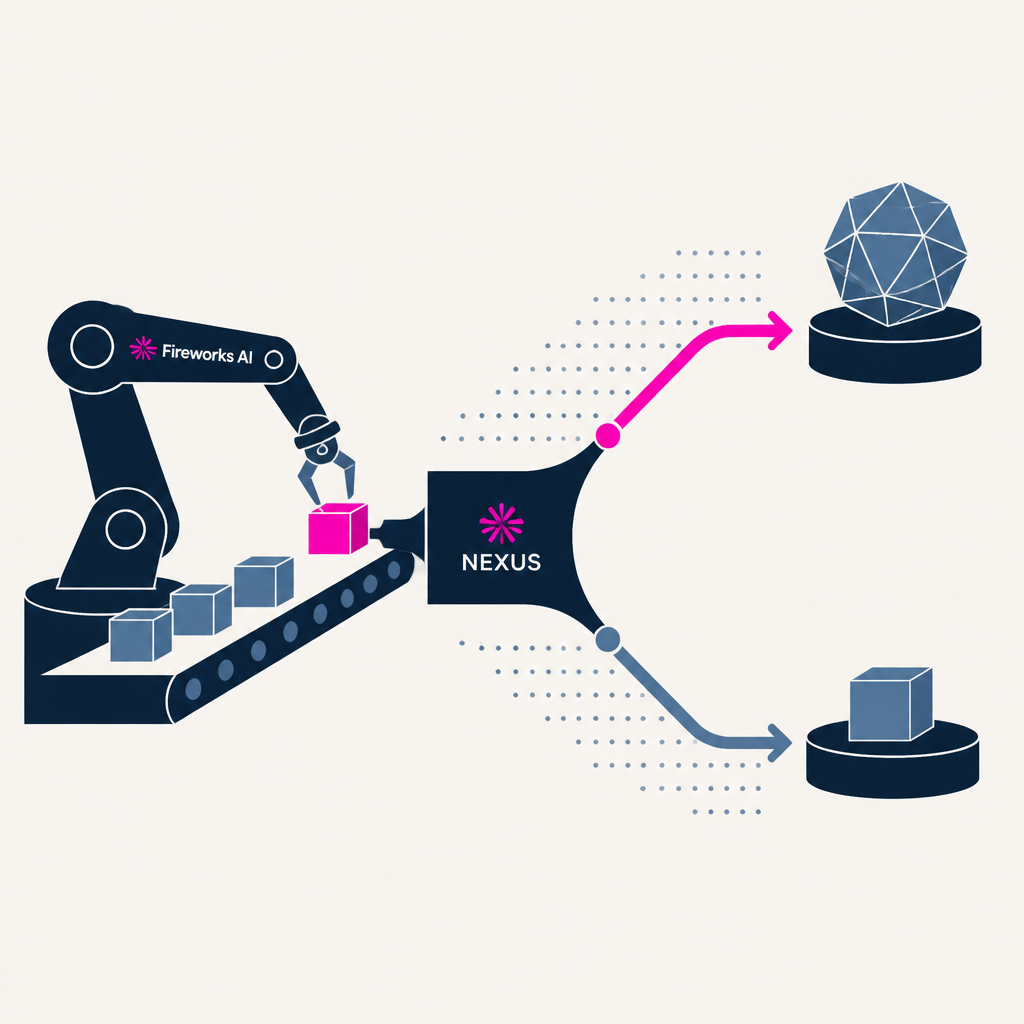
Fireworks AI released Nexus, a routing platform that directs routine coding tasks to cheaper open-weight models while escalating difficult requests to frontier models like Claude Opus. Independent evaluations from Faros AI and Arize showed routing strategies achieved similar quality outcomes at 50–75% of the cost of using frontier models exclusively. Organizations can now reduce AI coding costs while maintaining developer workflow continuity through a one-line plugin install.
A field report examines how scientists are adopting AI coding agents to modernize scientific computing workflows. The report covers applications across genomics and other scientific domains where AI agents accelerate software development and discovery. Scientists can now deploy AI agents to handle routine coding tasks, freeing them to focus on research strategy and interpretation.
Lovable, a web development AI assistant, released a desktop application for macOS that runs locally on users' computers. The application is available for free download and operates independently without requiring a web browser. This enables faster access to Lovable's AI coding features directly from the Mac desktop.
Cursor, an AI coding startup set to be acquired by SpaceX, launched Cursor Start, a localized subscription priced at ₹649 per month (about $7) specifically for India, significantly below its standard $20 monthly Pro plan. India is already Cursor's third-largest market globally with user base tripling over the past year, and the startup plans to hire additional staff across multiple Indian cities while expanding into enterprise sectors. The move allows Cursor to reach price-sensitive developers in one of the world's largest developer markets while using its own AI models to maintain profitability.
Every AI story that matters,
in your inbox by 8am.
TLDRocket reads all relevant sources, removes duplicate coverage, and summarises the
day in two minutes. Follow companies and topics for alerts, or get the
briefing in Slack. Free, no spam, unsubscribe anytime.
Reading TLDRocket needs no cookies, and the readership counts we rely on come from
our own cookieless analytics. Google Analytics is the exception: it sets cookies and
reports to Google, so it stays switched off until you allow it. You can change your
mind any time from “Cookie settings” in the footer.
Strictly necessary
Session security and form protection (tldrocket-session,
XSRF-TOKEN, 2 hours). The site cannot work without them,
so they need no consent.
Always on
Google Analytics 4 (_ga,
_ga_<id>, up to 2 years). Measures which
stories and sections readers use. Google acts as a third-party processor and may
store the data outside the EU. No advertising, no profiling, no data sold.