Google launched Gemini 3.8 Live and Gemini 3.8 Live Extended Thinking to cut latency in voice AI by enabling near-real-time reasoning and simultaneous speech-and-thought processing while running background tool calls. Gemini 3.8 Live Extended Thinking scored 82.6 on the Artificial Analysis Speech to Speech Quality Index. Developers and enterprises can now use the models via the Gemini API, Google AI Studio, and Gemini Enterprise private preview, with Gemini 3.8 Live priced at $0.005 per minute for audio inputs and $0.018 per minute for outputs, and the Extended Thinking variant adding separate charges for reasoning tokens and extra inputs like video and documents.
Good Start Labs trained an AI model inside a game set in 1830 and then tested it on finance-research tasks to see whether game-learned skills transfer. The company found that only a multi-turn terminal-agent setup improved performance on the Finance-Agent benchmark, while single-turn question answering did not. The results pushed the company to focus on training design—especially tool-using, goal-directed environments with verifiable rewards—because that’s what makes the skills carry into downstream work.
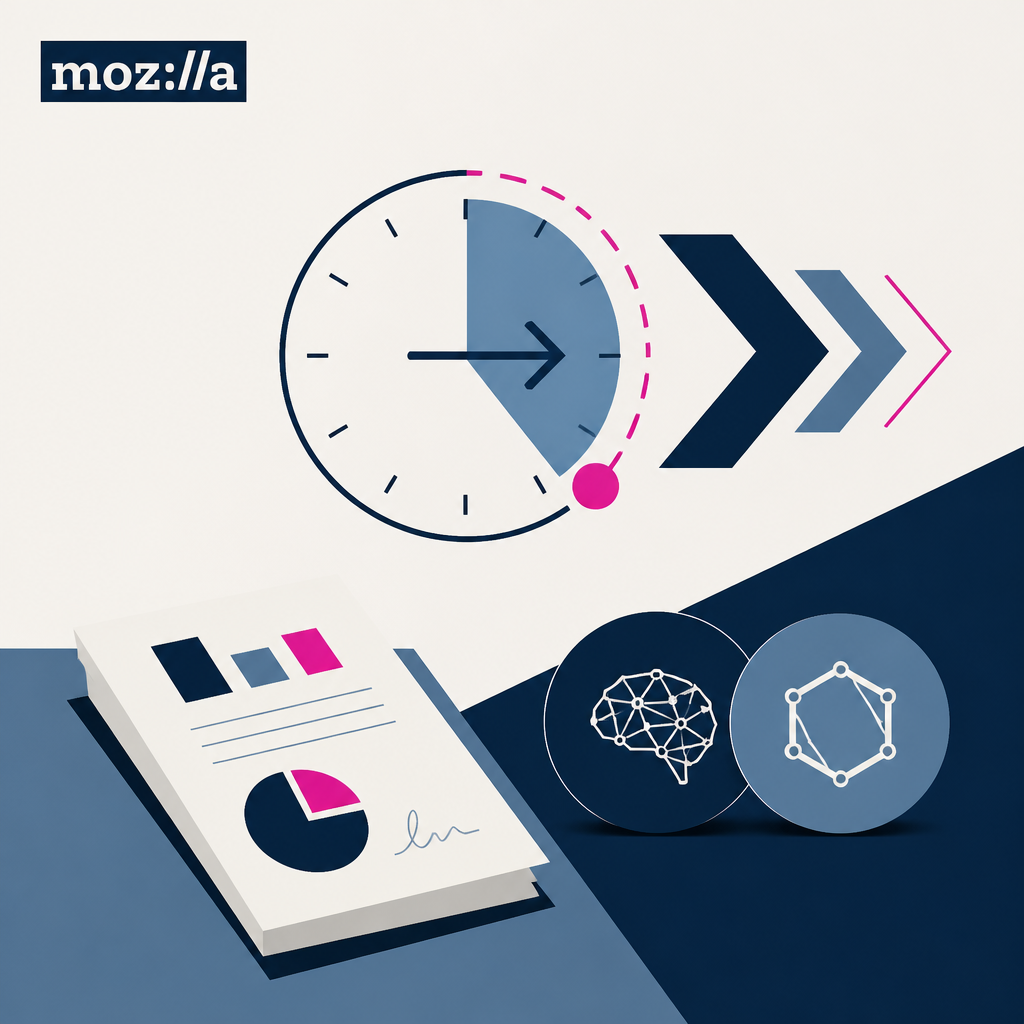
Mozilla reports the performance gap between US frontier AI models and top Chinese open-weights models has narrowed to 4.4 months, changing how companies choose between them. It says Kimi K3 scores only 3 points behind Anthropic’s Fable 5 while costing 30 percent as much. The result is a shift toward open models as the default for most routine work, reserving paid closed models for specific heavy workloads like expert tasks and long-context retrieval.
Researchers proved a theoretical separation showing shallow quantum circuits outperform limited transformer-style LLM models on specific computational tasks, both for returning correct values and for sampling from a target distribution. The circuit depth stays close to constant while the functional separation uses an iterated index problem solved by a close-to-constant-depth quantum circuit with a single classical AND gate. The work expands the known frontier of quantum-vs-classical lower bounds by extending them against stronger LLM capabilities like chain-of-thought and by motivating benchmarks for comparing quantum systems to LLMs.
Every AI story that matters,
in your inbox by 8am.
TLDRocket reads all relevant sources, removes duplicate coverage, and summarises the
day in two minutes. Follow companies and topics for alerts, or get the
briefing in Slack. Free, no spam, unsubscribe anytime.
Reading TLDRocket needs no cookies, and the readership counts we rely on come from
our own cookieless analytics. Google Analytics is the exception: it sets cookies and
reports to Google, so it stays switched off until you allow it. You can change your
mind any time from “Cookie settings” in the footer.
Strictly necessary
Session security and form protection (tldrocket-session,
XSRF-TOKEN, 2 hours). The site cannot work without them,
so they need no consent.
Always on
Google Analytics 4 (_ga,
_ga_<id>, up to 2 years). Measures which
stories and sections readers use. Google acts as a third-party processor and may
store the data outside the EU. No advertising, no profiling, no data sold.