Agent demos can look reliable until real inputs trigger missing records, tool errors, policy changes, or capability limits that reveal the system is not production-ready. The article’s example billing trace includes a 13.4s run that used 2,180 tokens and cost $0.04, illustrating how a harness logs and gates work around the model. Production deployments change by treating the model as only one component and adding tool contracts, permissions, deliberate context, traces, and failure-focused tests so wrong calls are contained and diagnosable.
AI agents have caused multiple production incidents by deleting data, exposing user information, enabling account takeovers, and leaking private repositories despite performing their intended tasks. The article points to an Instagram support chatbot being used to hijack thousands of accounts. Organizations should add four safeguards—Sense, Decide, Act, and Secure—to keep agents’ inputs current, ground actions in decision history, orchestrate multi-step workflows, and restrict/monitor permissions with an emergency kill switch.
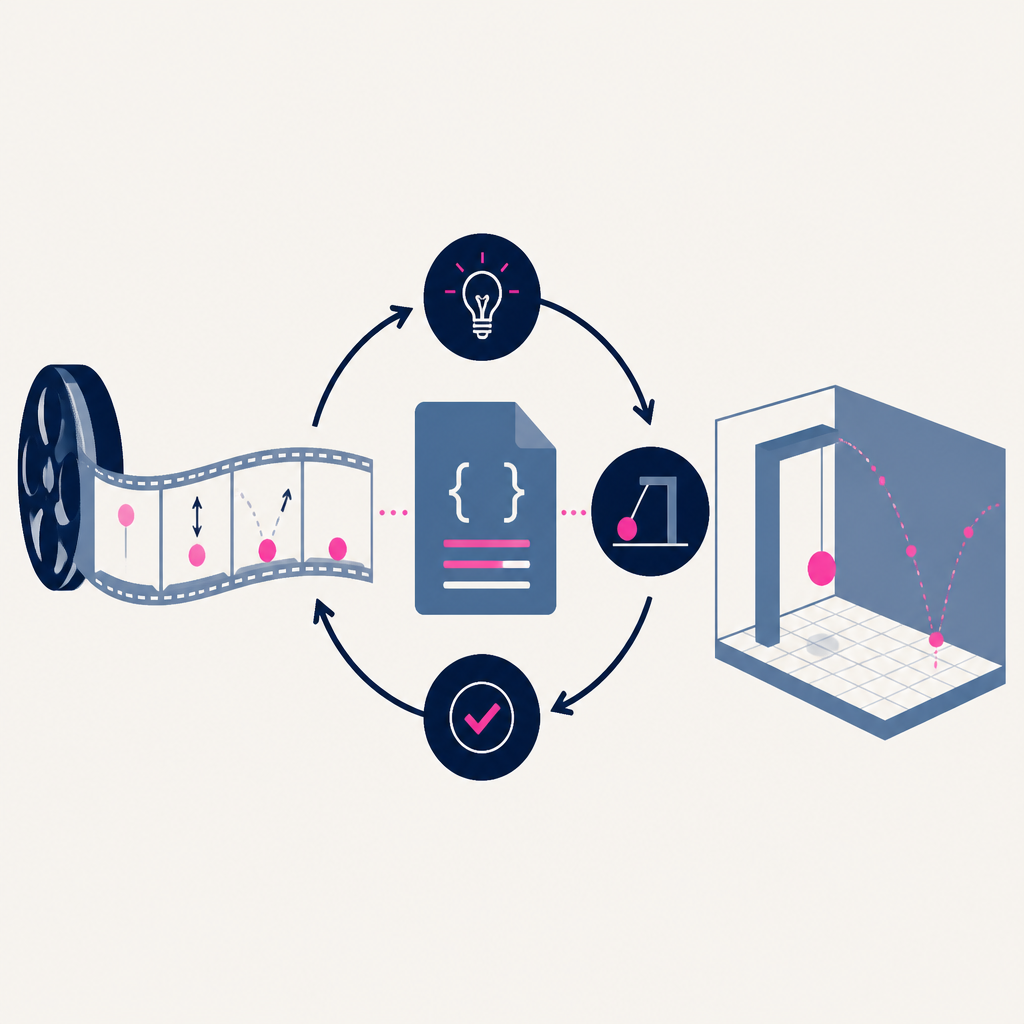
MirroS released Code-as-World, a method that converts real videos into executable MuJoCo physics programs by fitting an editable scene.json rather than predicting pixels, latents, or captions. The agentic propose→execute→verify loop recovers those programs in up to 5 rounds and Code-as-World-VL-9B scores 55.4 MRA on QuantiPhy-validation (above Gemini-3.1 Flash at 54.8). Verified worlds produced by this loop become training supervision with exact physical labels, and MirroS shipped Apache 2.0 code plus 4B and 9B checkpoints with an OpenAI-compatible /v1 vLLM endpoint for internal research use.
Every AI story that matters,
in your inbox by 8am.
TLDRocket reads all relevant sources, removes duplicate coverage, and summarises the
day in two minutes. Follow companies and topics for alerts, or get the
briefing in Slack. Free, no spam, unsubscribe anytime.
Reading TLDRocket needs no cookies, and the readership counts we rely on come from
our own cookieless analytics. Google Analytics is the exception: it sets cookies and
reports to Google, so it stays switched off until you allow it. You can change your
mind any time from “Cookie settings” in the footer.
Strictly necessary
Session security and form protection (tldrocket-session,
XSRF-TOKEN, 2 hours). The site cannot work without them,
so they need no consent.
Always on
Google Analytics 4 (_ga,
_ga_<id>, up to 2 years). Measures which
stories and sections readers use. Google acts as a third-party processor and may
store the data outside the EU. No advertising, no profiling, no data sold.