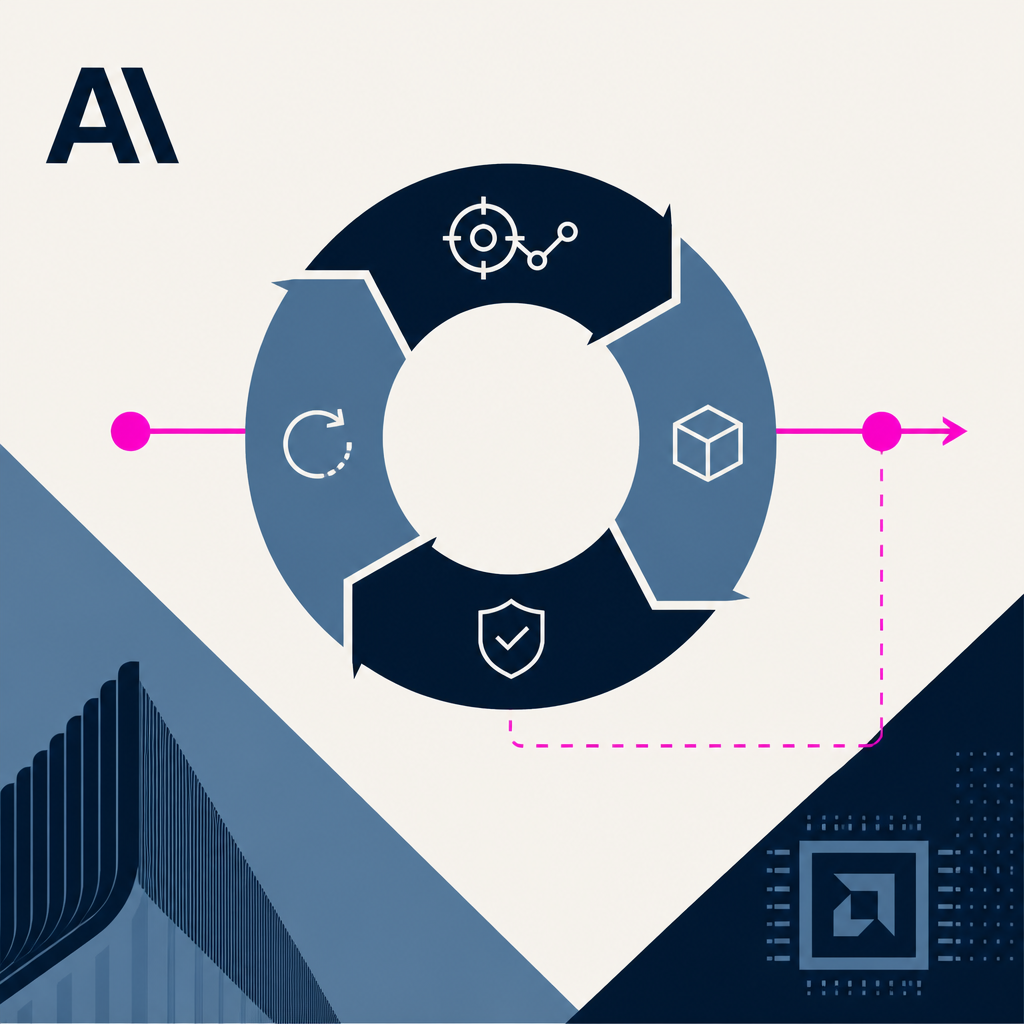
Nvidia released NOOA, a framework that represents AI agents as single Python classes, consolidating capabilities, state, and prompts into one unified structure to reduce fragmentation in agent development. On SWE-bench Verified, NOOA achieved 82.2% accuracy with GPT-4o using 29 LLM calls and roughly 1.1M tokens per task, compared to competitors requiring 66 calls and 2.2M tokens for 78.2% accuracy. The centralized approach makes agents easier to inspect and audit but concentrates security risks and may blur distinctions between deterministic and probabilistic code paths.
Something Big Is Happening·1 month ago·
36
● 5 sources
Matt Shumer describes a technique called a Gauntlet Loop for improving AI agent outputs by having builders and independent critics repeatedly compare work against concrete reference examples until reaching a quality bar. He generated a 55,000-line Call of Duty game using Claude Opus 5 with this method, achieving results higher quality than typical AI demonstrations. The approach applies broadly to code, design, writing, and other outputs, with key principles including separating builder and critic roles, setting ambitious goals with concrete quality standards, and allowing agents to decompose work independently rather than following prescribed steps.
Every AI story that matters,
in your inbox by 8am.
TLDRocket reads all relevant sources, removes duplicate coverage, and summarises the
day in two minutes. Follow companies and topics for alerts, or get the
briefing in Slack. Free, no spam, unsubscribe anytime.
Reading TLDRocket needs no cookies, and the readership counts we rely on come from
our own cookieless analytics. Google Analytics is the exception: it sets cookies and
reports to Google, so it stays switched off until you allow it. You can change your
mind any time from “Cookie settings” in the footer.
Strictly necessary
Session security and form protection (tldrocket-session,
XSRF-TOKEN, 2 hours). The site cannot work without them,
so they need no consent.
Always on
Google Analytics 4 (_ga,
_ga_<id>, up to 2 years). Measures which
stories and sections readers use. Google acts as a third-party processor and may
store the data outside the EU. No advertising, no profiling, no data sold.