
How AI Becomes a Political Crisis
ChinaTalk Jordan Schneider ● Covered by 2 sources
Opinion — commentary, not a factual news event.
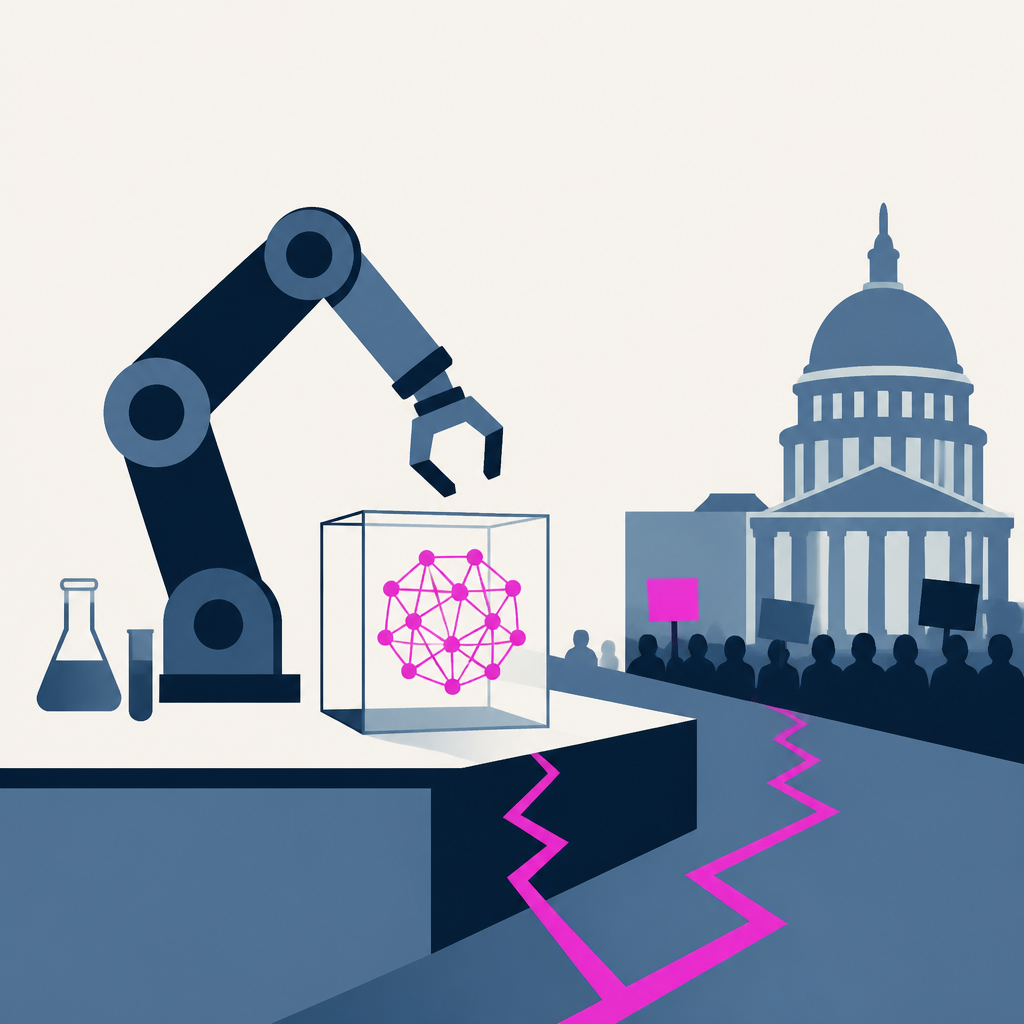
AI politics is getting weird: talk of layoffs, protests, and open models is everywhere. Even a little AI job loss could scramble national politics, especially for junior white-collar workers.
Based on reporting by ChinaTalk, Jordan Schneider — read the original for the full story.
Summary, retelling and take written by AI under human oversight; images are AI-generated illustrations. How we work · Report an error
AI used to be a story about software and benchmarks. Now it is starting to look like a labor story, a tax story, and maybe a security story too. The source conversation with Anton Leicht, a Carnegie fellow and the author of Threading the Needle, treats that shift as the point: the politics around AI are changing fast, and even six months can feel like a different era.
The sharpest warning here is about unemployment that does not need to be massive to matter. If AI agents start taking junior white-collar jobs, the damage may not just be lost paychecks. It could break the career pipeline itself, leaving fewer paths into established professions and turning a modest labor shock into a national political problem.
That is why the policy discussion leans so hard on protecting workers without freezing the economy in place. The conversation points to better data on AI and labor, and even to subsidizing junior hiring. It also argues that the government should look to corporate income taxes, not token taxes, to help fund the transition. By contrast, handing the state AI equity or so-called golden shares is presented as a bad idea.
The source also flags a second front: backlash against data centers. That resistance is no longer an abstract worry. It is part of the same political economy, alongside ideas for winning public support and for friendshoring AI infrastructure. Safety sits in the middle of it all, with the claim that a full pause on AI development would not work, but a coordinated slowdown might.
And then there is the broader fight over open source and national security. The piece frames that as a coming reckoning, not a side issue. It also nods to Kafka, bureaucracy, and the odd routes ideas take through American and European policy circles. In other words: AI is no longer just an engineering problem. It is entering the part where institutions start to sweat.
My take — AI-written commentary, not fact-checked reporting
This is the part where the hype crowd meets payroll and zoning law. Open models, data centers, junior hiring, taxes, national security — AI is starting to behave like a normal political issue, which means the slogans will get louder and the compromises uglier. The market wanted a moonshot; politics prefers a committee with a grudge.
Read more about this at: ChinaTalk