
Why every company wants an AI model router right now
Fortune Sharon Goldman
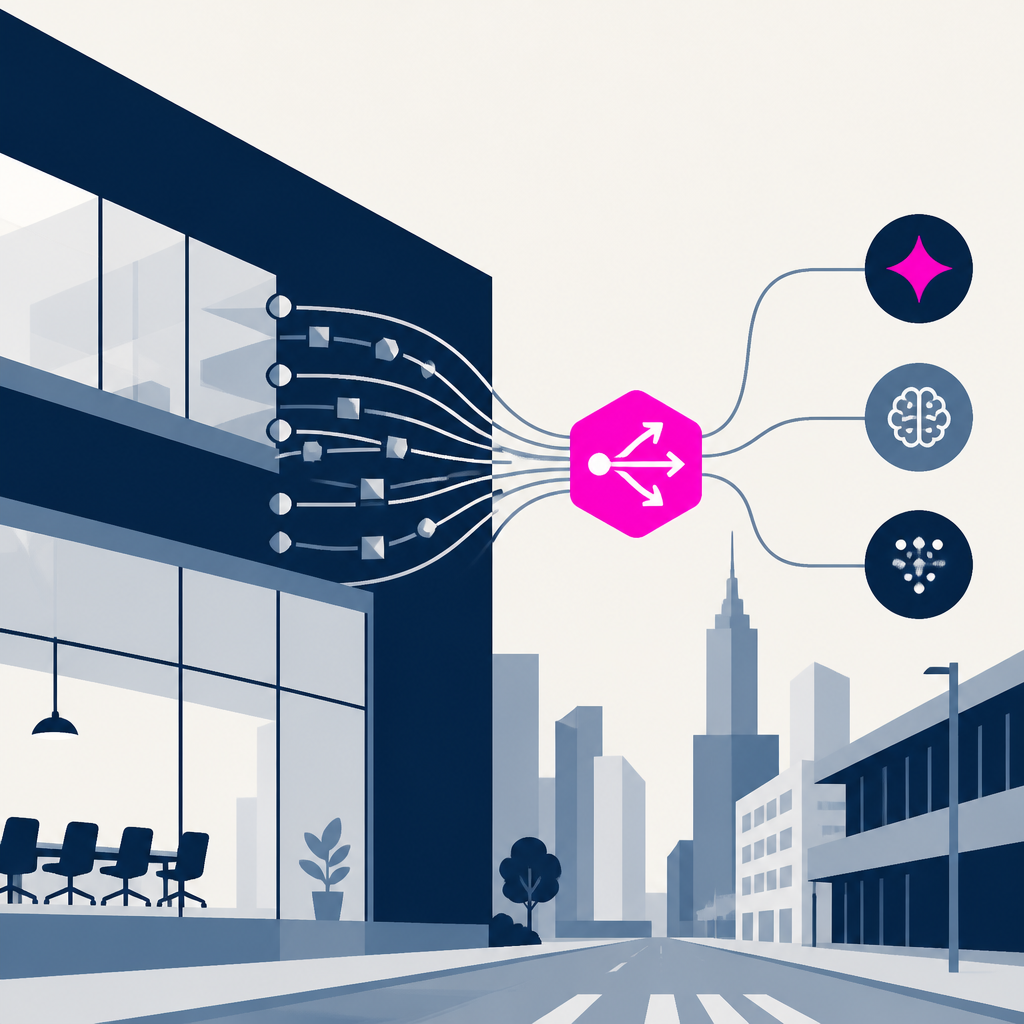
Companies are routing AI tasks to cheaper models to dodge huge surprise bills. It’s turning model choice into a cost-control game, not just a quality one.
Based on reporting by Fortune, Sharon Goldman — read the original for the full story.
Summary, retelling and take written by AI under human oversight; images are AI-generated illustrations. How we work · Report an error
A lot of companies got blindsided this year by AI bills that kept climbing while nobody was watching. The trigger was not casual chatbot use. It was coding agents like Claude Code and Codex grinding away for hours, making repeated calls to frontier models and piling up tokens until the invoice got ugly.
One study in the piece puts the scale of the problem in blunt terms: 62% of organizations said an unexpected AI expense changed a business decision in the past year. Of those, 40% had to take it to the board, 33% froze spending in an emergency, and 25% delayed or killed an AI project. That kind of pain is exactly why AI model routers are suddenly everywhere.
The basic idea is simple enough. Instead of sending every request to the priciest model, companies can route each step of an agent’s work to the model that best fits the task, whether the priority is cost, speed or performance. Companies say that can cut inference spending by double-digit percentages, and sometimes by as much as 30%. So the market has started filling up fast.
OpenRouter offers a marketplace and unified gateway to hundreds of models, and Fortune says it has reportedly been in acquisition talks with Stripe at a valuation of up to $10 billion. Not Diamond takes a different approach and automatically sends requests to the model best suited for the task. LiteLLM lets enterprises build and run their own routing setup. On top of that, Salesforce and Databricks are adding routing features to their own platforms, while Cursor, Ramp and Meta are reportedly building routers too. Runway has already launched one.
Chris Clark, OpenRouter’s co-founder and chief operating officer, says the demand is being driven by token-hungry agents, especially tools like Anthropic’s Claude Code, which was released in mid-2025. He said the C-suite spent 2024 and 2025 pushing AI adoption, but this year is when the pieces finally clicked because agents moved beyond chat and into actions. The catch is that many tasks are already “intelligence-saturated,” so throwing the newest frontier model at everything just wastes money.
There’s also a bigger reason this is sticking. Salesforce’s David Ward says routing will eventually cover trust, compliance, governance and measurable business outcomes, not just model choice. Dataiku’s Florian Douetteau points to enterprise anxiety over access restrictions to Anthropic’s Fable model and the need to switch providers, or fall back on open-weight models, if access changes. In other words: companies don’t just want cheaper AI. They want to stop letting one model vendor hold the keys to the building.
My take — AI-written commentary, not fact-checked reporting
The router boom is a sign that enterprise AI is finally meeting reality. Most companies didn’t want intelligence; they wanted a controllable bill, a fallback plan, and less drama when a vendor sneezes. The market’s new religion is not “bigger model, better model.” It’s “please don’t make procurement call the CFO again.”
Read more about this at: Fortune