Choco automates food distribution with AI agents
OpenAI
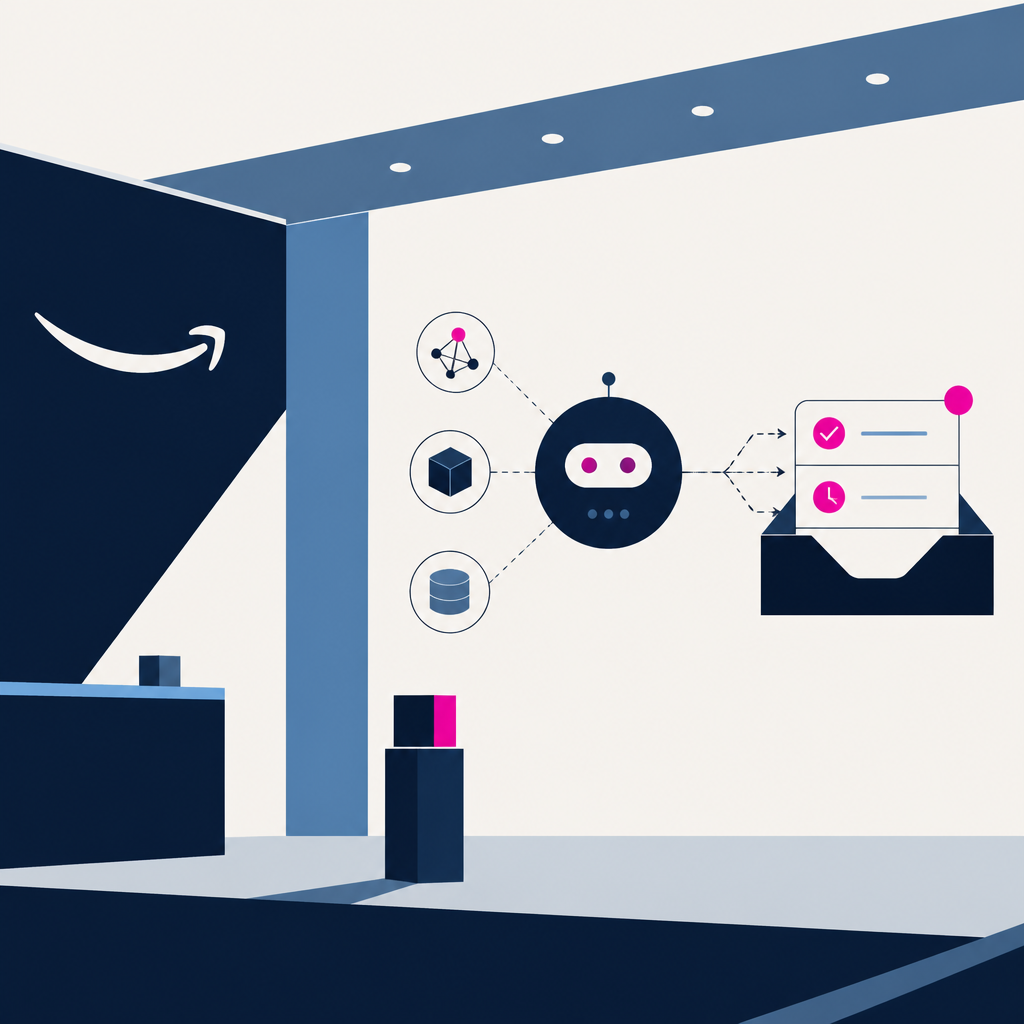
Choco built AI agents on OpenAI's APIs to automate food distribution orders and admin work. Fewer manual calls and faxes, more time for the humans actually running the business.
Based on reporting by OpenAI — read the original for the full story.
Summary, retelling and take written by AI under human oversight; images are AI-generated illustrations. How we work · Report an error
Food distribution is one of those industries nobody outside it thinks much about, yet it runs on an absurd amount of manual grunt work. Orders still get placed by phone, fax, or scribbled notes, and someone on the other end has to transcribe all of that into a system before a truck ever gets loaded. Choco decided that gap was exactly where AI agents could do the most good, and it turned to OpenAI's APIs to build the automation layer.
The pitch isn't flashy. Choco's agents take in messy, unstructured order requests — the kind that used to require a person listening to a voicemail or squinting at a handwritten note — and turn them into clean, structured data that flows straight into distributors' systems. That's the boring-but-essential kind of AI work that actually saves hours, not the kind that makes headlines. But it's also the kind that compounds, because every order processed without a human retyping it is time given back to sales reps, warehouse staff, and ops teams who were never hired to do data entry in the first place.
OpenAI frames this as a case study in real-world impact rather than a lab demo, and that distinction matters. Food distributors operate on thin margins and tight schedules; a delayed order isn't an abstract inefficiency, it's a restaurant that doesn't get its produce on time. Choco's bet is that reliable automation at this layer translates directly into fewer errors and faster turnaround, which in an industry built on perishable goods and next-day delivery windows is not a small thing.
What's notable is how unglamorous the use case is compared to the chatbots and image generators that dominate AI conversation. There's no creative writing here, no code generation, just an old, slow, paper-heavy process getting quietly rebuilt around language models that can read and route information faster than any team of humans typing it in by hand. That's arguably where a lot of the near-term economic value from this technology is actually going to show up — not in flashy demos, but in supply chains most people never think about until the shelves are empty.
My take — AI-written commentary, not fact-checked reporting
This is the AI story I actually believe: not another chatbot demo, but language models quietly eating the fax-machine-and-clipboard layer of a trillion-dollar industry. Everyone's obsessed with whether GPT-5 can write poetry; meanwhile the real money is in distributors who stop losing orders because someone misheard a phone call. More boring wins like this, please, and fewer benchmark screenshots.
Read more about this at: OpenAI