
When AI Stops Experimenting and Starts Scaling [Sponsored]
Tech.eu Tech.eu Editorial Team
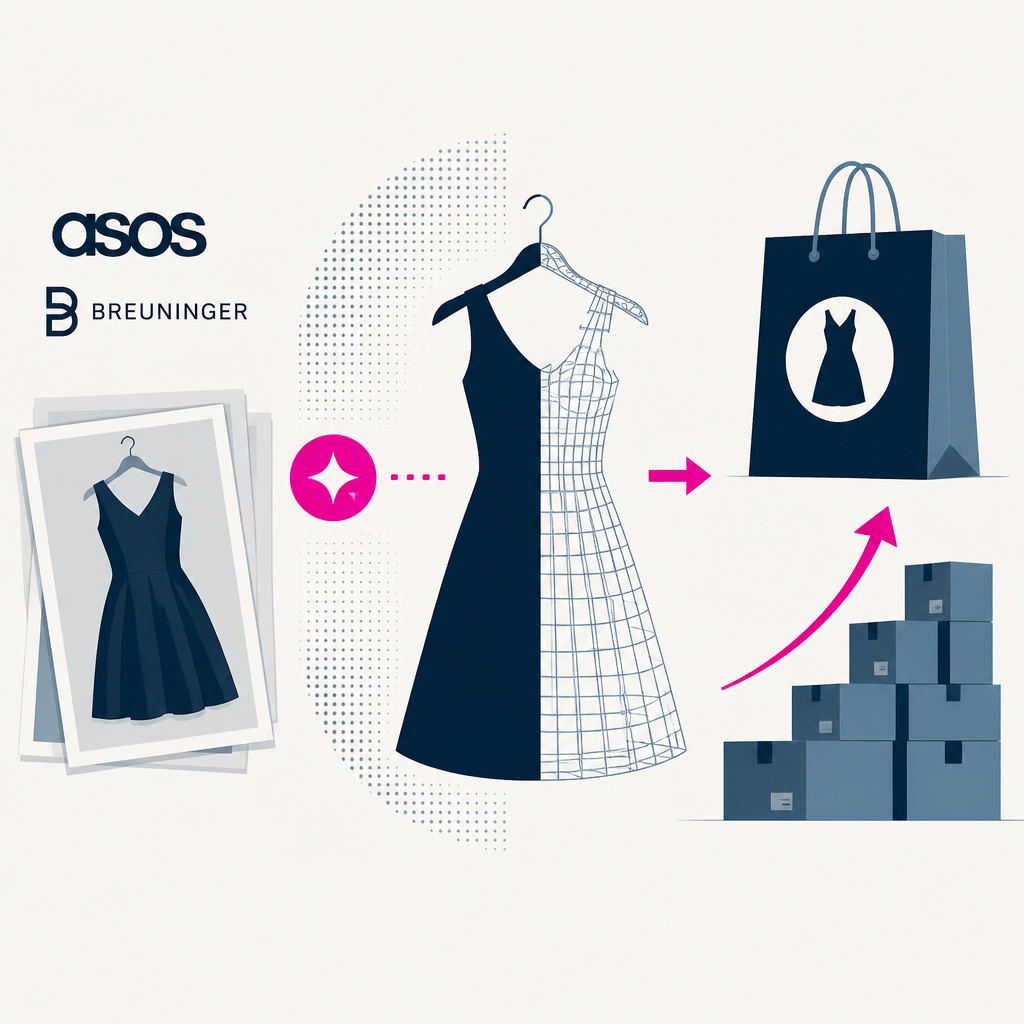
Virtual try-on AI finally works well enough that ASOS, Breuninger and Maybelline are using it live, not as a demo. It's the clearest sign yet that AI is moving from pilot projects to actual infrastructure across retail and beyond.
Based on reporting by Tech.eu, Tech.eu Editorial Team — read the original for the full story.
Summary, retelling and take written by AI under human oversight; images are AI-generated illustrations. How we work · Report an error
Virtual try-on has been fashion e-commerce's running joke for about ten years — always promising, rarely usable. Brands needed expensive 3D scans of every product, the tools mangled anything shot in bad lighting, and the output tended to look like a wax figure rather than a customer. That's no longer the case. Generative AI can now take a plain product photo and spin up a 3D model that renders drape, cut and fabric behavior on the fly, skipping the manual 3D pipeline that made the old approach a non-starter.
The proof is that this stuff is actually shipping. ASOS lets shoppers upload a photo or build a digital twin from their own measurements. Breuninger became the first fashion retailer in Germany to bolt Google's virtual try-on tech into its app. Maybelline offers three ways to preview a lipstick shade — upload, digital avatar, or live camera. None of this lives in a research paper; it's running in production, against real purchase and return data.
And the returns problem is not small. The National Retail Federation pegs 2025 US online fashion returns at 19.3%, with Gen Z shoppers sending back an average of nearly eight items each. Arnold Pötsch, who led the BVDW's working group on 3D commerce, calls virtual try-on a genuine competitive edge now — not a gimmick — because it closes the gap between the physical product and its digital stand-in, which cuts hesitation, returns, and waste all at once.
What makes this worth watching outside of fashion is the underlying shift: AI tools that survive contact with a real P&L instead of dying in pilot purgatory. Fintech is seeing the same thing with fraud detection and underwriting becoming default infrastructure rather than a bolt-on feature. Healthtech diagnostic models are finally clearing trust hurdles that stalled them for years. Deeptech founders are shipping robotics and materials research on realistic timelines instead of endless R&D cycles. SaaS companies are getting judged on retention and margin, not on how many AI buzzwords fit in the pitch deck.
That's essentially the bet DMEXCO is making with its 2026 theme, "Scaling Intelligence," running September 23–24 in Cologne. The easy wins — slapping a chatbot onto an existing product — are used up. What's left is the harder work of building AI that holds up under real usage and shows up in numbers operators actually track. DMEXCO's mix of an Expo floor pairing scaled deployments with early-stage startups, plus conference talks focused on what breaks when a model goes from pilot to production, is built specifically around answering that question — and doing it with a notably European lineup of builders working under different regulatory and capital pressures than their US or Chinese counterparts.
My take — AI-written commentary, not fact-checked reporting
I'll believe
Read more about this at: Tech.eu
Related stories
 Why the AI economy is like a bad dating app — drowning in decks, pilot purgatory — and it's playing out like the dotcom bubble, except worse
Fortune ·
50
Why the AI economy is like a bad dating app — drowning in decks, pilot purgatory — and it's playing out like the dotcom bubble, except worse
Fortune ·
50