
🔮 For AI adopters, success and failure look identical — at first
Exponential View Nathan Warren ● Covered by 13 sources
AI adopters everywhere are spending big and seeing nothing yet, and everyone's asking why the returns haven't shown up. Turns out looking broke and looking smart can look exactly the same in year one.
Based on reporting by Exponential View, Nathan Warren — read the original for the full story.
Summary, retelling and take written by AI under human oversight; images are AI-generated illustrations. How we work · Report an error
There's a familiar headline making the rounds again: companies keep pouring money into AI, and the payoff still hasn't materialized. The New York Times ran a version of this story back in August 2025. Reuters closed out the year with much the same conclusion. Barclays says productivity gains from broad AI adoption remain elusive. And now, seven months into 2026, the same question is still open — where's the money going, and why isn't it coming back?
The pressure on executives to answer that question is real. BCG found that half of CEOs surveyed globally believe their jobs hinge on getting AI strategy right. Yet actual disclosed numbers are rare. JPMorgan's claim of $1 to $1.5 billion in value created is one of the only concrete figures any large company has put on the record. Everyone else is guessing, or staying quiet.
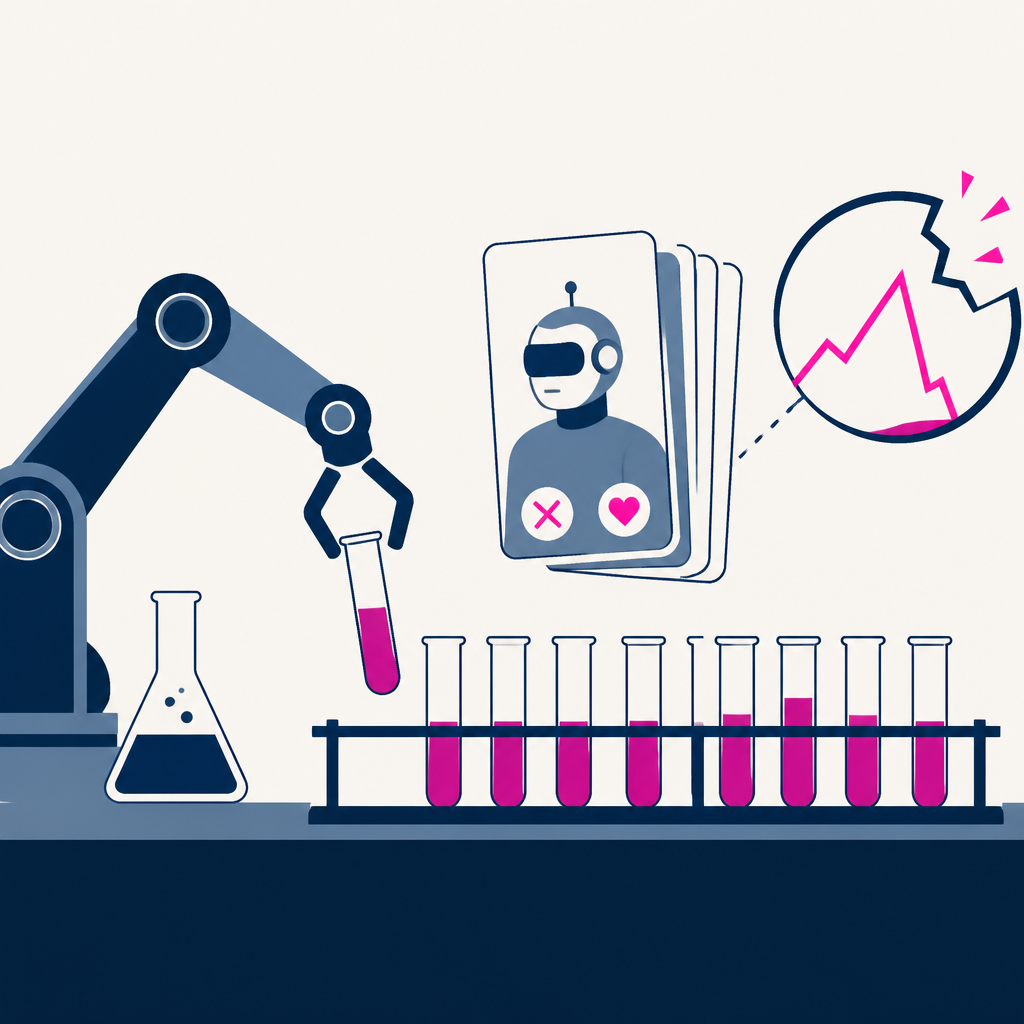
Exponential View's answer, drawn from a new economic model, is that this confusion is baked into how technology adoption actually works. Big investments — whether in real estate or software — tend to follow a J-curve: costs first, breakeven later, profit eventually. With AI, most of that early cost isn't the technology itself but the learning that surrounds it — retraining staff, rebuilding workflows, absorbing mistakes. Multiply that across dozens of internal projects running at different speeds and different stages, and a company that's actually on track to win can look just as expensive and chaotic as one that's failing outright.
History offers two useful, unflattering archetypes for how this can go wrong even when adoption looks active. The New York Stock Exchange spent decades slow-walking electronic trading, automating just enough to look modern while protecting its floor traders — until Nasdaq's fuller embrace of automation forced a merger and a regulatory overhaul years later. Borders made a similar bet, outsourcing its e-commerce entirely to Amazon in 2001 rather than building the capability itself, and didn't reverse course until 2008, three years before bankruptcy. General Motors, meanwhile, ran the opposite failure mode in the 1980s: dozens of parallel automation bets, including robots, a costly data-processing acquisition, and the NUMMI joint venture with Toyota, which quietly outperformed every other GM plant using the same workforce GM had once laid off. GM saw the result. It just never managed to move that lesson anywhere else in the company.
The throughline is that neither stalling out early nor scattering bets everywhere produces learning that compounds. What separates a winner from a company quietly heading toward Borders' fate isn't how much it's spending on AI right now, or how many pilots it's running. It's whether anything learned in one project is actually making the next one better. That signal doesn't show up in a quarterly earnings call. It shows up years later, when it's either too late to catch up or too obvious to call it luck.
My take — AI-written commentary, not fact-checked reporting
I've watched enough hype cycles to know that the absence of visible ROI is not itself evidence of failure — but it's also not proof of genius, and too many companies are hiding behind the J-curve idea as an excuse to avoid asking hard questions about their own AI programs. The real tell isn't spend, it's whether your fifth pilot is smarter than your first; if it isn't, you're not on a J-curve, you're just burning money like GM did with NUMMI, watching the answer sit right in front of you and choosing not to use it.
Read more about this at: Exponential View
Related stories
 Why the AI economy is like a bad dating app — drowning in decks, pilot purgatory — and it's playing out like the dotcom bubble, except worse
Fortune ·
50
Why the AI economy is like a bad dating app — drowning in decks, pilot purgatory — and it's playing out like the dotcom bubble, except worse
Fortune ·
50