
Welcome FLUX.3 Image Klein in Diffusers
Hugging Face
FLUX.3 Image Klein lands in Diffusers on day one. It does text-to-image, edits, and box-based layout control from one model.
Based on reporting by Hugging Face — read the original for the full story.
Summary, retelling and take written by AI under human oversight; images are AI-generated illustrations. How we work · Report an error
Black Forest Labs has pushed FLUX.3 Image Klein into Diffusers immediately, and the pitch is broad: one model for straight text-to-image, multi-reference image editing, and a new layout mode that lets you place parts of an image with bounding boxes. The Hugging Face post also says both open checkpoints in the collection are already available to try on the Hub space.
The most useful detail here is that the model is built to do more than follow captions. For new images, you can describe a scene and then pin specific regions with boxes. For edits, you can point to content in a reference image and tell the model where that content should move in the output. The examples in the post cover a fox scene, a combined fox-and-bench image, a minimalist silhouette graphic, and a yarn-based knight that gets shifted within the frame.
There’s a practical angle too. The distilled checkpoint makes a 1024 × 1024 image in about 2 seconds on an H100, and the post gives 1.93 seconds for text-to-image in its timing table. Image-to-image takes 3.87 seconds with one 1024 × 1024 reference, while the layout-editing example takes 4.10 seconds with a 1360 × 768 reference. A reference image roughly doubles the work because its tokens travel through the transformer alongside the text and generated image.
Diffusers support starts with a ModularPipeline, which means the model ships as something you can open up and swap pieces in or out. Black Forest Labs also ships the transformer as a single file in bf16, fp8r, and nvfp4, with fp8r and nvfp4 aimed at lighter setups. For training, the post points to LoRA scripts for both text-to-image and image editing, plus DreamBooth examples that can learn a style or an instruction-based edit.
Under the hood, the model is doing the usual modern image-model balancing act: a VAE turns pixels into latents, Qwen3-VL provides the text features, and the transformer handles text, noisy image, and reference streams in two stages. It’s a lot of moving parts, but the point is simple. FLUX.3 is being sold not as one more generator, but as a single system for making, editing, and positioning images with less switching around.
My take — AI-written commentary, not fact-checked reporting
This is the right way to ship an image model: open enough to inspect, modular enough to hack, and concrete about what it can actually do. The industry has spent too long pretending that “generate a picture” and “control a picture” are the same sentence. They aren’t, and the box prompts make that obvious.
Read more about this at: Hugging Face
Related stories
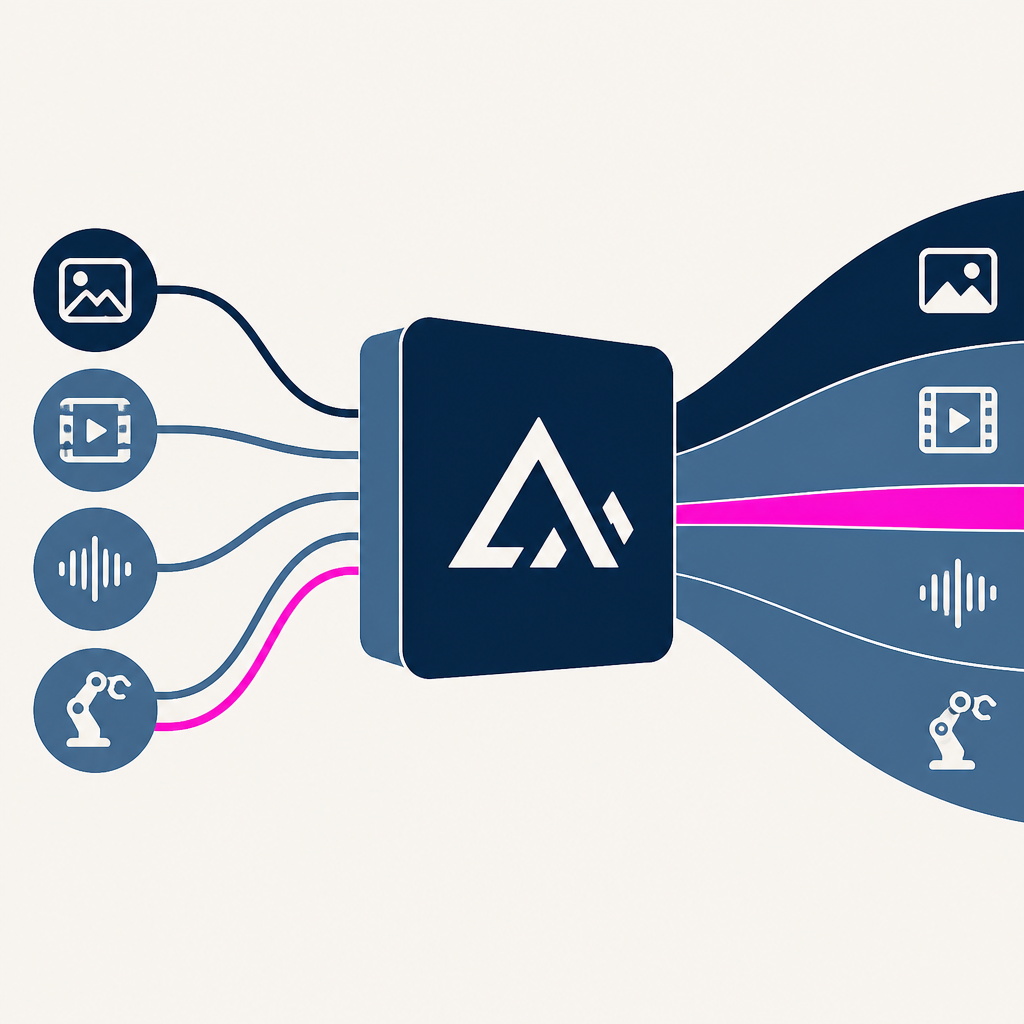 Black Forest Labs Releases FLUX 3: A Multimodal Flow Model for Image, Video, Audio and Robot Action Prediction
MarkTechPost · 2 months ago ·
18
Black Forest Labs Releases FLUX 3: A Multimodal Flow Model for Image, Video, Audio and Robot Action Prediction
MarkTechPost · 2 months ago ·
18