
We served opposing presidents, but we agree on how to fix the data-center mess
Fortune Michael S. Regan ● Covered by 2 sources
Opinion — commentary, not a factual news event.
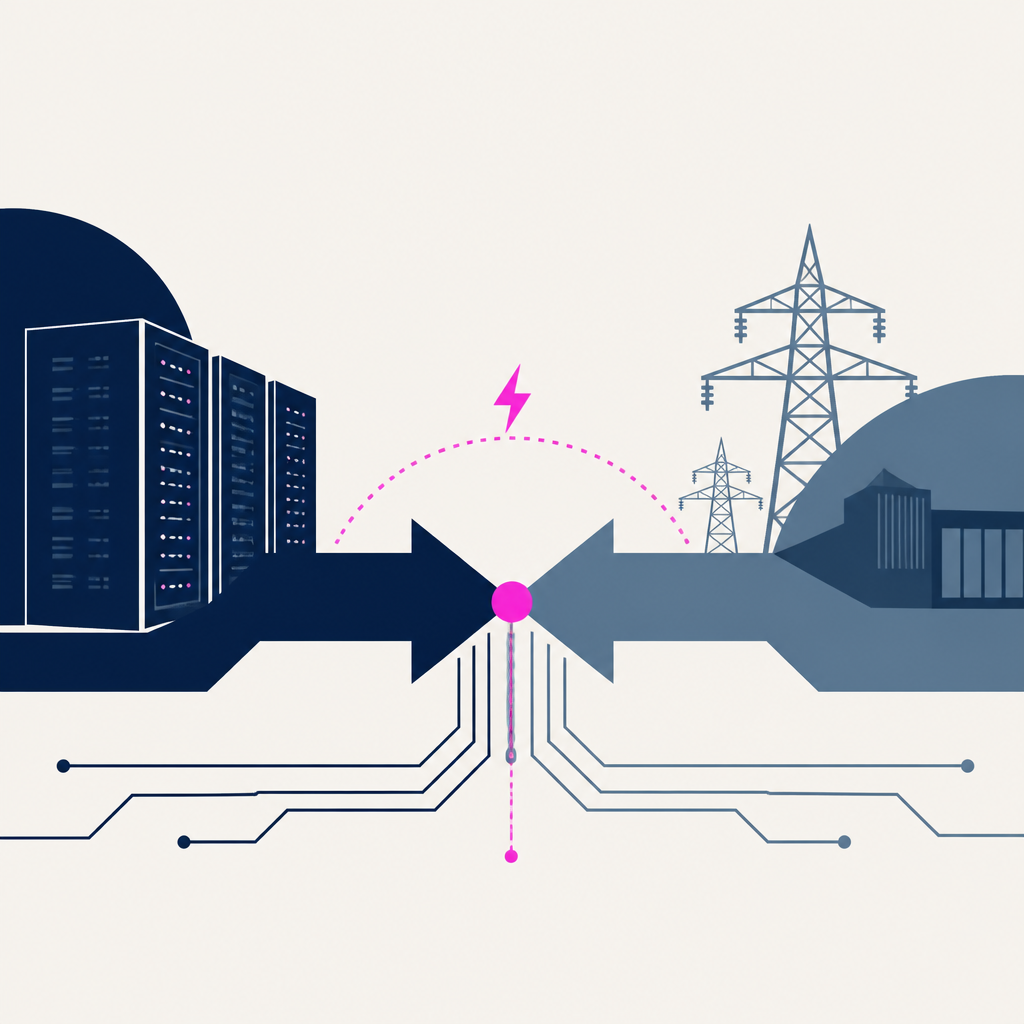
Ex-EPA and ex-FERC chiefs want new federal rules for data centers. They say the current patchwork is risking power, water and community trust.
Based on reporting by Fortune, Michael S. Regan — read the original for the full story.
Summary, retelling and take written by AI under human oversight; images are AI-generated illustrations. How we work · Report an error
Two former top regulators from opposite parties are making the same argument: America’s data-center boom has outrun the rules around it. One led the Environmental Protection Agency under President Biden. The other chaired the Federal Energy Regulatory Commission under President Trump. Their point is blunt. The country is already living with the consequences, from higher power bills and air pollution to stressed water systems and nonstop noise.
They frame the problem as a familiar American habit: build first, figure out the rules later. Aviation went through the same thing a century ago, when the United States had the aircraft but not the national policy. Congress eventually stepped in, first with the Air Commerce Act of 1926 and later with the FAA. The lesson they draw is not nostalgia. It is that industries grow more safely, and more usefully, when there is a framework before the mess becomes permanent.
The warning signs are already here. In May, the North American Electric Reliability Corporation issued its most serious alert, saying sudden swings in data-center demand threaten grid stability. Last month, Pennsylvania’s Public Utility Commission said the country’s largest grid will miss its reliability standard starting next year. States are improvising in response. Some have paused new hyperscale projects for up to a year. Virginia has pulled future large data-center projects out of its fast-track permitting lane so developers can work through community benefits agreements and meet standards on water, pollution, noise and local hiring.
The authors are not arguing for a blanket no. They want a “maybe, but here’s what you have to do” model instead. That means site-specific rules, community input from the start, and projects that don’t dump the costs of transmission, water or infrastructure upgrades on the people living nearby. They point to Virginia as a live example, including a proposal that would require local approval for any data center using more than 25 megawatts and ban nondisclosure agreements that keep residents in the dark.
Their broader complaint is that no one is really in charge. Data centers are now regulated through a patchwork spread across the EPA, FERC, the Army Corps, state utility commissions and county zoning boards. The two ex-regulators want one roof for oversight of AI and digital infrastructure, not AI itself. Their message is simple: if the country wants the computing power, it needs a rulebook that the public can actually trust.
My take — AI-written commentary, not fact-checked reporting
This is what happens when a hot industry gets treated like a planning exemption with servers attached. The smarter move is not to bless every project, or to freeze everything with a grand moral panic, but to make the builder carry the burden for once. Funny how “move fast” always sounds less noble when the noise is outside your house.
Read more about this at: Fortune