Vixen and Keyhole Panda: China-linked cyber operations
OpenAI ● Covered by 3 sources
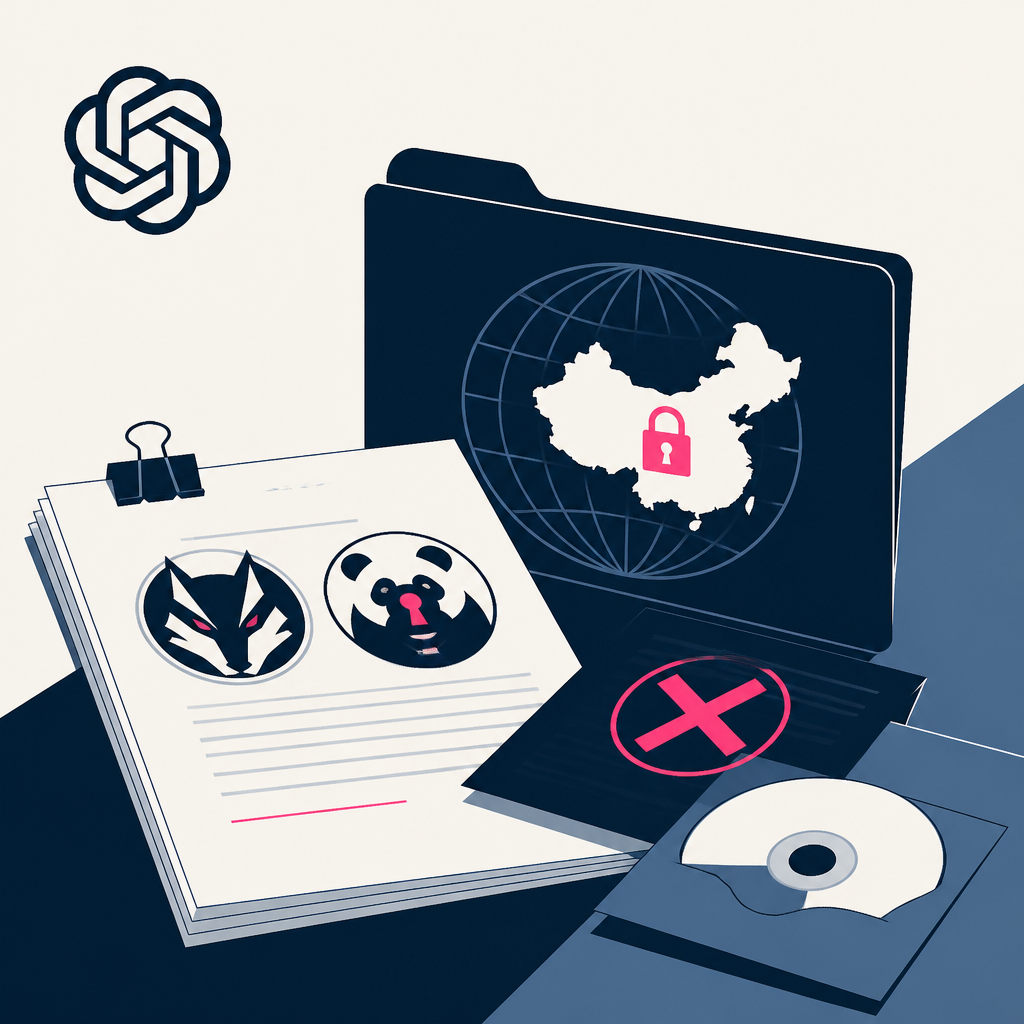
OpenAI shut down accounts tied to Chinese state-linked hacking crews. They were using ChatGPT to help with vulnerability research, scripting, and translation.
Based on reporting by OpenAI — read the original for the full story.
Summary, retelling and take written by AI under human oversight; images are AI-generated illustrations. How we work · Report an error
OpenAI's latest threat report names two clusters it's calling Vixen and Keyhole Panda, both publicly linked to actors operating out of the People's Republic of China. The company says it banned the associated accounts after catching them using its models not to write malware from scratch, but to do the unglamorous grunt work that surrounds an intrusion.
That grunt work is the interesting part. According to OpenAI, the accounts leaned on AI for vulnerability research, drafting and debugging scripts, translating technical material, and troubleshooting operational hiccups along the way. None of that sounds like a Hollywood hacking scene. It sounds like an IT department, which is precisely the point — nation-state operators increasingly treat AI chatbots as a force multiplier for tedious tasks, not a magic exploit generator.
OpenAI has been publishing these takedown reports periodically, and the pattern keeps repeating: state-linked groups from China, Russia, Iran, and North Korea show up using mainstream AI tools for reconnaissance, phishing content, code review, and translating between languages during multi-stage operations. Vixen and Keyhole Panda fit neatly into that pattern rather than breaking new ground, but the naming and public attribution matter because they give defenders something concrete to search for in their own logs.
What OpenAI didn't detail is how much operational damage these accounts actually enabled before being caught. The report frames this as a disruption of misuse, not a description of a successful breach, and that distinction is worth holding onto. Still, the fact that state-backed teams now treat commercial chatbots as a standard part of their toolkit says a lot about how quickly AI has been absorbed into ordinary cyber tradecraft, on both sides of the fence.
My take — AI-written commentary, not fact-checked reporting
I'll believe these takedown reports are more than PR theater when OpenAI starts publishing details on what these actors actually accomplished, not just that they got banned. Naming APT-style clusters after animals feels good for headlines, but the real signal — how much AI assistance actually moved the needle on a real intrusion — stays conveniently vague every time.
Read more about this at: OpenAI