
To power AI, Khosla and a16z bet this startup can reinvent mining
Fortune Allie Garfinkle
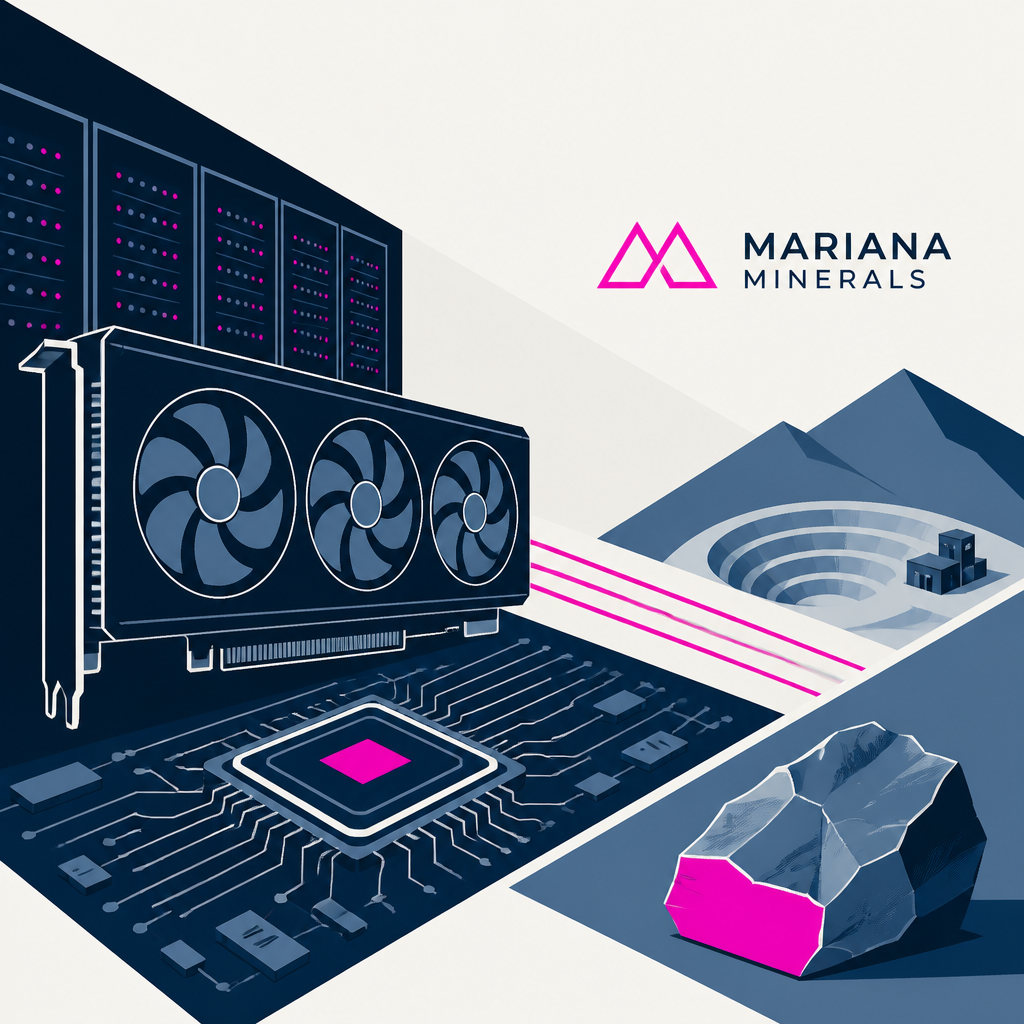
Mariana Minerals just landed $310M to automate copper and lithium mining for the AI era. AI hardware runs on metals, and right now China controls most of that supply chain.
Based on reporting by Fortune, Allie Garfinkle — read the original for the full story.
Summary, retelling and take written by AI under human oversight; images are AI-generated illustrations. How we work · Report an error
Turner Caldwell isn't shy about the comparison: if oil and gas ran the last hundred years, he thinks metals run the next hundred. Caldwell is CEO and cofounder of Mariana Minerals, a software-heavy mining startup he started in 2024 with Baker Tilney and Juan Lozano after nearly a decade building factories for Tesla. His pitch is simple and a little sweeping — lithium and copper first, then aluminum, magnesium, nickel, cobalt, manganese, uranium, rare earths, all run through the same generalizable software backbone.
The money backs up the ambition. Mariana just closed a $310 million Series B led by Khosla Ventures, with longtime backer Andreessen Horowitz returning alongside Breakthrough Energy Ventures, Greenoaks, Halo Fund, Pax Ventures, StepStone Group, BHP Ventures, Washington Harbour Partners, Greycroft and Mitsubishi Corporation, among others. That brings total funding to $400 million and pushes the valuation to $1.5 billion — real numbers for a company operating in a sector that mostly gets ignored by venture capital.
Some of that capital is going straight into dirt. Mariana owns two projects with on-the-nose names: Copper One, an idled Utah copper mine the company acquired in 2025 and restarted in four months using autonomous software, now working toward 50,000 metric tons of refined copper a year. And Lithium One, a Texas site that broke ground in 2025 and is targeting commercial production in 2027. Both are meant to prove that a leaner, software-driven operator can move faster than the industry's giants — names like Standard Lithium and BHP Group, which Mariana will be competing against directly.
The timing isn't accidental. China controls as much as 90% of critical minerals processing globally, and that figure climbs to 92% for rare earth magnets used in smartphones and defense hardware. Decades of aggressive Chinese industrial policy, paired with American industrial decline, have left the U.S. in what's often called a critical minerals chokehold. Travis Kalanick, the former Uber founder now running physical AI company Atoms, put it bluntly: data centers, chips, the grid, robots, EVs and defense systems all trace back to copper and other critical minerals, and there's no leading the AI era without a domestic supply chain for them.
Caldwell keeps circling back to electricity. AI infrastructure, renewables, reindustrialization, transport electrification — all of it, he argues, is downstream of how much power the country can generate, and copper sits at the center of that. Prices for it have already started climbing, and if they keep rising, every industry that depends on copper inherits the cost. Mariana's bet is that cheaper, faster, software-run mining is the fix. Whether a $400 million startup can actually bend that curve against entrenched giants and a geopolitical squeeze is the real test ahead.
My take — AI-written commentary, not fact-checked reporting
Silicon Valley loves discovering that physics still matters, and this is the latest example — you can't build AI data centers, EVs or grids out of software alone, and someone eventually has to dig up the copper. Betting on a startup to out-operate century-old mining incumbents is a stretch, but the underlying diagnosis is right: treating critical minerals as a national afterthought while one country controls most of the processing is the kind of chokehold that doesn't fix itself with more chips or bigger models.
Read more about this at: Fortune