
The way we consume energy is changing. Abu Dhabi’s integrated system has already embraced that change
Fortune H.E. Dr Abdulla Saif Al Jarwan
Opinion — commentary, not a factual news event.
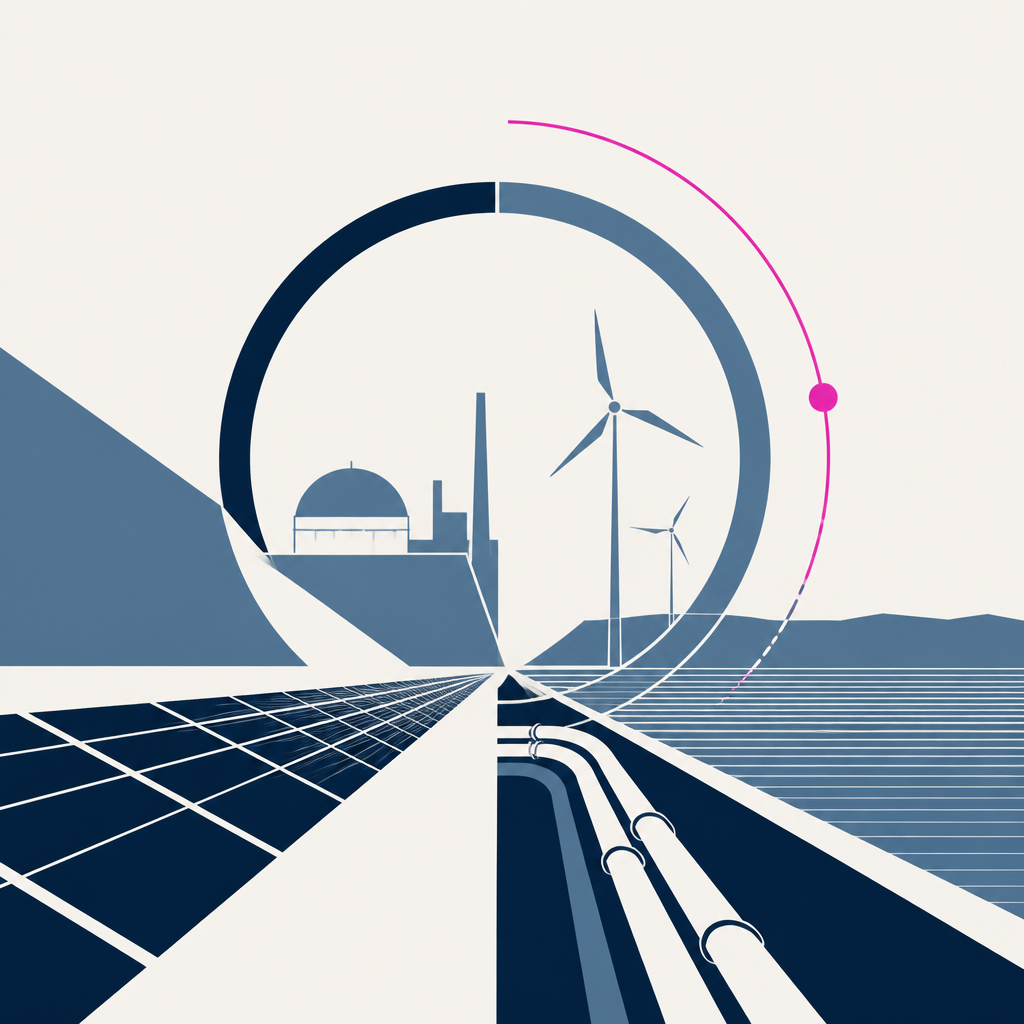
Abu Dhabi says its power-and-water system is built for the AI era. That matters because data centers need electricity, cooling and water, all at once.
Based on reporting by Fortune, H.E. Dr Abdulla Saif Al Jarwan — read the original for the full story.
Summary, retelling and take written by AI under human oversight; images are AI-generated illustrations. How we work · Report an error
A quiet shift is running through energy planning: demand is getting more stubborn, more physical and less forgiving. Grid queues, water pressure, industrial electrification and the need for round-the-clock power are all forcing a rethink. The International Energy Agency expects global electricity demand to rise 3.6% a year from 2026 to 2030, and it says data center use climbed 17% in 2025, with AI-focused facilities up about 50%.
That backdrop explains why the old question — which energy source grows fastest — is giving way to a more practical one: how do you build a system that can actually hold together? Abu Dhabi’s answer is integration. H.E. Dr. Abdulla Humaid Saif Al Jarwan, chairman of the Abu Dhabi Department of Energy and a member of the Abu Dhabi Executive Council, argues that energy security and sustainability only work if they are designed together, with regulation, capital, grids, desalination and reuse all moving in sync.
The emirate’s hydrocarbon piece is still part of that story. ADNOC’s Murban crude, the article says, has a carbon intensity less than half the global industry average, and clean grid power supplied through ADNOC’s partnership with Emirates Water and Electricity Company is helping lower emissions further. At the same time, Abu Dhabi is leaning hard into clean electricity: EWEC has met more than 80% of the emirate’s total power demand using renewable and clean energy from solar and nuclear sources.
The scale matters. Barakah provides large-scale clean baseload power, while Masdar’s global renewable portfolio has reached 65GW and is set to rise to 100GW by 2030. Water sits in the same system, not beside it. The article points out that data centers need both power and cooling water, while desalination itself adds energy demand. In a dry region, treating those as separate problems just makes the bill bigger.
That is why Abu Dhabi is framing long-term capital as part of resilience, not a side issue. The UAE-US AI Campus includes a planned 1GW cluster in Abu Dhabi, a reminder that AI infrastructure will compete on the reliability of the power and water behind it. The pitch here is simple: in the next wave of growth, the winners won’t be the loudest projects. They’ll be the systems that keep working when demand gets messy.
My take — AI-written commentary, not fact-checked reporting
This is the kind of energy policy that actually deserves the word "strategy". Abu Dhabi is treating power, water and digital demand as one problem, while plenty of places still act surprised when a data center wants both electricity and cooling. The market loves shiny megawatts; the grown-up answer is boring integration, which is usually where the real advantage lives.
Read more about this at: Fortune
Related stories
 Data centers can be good citizens. It’s why we’re partnering with Google and Nvidia to create the AI Energy Management Alliance
Fortune ·
21