
The Sequence Robotics - Issue #952: One Brain, Many Bodies: Inside Skild AI's Robotics Bet
TheSequence Jesus Rodriguez
Skild AI wants robot brains that move from one body to another without starting over. That could make robots far more flexible — if they can still work fast, safely, and reliably.
Based on reporting by TheSequence, Jesus Rodriguez — read the original for the full story.
Summary, retelling and take written by AI under human oversight; images are AI-generated illustrations. How we work · Report an error
Skild AI is making a pretty clear bet: robotic intelligence should travel with the brain, not be rebuilt from scratch for every machine. That sounds neat in the abstract, but the company is aiming at a very practical problem. A robot that learns one body well can still be lost the moment the hardware changes. Different joints, different balance, different motion. Same task, new headache.
The article frames that with a simple body-swap thought experiment. Wake up with different legs, and even walking becomes a puzzle. Before the robot can do anything useful, it has to work out what kind of body it is controlling. Skild’s argument is that this understanding should come from the model itself, not from engineers trying to spell out every detail ahead of time.
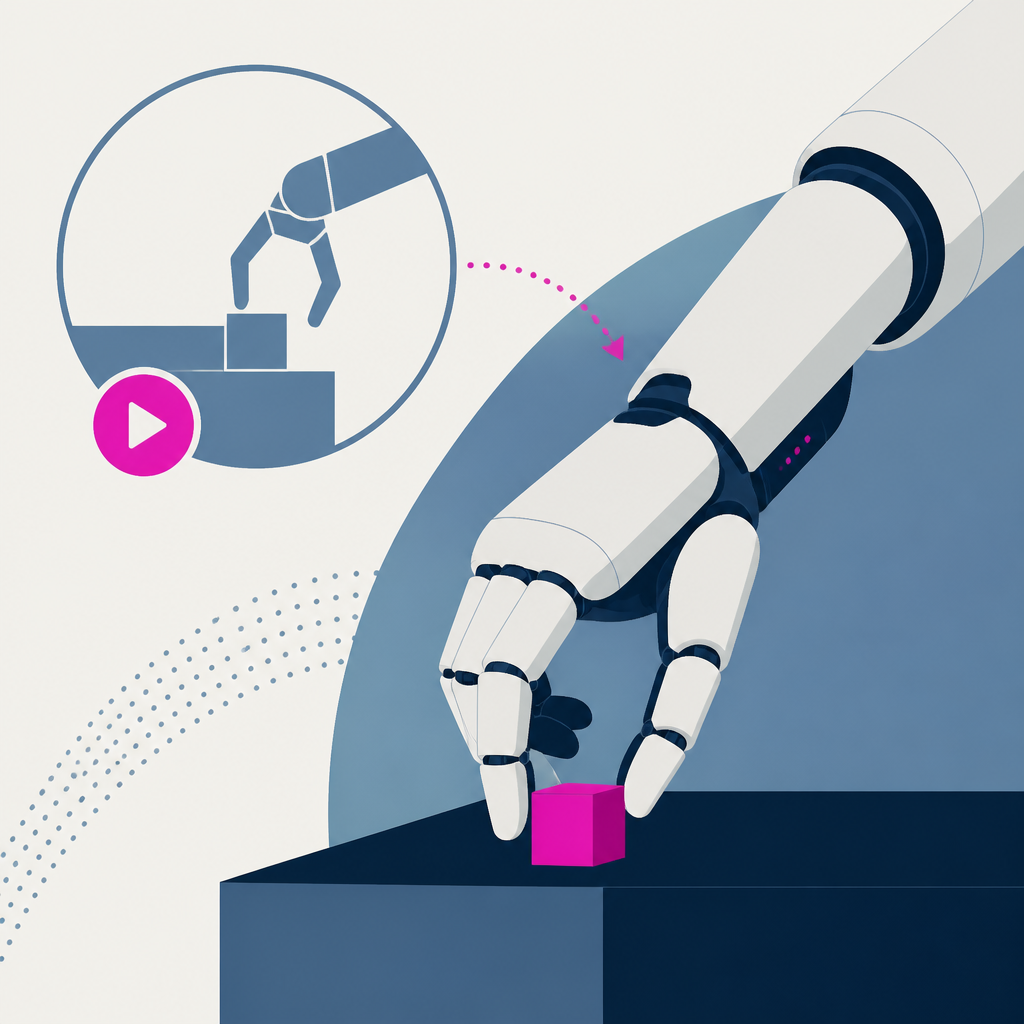
That places the company’s research in a few overlapping areas: motor adaptation, video-prompted task learning, and self-play. Put together, those ideas point to a system that can adjust to new hardware, pick up tasks from video cues, and improve through practice. It’s an ambitious stack, and the appeal is obvious. If it works, you don’t need a separate intelligence project for every new robot shell.
But the real test is still out in the physical world. The source is blunt about the hard part: deployment. A robot brain can be clever in a lab and still fail when speed, reliability, and safety matter. That’s the line Skild has to cross. Not can a model adapt in principle, but can it do it fast enough, consistently enough, and safely enough to matter outside a demo.
My take — AI-written commentary, not fact-checked reporting
This is the right bet, because rebuilding intelligence for every box with motors is a great way to keep robots expensive and stupid. The industry loves shiny bodies; the boring win is transferable brains. Safety will be the tax on all this enthusiasm, as usual, and rightly so.
Read more about this at: TheSequence
Related stories
 Skild AI Taps NVIDIA Physical AI to Teach Robots New Tasks From a Single Video
NVIDIA Blog · 1 month ago ·
45
Skild AI Taps NVIDIA Physical AI to Teach Robots New Tasks From a Single Video
NVIDIA Blog · 1 month ago ·
45