
The betrayal behind the data-center backlash: AI promised to break the rules of class but is just rewarding them so far
Fortune Nick Lichtenberg
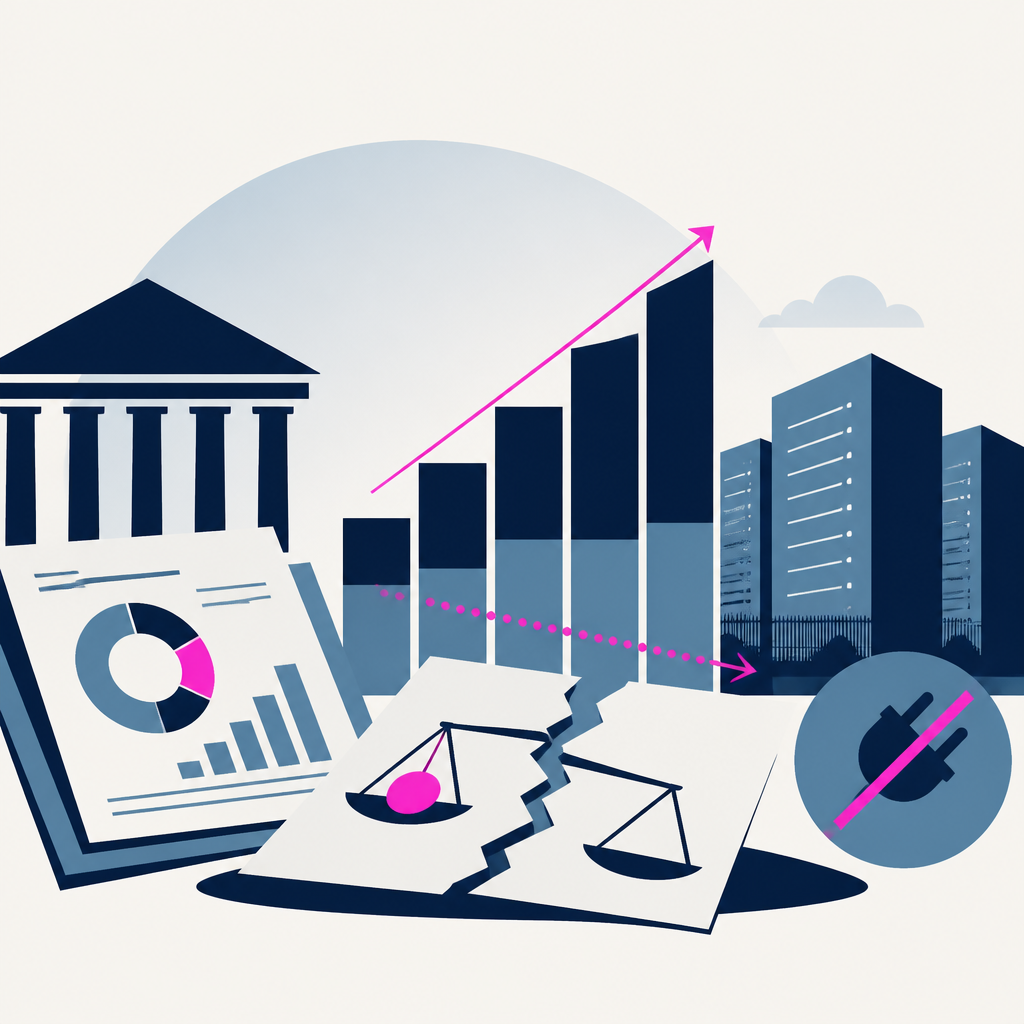
AI was sold as a class-leveler. So far it looks like it’s padding investors and pinching wages instead. The backlash is real: people can see the costs in their bills while the gains go elsewhere.
Based on reporting by Fortune, Nick Lichtenberg — read the original for the full story.
Summary, retelling and take written by AI under human oversight; images are AI-generated illustrations. How we work · Report an error
AI was supposed to flatten the old pecking order. Instead, the money trail points right back to the people who already had it: stockholders, higher earners, and older households with portfolios big enough to absorb the shock. That’s the sharpest reading of the new research from Wall Street and academia. Not a job apocalypse. Something quieter, and more familiar.
Morgan Stanley’s Heather Berger and her team make the central point in blunt financial terms. Households most exposed to AI tend to be college-educated, city-based, and well paid, but they also sit on a lot of equity wealth. The top 20% of earners hold 87% of direct equity and mutual fund exposure. For that group, portfolio gains can easily outweigh a hit to wages. For the bottom 40%, the math is far less forgiving.
Apollo Global Management’s work gets to the workers left behind by that math. Using real Claude usage logs matched to wage data across 321 occupations, the firm found no big wave of layoffs. Employment barely moved. Wages did. In the high-exposure jobs, real wage growth after 2023 ran 6.7 percentage points slower than in low-exposure work. The hit was worst for the lowest-paid workers and essentially vanished at the top. That is not disruption in the dramatic sense. It is suppression.
The corporate side looks just as telling. Morgan Stanley’s Michael Gapen found non-financial profits jumping $400.9 billion in the second quarter of 2026, with margins near postwar highs. The gains came from pricing power, not a neat productivity miracle. Firms pushed up prices by 2.30 cents per unit while costs barely changed. At the same time, wage growth slowed to its weakest pace since May 2021, even as unemployment stayed at 4.1% and hiring softened.
No wonder the public has latched onto data centers as the symbol of the whole thing. Gallup and Politico both found broad opposition, and fear of higher electricity bills rose fast over just six months. Local communities see the costs. The benefits show up on someone else’s balance sheet. That’s the part the AI pitch never quite explained.
My take — AI-written commentary, not fact-checked reporting
This is the bit AI boosters keep skipping: technology can be “transformative” and still leave the class structure basically intact. If the upside flows to portfolios while wages get squeezed, that’s not progress, that’s a very modern tax break for people who already own the place. Europe’s instinct to ask who pays the bill is looking less cautious and more sane by the day.
Read more about this at: Fortune
Related stories
 Workers feared AI would kill jobs. Instead, it could boost their paychecks: 72% of employers say they’ll pay more for AI skills
Fortune ·
39
Workers feared AI would kill jobs. Instead, it could boost their paychecks: 72% of employers say they’ll pay more for AI skills
Fortune ·
39