Team uses AlphaFold AI to redesign gene-editing proteins to make them safer
Ars Technica John Timmer
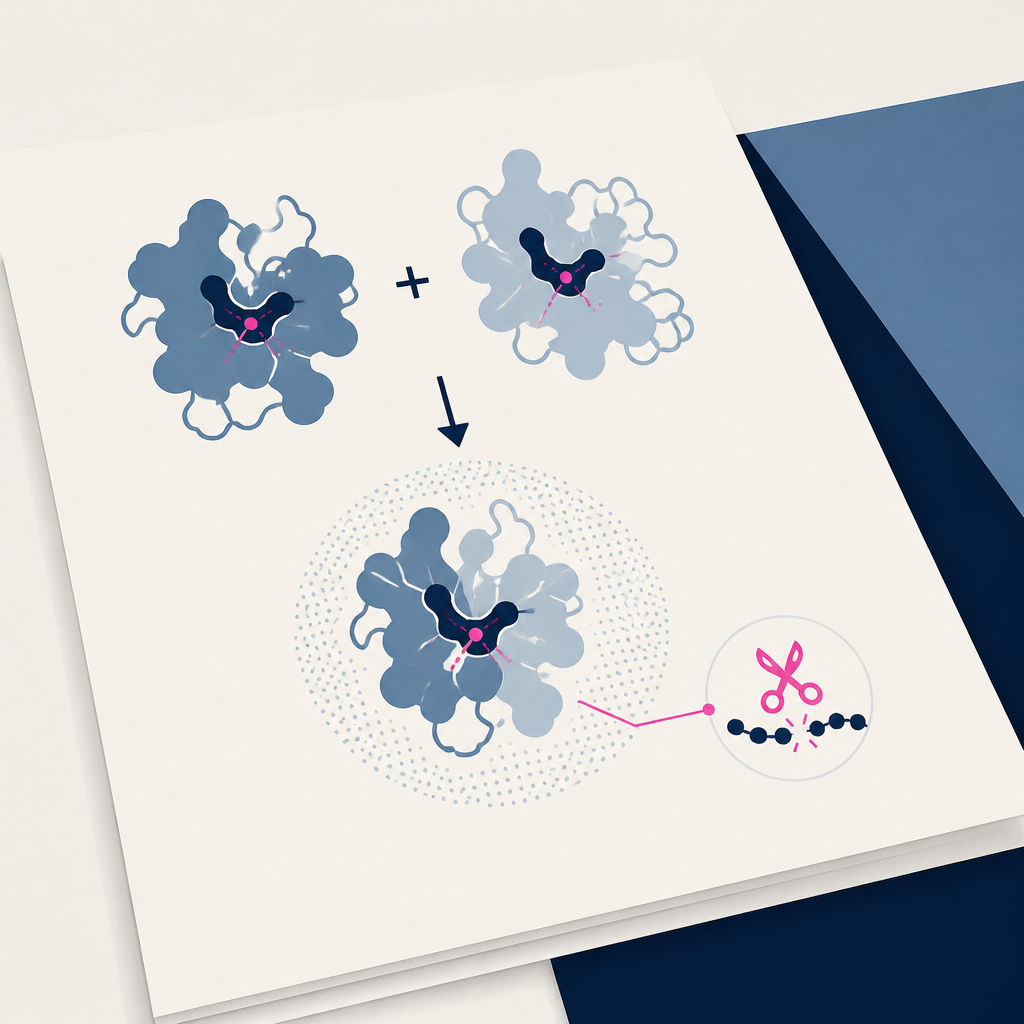
Scientists used AlphaFold to redesign CRISPR-style proteins, cutting stray DNA edits. Off-target hits are gene therapy's biggest safety headache.
Based on reporting by Ars Technica, John Timmer — read the original for the full story.
Summary, retelling and take written by AI under human oversight; images are AI-generated illustrations. How we work · Report an error
Gene editing has been around in usable form for barely a decade, but the therapies built on it are still fighting the same ghost: the off-target edit. Even the most precise molecular scissors occasionally snip somewhere they shouldn't, because the human genome is three billion letters long and rare sequences have a nasty habit of repeating themselves by accident. Treat enough cells — and real therapies treat millions — and those low-probability mistakes stop being theoretical.
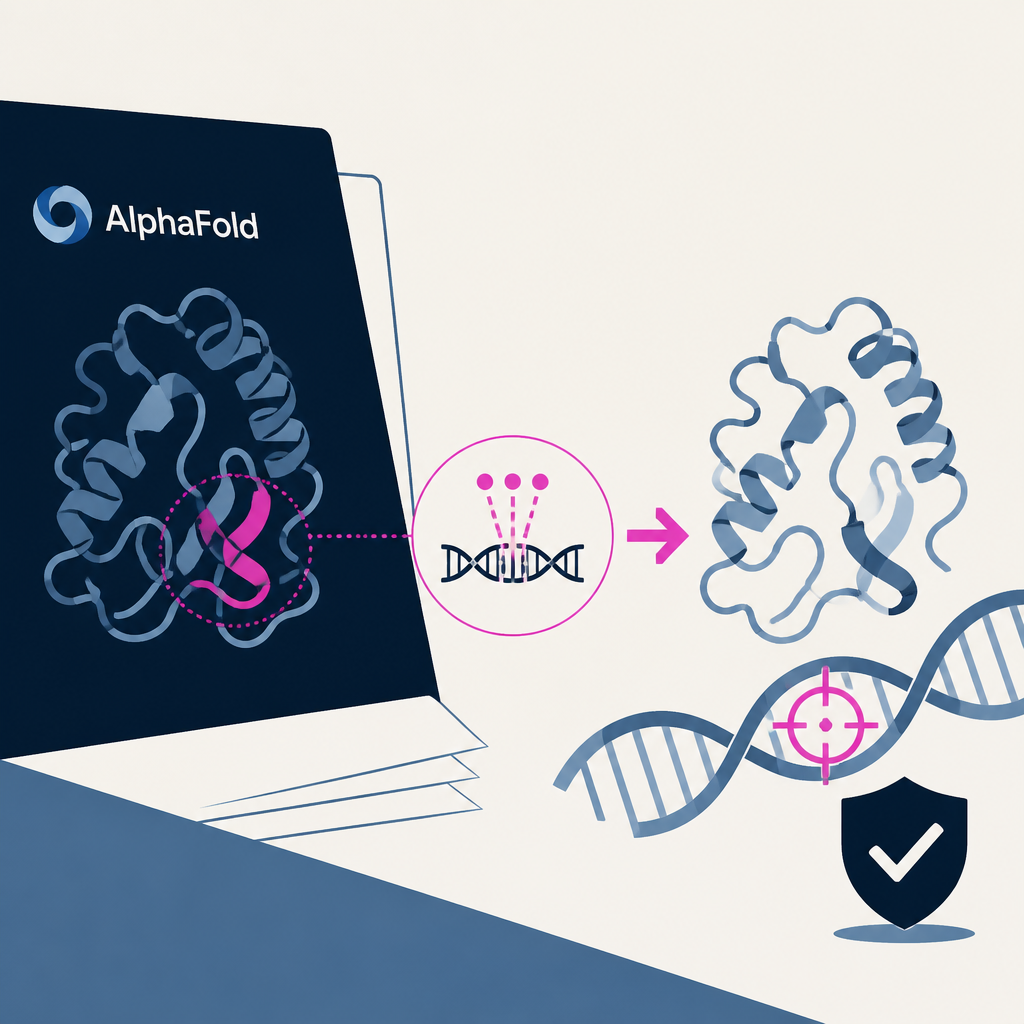
A team publishing in Nature decided to go after the problem from the protein's own architecture rather than just screening for bad outcomes after the fact. They took AlphaFold, the structure-prediction system that made its name solving the decades-old protein-folding puzzle, and repurposed it to hunt for the specific regions of gene-editing proteins that seem to be doing the damage. Instead of asking AlphaFold what a protein looks like, they asked it which parts of that shape are most responsible for grabbing DNA it wasn't supposed to touch.
Once those trouble spots were mapped, the researchers went in and re-engineered them, essentially filing down the parts of the protein that were too eager to bind. The result, according to the paper, was editors that kept their intended accuracy while making noticeably fewer wrong cuts. That's not a small tweak — off-target effects have been one of the main reasons regulators and clinicians stay cautious about rolling gene therapies out more broadly.
What makes this interesting isn't just the safety bump itself, but the method. AlphaFold was built to answer a structural biology question, not to babysit CRISPR proteins. Turning a general-purpose folding model into a diagnostic tool for editing errors suggests there's a lot of unclaimed value sitting inside these AI systems once someone points them at a narrower, weirder problem than the one they were trained for.
None of this means off-target edits are solved. But it does mean the toolkit for chasing them down just got sharper, and it came from a direction — reused AI infrastructure — that a lot of biologists probably weren't expecting.
My take — AI-written commentary, not fact-checked reporting
This is the AlphaFold story I actually care about — not another benchmark flex, but someone bolting the model onto a real, annoying, safety-critical problem and getting a measurable improvement out of it. The AI hype machine loves chatbots and image generators, but the quieter wins are showing up in labs like this one, where a protein-folding tool gets repurposed into a debugging instrument for gene editors. More of this, please, and less of pretending every capability increase needs a flashy demo to matter.“}
Read more about this at: Ars Technica