Sakana AI Releases Fugu-Cyber: An Orchestration Model Reporting 86.9% on CyberGym and 72.1% on CTI-REALM
MarkTechPost Asif Razzaq ● Covered by 16 sources
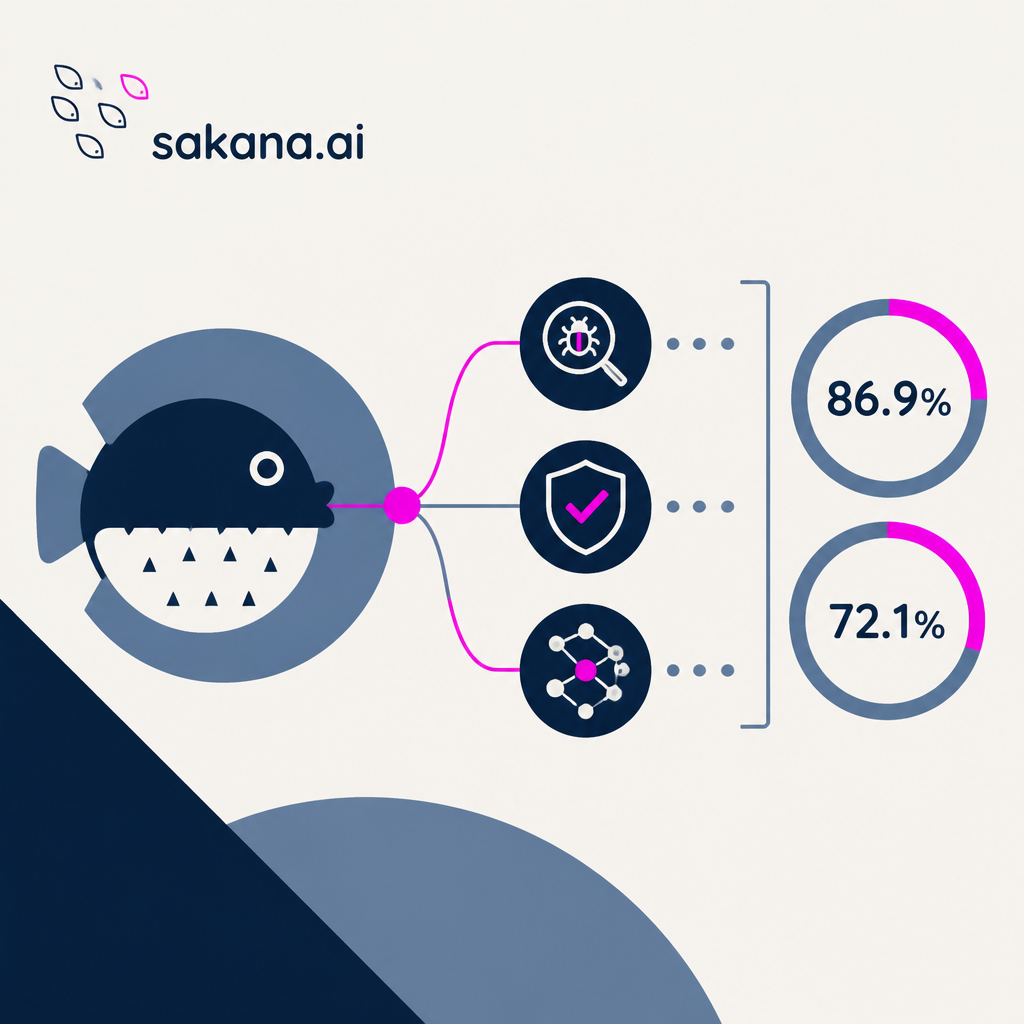
Sakana AI released Fugu-Cyber, a security-focused orchestration model that routes tasks to specialist language models for vulnerability detection and threat analysis. The model achieved 86.9% on CyberGym (a UC Berkeley vulnerability benchmark of 1,507 real-world bugs) and 72.1% on CTI-REALM (Microsoft's detection-engineering benchmark), slightly above comparable frontier models. Access requires manual approval and is limited to token-based subscriptions at a 20% premium to Fugu-Ultra, with no availability in the EU.
Why it matters
Sakana AI has released Fugu-Cyber, a security-tuned endpoint on its Fugu orchestration model. It reports 86.9% on CyberGym and 72.1% on CTI-REALM, edging past GPT-5.5-Cyber and Claude Mythos Preview. Access is gated behind manual approval, a defensive-use policy, and the Token Plan. Here is what the numbers actually mean. The post Sakana AI Releases Fugu-Cyber: An Orchestration Model Reporting 86.9% on CyberGym and 72.1% on CTI-REALM appeared first on MarkTechPost.
Also covered by
- Zvi (Don't Worry About the Vase) — Claude Opus 5: The System Card
- Latent Space — [AINews] Claude Opus 5: Fable-level performance at Opus price (half Fable)
- Simon Willison — Quoting Boris Cherny
- Simon Willison — Introducing Claude Opus 5
- MarkTechPost — Meet the New Claude Opus 5: Frontier-Class Agentic Coding and Computer Use at Unchanged Opus Pricing
- Ars Technica — Anthropic's Opus 5 is about token efficiency, not a capability leap
- The New Stack — Opus 5 costs a third of the price — and that’s actually the problem
- AWS Machine Learning — Introducing Claude Opus 5 on AWS: Anthropic’s most capable Opus model
- Anthropic News — Introducing Claude Opus 5
- The New Stack — Anthropic’s Opus 5 is almost Fable 5
- TechCrunch AI — Anthropic launches Opus 5
- Sakana AI — Announcing Fugu-Ultra v1.1 and Claude Code interface for Fugu
- The Verge — Anthropic releases Opus 5 with ‘close’ to Fable 5’s capabilities
- The Batch — Mythos Begets Fable, Cursor's Composer 2.5, Agents Building Agents
- The Batch — Testing Mythos and Fable, Moving Beyond SWE-bench, Nvidia's Open Contender