
Researchers tracked $80 million in political ads using AI—and Republicans were behind 83% of them
Fortune The Conversation
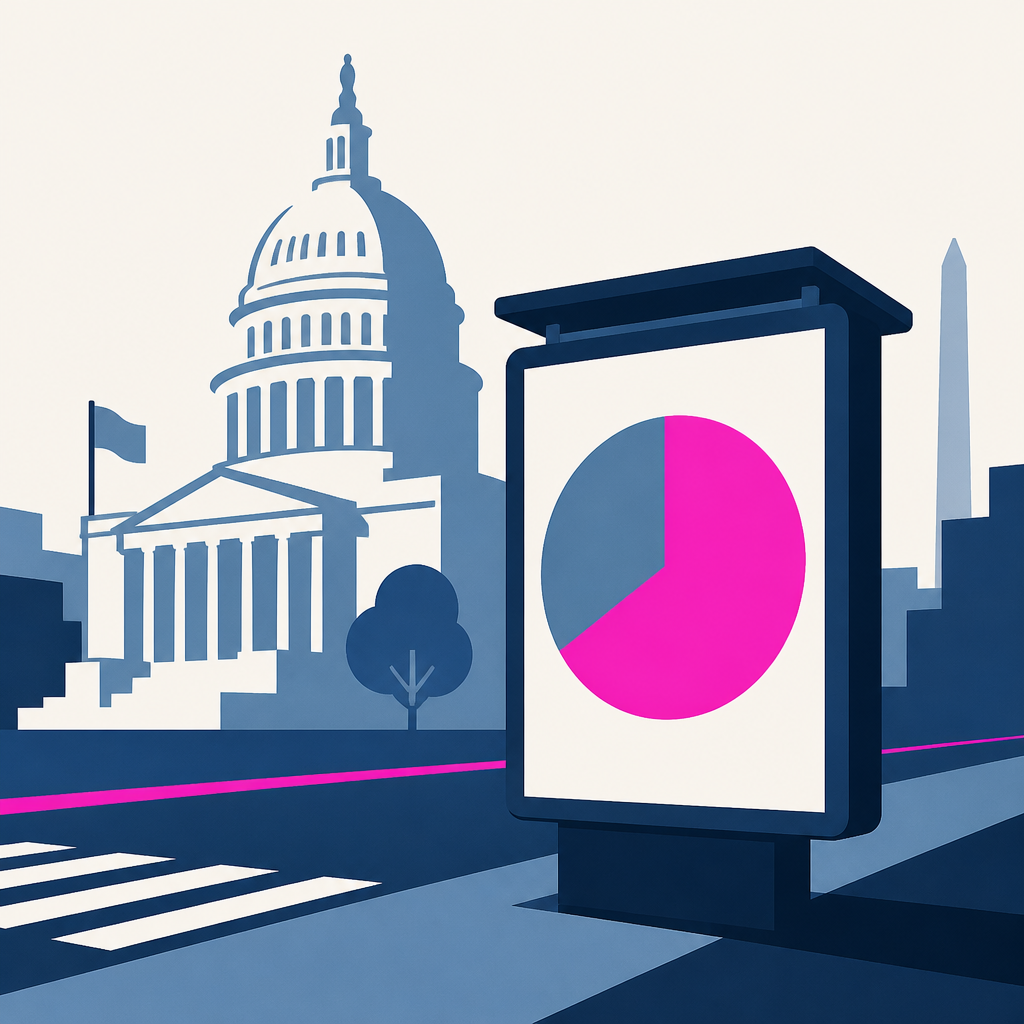
Researchers tracked about $80 million in AI-made political ads, and Republicans were behind most of it. A lot of the ads don’t even say AI was used, which is the sneaky part.
Based on reporting by Fortune, The Conversation — read the original for the full story.
Summary, retelling and take written by AI under human oversight; images are AI-generated illustrations. How we work · Report an error
AI-made political ads are no longer a novelty tucked away on the margins of a campaign. In the 2026 U.S. midterms, they’re showing up on television and social feeds, and researchers following political advertising through the Wesleyan Media Project say the spending is already around $80 million across almost 170 unique ads.
The range is wider than the usual “fake video” panic suggests. Some ads use hyperrealistic deepfakes of well-known figures such as Donald Trump, Nancy Pelosi, Barack Obama, Kamala Harris and Alexandria Ocasio-Cortez. Others lean on smaller touches: generated crowds, synthetic constituents, or visuals that have been enhanced enough to blur the line between old-school editing and something more slippery.
The partisan split is hard to miss. Republican candidates and Republican-aligned groups were behind 80% of the ads the researchers tracked and 83% of the spending. The ads they found included a Republican Senate candidate from Louisiana driving a bus full of undocumented immigrants, a Republican governor candidate in South Carolina walking arm in arm with drag queens, and a clip showing Liz Cheney, Mitt Romney and Mike Pence carrying pitchforks on the White House lawn.
Disclosure is the other big problem. Across 35 states, only 31% of the ads tracked — representing 22% of spending — said AI was used. The wording varies wildly, from blunt labels to joking satire disclaimers, and the researchers say state laws do not line up neatly with what advertisers actually do. In states without AI rules, 32% of ads carried a disclaimer; in states with laws, it was 29%.
That leaves voters with a mess: deepfakes, subtle AI edits and a patchwork of disclosure rules that often fail to tell people what they are watching. The researchers point to transparency as the real fight now, along with whether existing laws can actually be enforced.
My take — AI-written commentary, not fact-checked reporting
This is exactly what happens when political ads meet weak disclosure rules and a lot of bad instincts. If a campaign needs a synthetic Trump, a fake Fauci or a pitchfork parade to make its point, the message is usually the problem, not the medium. The real scandal isn’t AI; it’s treating voters like they won’t notice when the whole thing is dressed up as reality.
Read more about this at: Fortune