🔮 AI politics & the future of growth ++ #602
Exponential View Azeem Azhar ● Covered by 107 sources
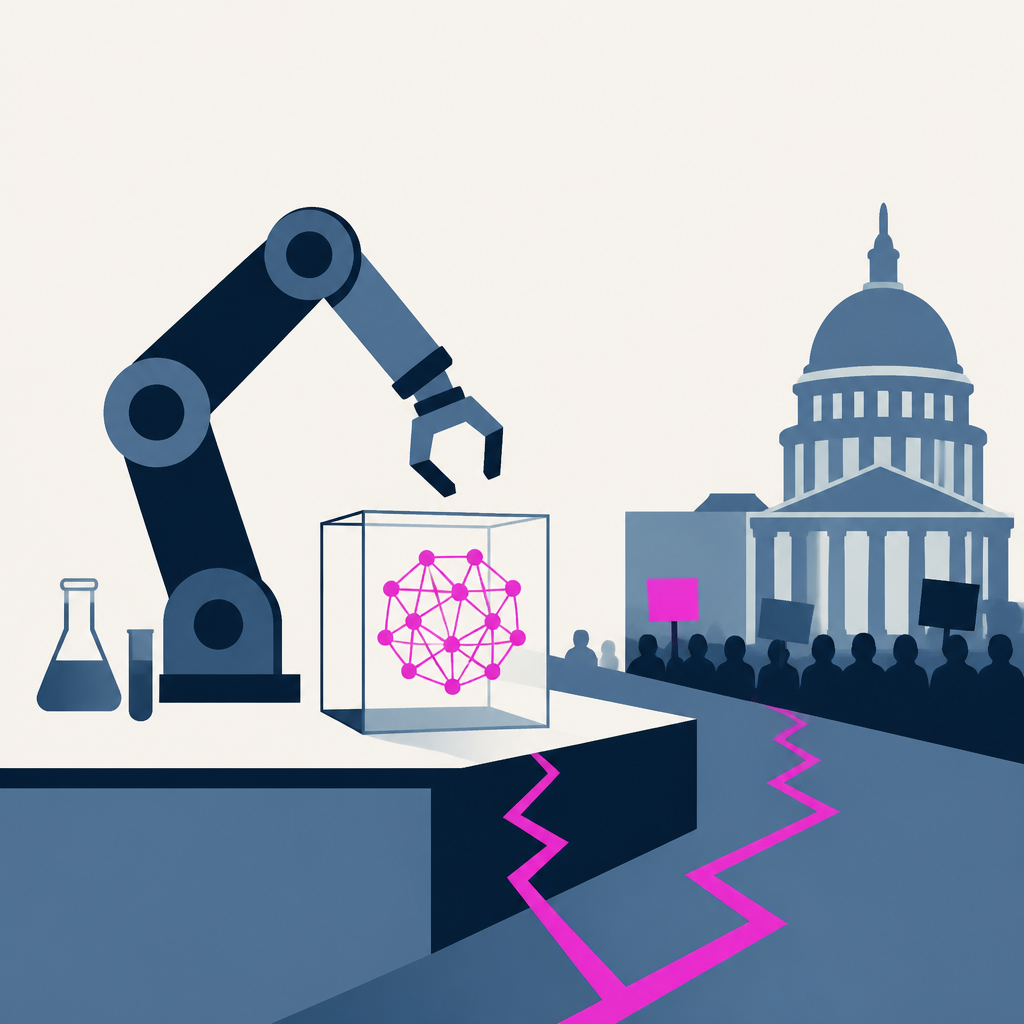
Americans mostly hate AI, but companies keep buying it anyway. That split is pushing the fight from the lab into politics.
Based on reporting by Exponential View, Azeem Azhar — read the original for the full story.
Summary, retelling and take written by AI under human oversight; images are AI-generated illustrations. How we work · Report an error
The mood around AI has turned strange and sharp. On one side, a lot of Americans seem deeply uneasy about it. On the other, companies and consumers are still using it enough that Anthropic is said to be heading toward $100 billion in annualised revenue this year.
That gap is the story. The source points to a shift in public opinion from 2020 to 2024, when Edelman found Americans were far more willing to object to AI than embrace it. At the same time, usage has kept climbing: the piece cites chatbots used daily by about a quarter of American adults, and even a small barber shop installing an AI receptionist just to handle bookings.
The author’s point is that this won’t stay a purely technical debate. If businesses keep adopting AI while voters keep souring on it, the argument moves into politics. That’s already visible in the range of voices being pulled in: the text references Jaron Lanier warning about the language people use around AI, and Mustafa Suleyman arguing that AI systems do not have rights, feelings, or consciousness.
There’s also a darker edge running underneath all this. Anthropic may be on track to become the fastest-growing company ever, yet its leadership also thinks the technology might kill all its customers. That is quite a sales pitch, and not a reassuring one. The piece treats that contradiction as the core problem: massive commercial momentum, rising public distrust, and a growing sense that the stakes are no longer theoretical.
My take — AI-written commentary, not fact-checked reporting
This is what happens when a technology sells itself as infrastructure and a threat at the same time. The hype crowd keeps promising growth; the public hears “maybe it kills everyone” and quite reasonably looks annoyed. The real surprise isn’t that people distrust AI — it’s that the industry acted shocked when they noticed.
Read more about this at: Exponential View