
The top four underwater and extreme‑environment data centres
Startups Magazine Roshini Bains
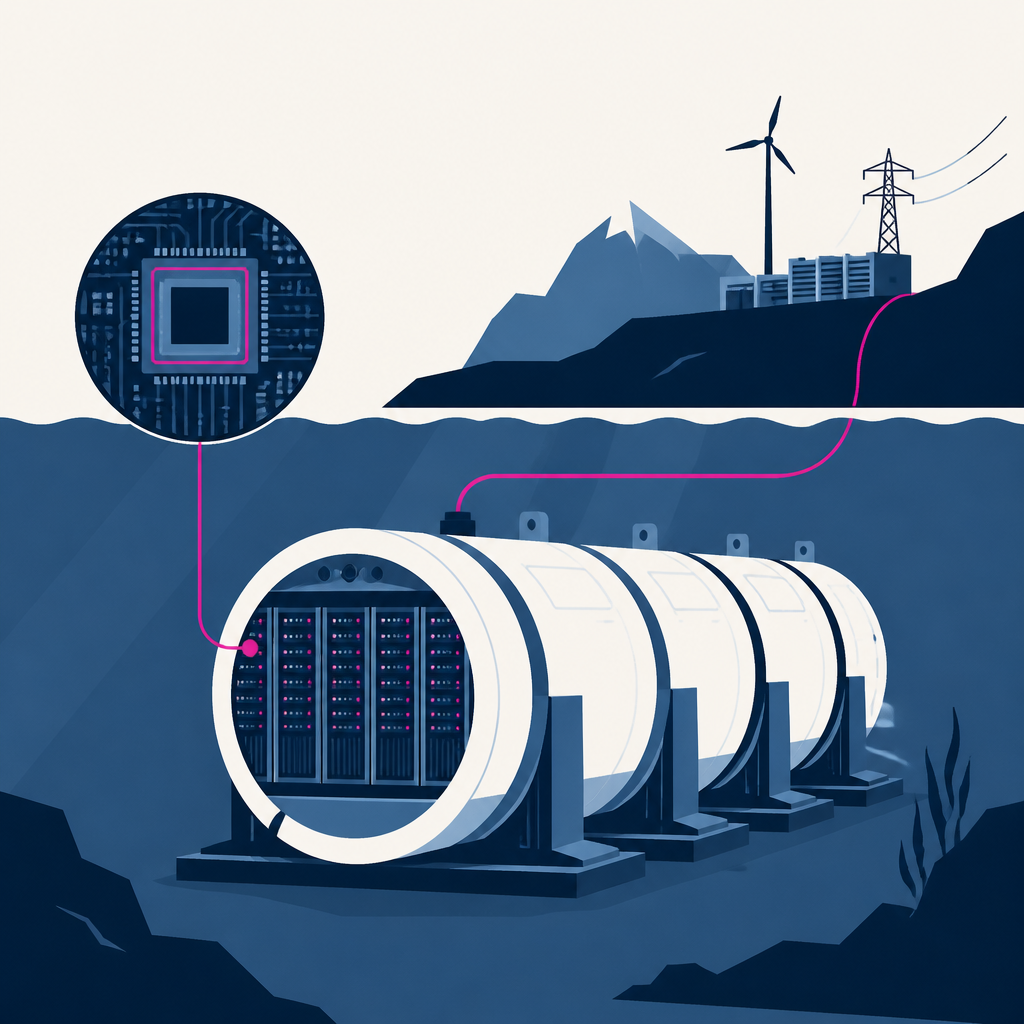
Data centres are moving underwater and onto wind farms. AI heat is forcing startups to use the sea, and some are already testing it.
Based on reporting by Startups Magazine, Roshini Bains — read the original for the full story.
Summary, retelling and take written by AI under human oversight; images are AI-generated illustrations. How we work · Report an error
Data centres used to be stuck on dry land, where air coolers, fans and chillers did most of the heavy lifting. That model is starting to look tired. AI workloads throw off so much heat that the old tricks are becoming less effective, and startup founders are now looking at the ocean as a giant, natural cooling system.
This isn’t a brand-new idea. Research into ocean-based cooling has been running for more than a decade, and Microsoft’s Project Natick, launched in 2015, showed that sealed servers on the ocean floor could be twice as reliable as their land-based counterparts. The reason was simple enough: a nitrogen-filled atmosphere and no people poking around meant fewer failures.
Panthalassa is taking that logic offshore with wave-powered nodes for AI inference. Its floating units are not anchored, steer themselves without engines or fuel, and use wave motion to generate electricity. The chips sit in watertight compartments below the surface, where the ocean does the cooling for free, and the results are sent back to land through Starlink. Founded in 2016, the company has raised $193 million in total, including a $120 million Series B in May 2026.
Subsea Cloud is pushing a different version of the same idea: sealed underwater capsules that use seawater instead of freshwater and are designed to cut power use by 30–40%. The company says its pods can hold high-density GPU racks, including space reserved for 2,048 Nvidia H100 GPUs. They connect back to the grid by cable, can be deployed in different places, and are meant to be quicker and cheaper to roll out than other underwater systems.
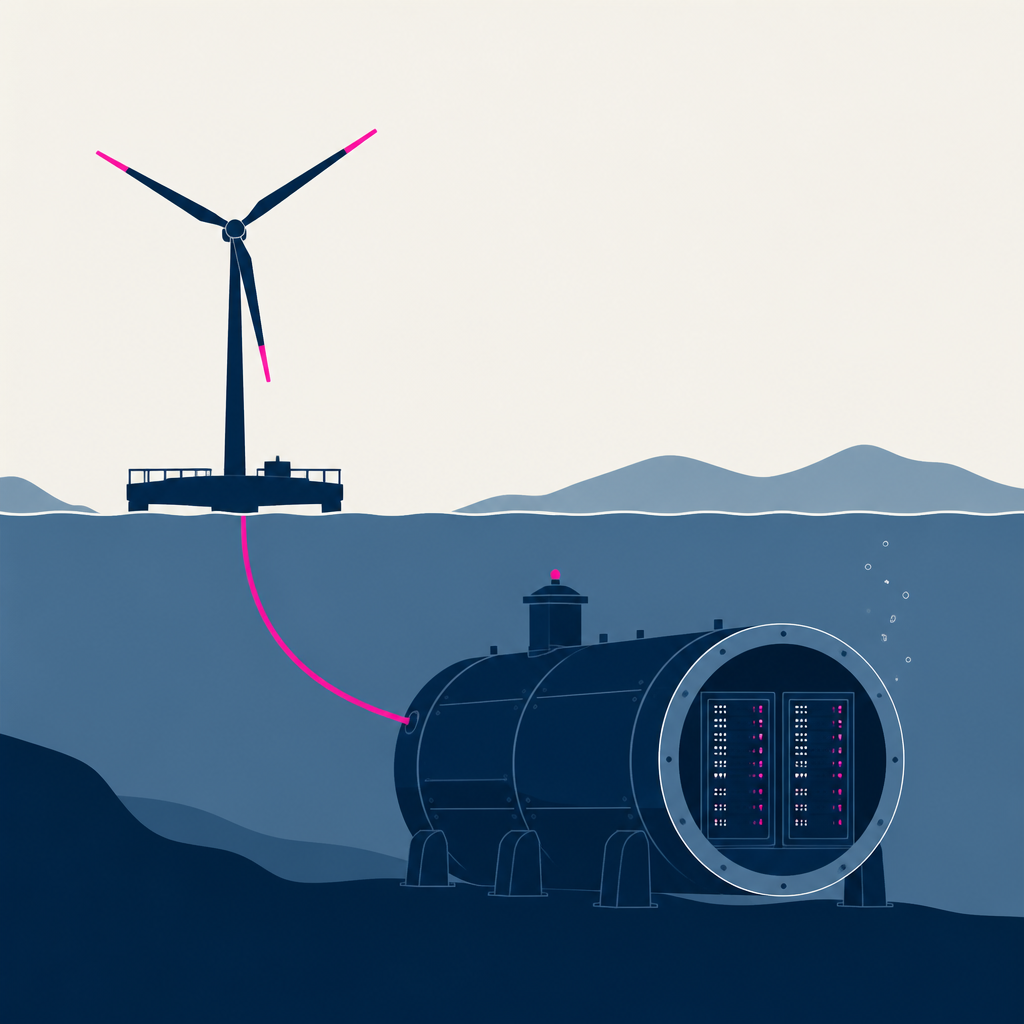
Then there’s Aikido, which bolts a data centre straight onto a floating wind turbine. Its AO60DC platform combines power generation, storage and cooling in one steel unit, with the turbine producing 15–18MW and 10–12MW of that going to AI compute. The platform sits about 200 miles from major cities, keeping latency under 10ms, and the company says its first commercial project is planned in the UK in 2028. Highlander Hailanyun has already gone commercial in China, running 2,000 servers at 24MW off the coast of Shanghai’s Lin-gang Special Area. It uses offshore wind, deep-sea cooling and optical-electrical composite cables, and says the setup is 95% green power. The bigger point is obvious: the next data centre may not look like a building at all. It may look like marine hardware, because that’s where the power and the cooling now make sense.
My take — AI-written commentary, not fact-checked reporting
The cleanest data-centre story right now is also the least glamorous: put the compute where the cooling is. That sounds almost boring, which is usually a good sign in infrastructure. The hype crowd can keep arguing about “AI factories”; the serious money is drifting toward seawater, wind and places most executives would rather visit on a spreadsheet than in person.
Read more about this at: Startups Magazine
Related stories
 AI's land problem is pushing data centers into the ocean
Fortune ·
29
Is the future of data centers portable? Runware builds a pod to find out
TechCrunch · 1 month ago ·
51
Single-Phase Direct Liquid Cooling Is Proven for the Next Decade of Ultra-Dense Compute
Wiley Science and Engineering Content Hub · 1 day ago ·
40
AI's land problem is pushing data centers into the ocean
Fortune ·
29
Is the future of data centers portable? Runware builds a pod to find out
TechCrunch · 1 month ago ·
51
Single-Phase Direct Liquid Cooling Is Proven for the Next Decade of Ultra-Dense Compute
Wiley Science and Engineering Content Hub · 1 day ago ·
40