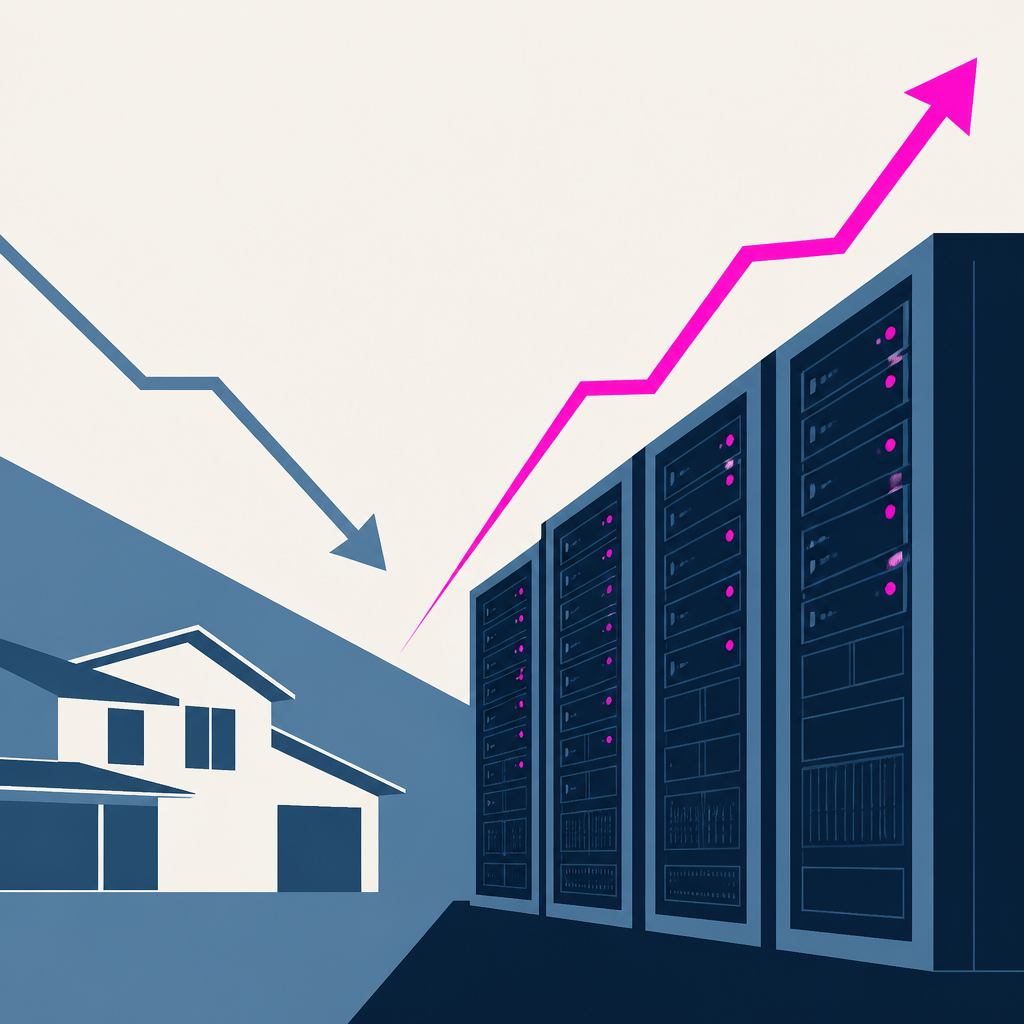
Market concentration and AI buildout spending: tech drives S&P 500 earnings growth while capital ramps
Andreessen Horowitz
Tech is driving most S&P 500 earnings growth now, while AI spending keeps pouring into chips and power. The surprise: even older GPUs are still holding value.
Based on reporting by Andreessen Horowitz — read the original for the full story.
Summary, retelling and take written by AI under human oversight; images are AI-generated illustrations. How we work · Report an error
a16z’s second State of Markets leans hard into one point: tech is no longer just a sector sitting inside the market, it is the market’s main engine. Since 2023, tech has become the earnings-growth story, and by late August it accounted for about 76% of the S&P 500’s total earnings growth in 2026. That is a pretty stark shift from the old durable-goods cycle, when houses, cars, and appliances did the heavy lifting.
The newer cycle runs on AI buildout. Money is flowing into semiconductors, power, networking, and the infrastructure around them, with hyperscalers turning free cash flow into semiconductor demand and debt joining the party too. The report’s framing is blunt: bits gave way to atoms. Hardware and infrastructure are back at the center of attention after years of software getting the glory.
There is also a useful reality check buried in the GPU debate. Some skeptics argued that chips like Nvidia’s B200 would be obsolete before long, leaving older parts stranded. That hasn’t played out yet. Demand for compute is still outrunning supply, rental rates and residual values are not falling the way they “should,” and even the A100 is still pricing at or above where it started the year. Better, cheaper intelligence is not killing demand; it is pulling more of it into the system.
And the adoption story is still early. Nearly 30% of S&P 500 companies say AI has had some quantifiable impact, but only about 2% report any tracked metric. On the consumer side, April data showed barely 2% of U.S. households paying for an AI service. So the chips are already hot, the spending is real, and the actual rollout of AI is still shallow.
Software, meanwhile, got its own correction. The source pushes back on the idea of a total wipeout, but the message is clear enough: post-ZIRP, the market wanted profitability, not just growth. By 2026, about 75% of tech companies are profitable, while only around 30% are growing 20% or more. That is not apocalypse. It is a very public demand to prove it.
My take — AI-written commentary, not fact-checked reporting
This is what happens when a market falls in love with infrastructure and then starts calling it destiny. The hot take that AI will instantly erase software was always a bit theatrical; the quieter truth is that investors now want cash flow, proof, and a decent power bill. In other words, the spreadsheet won the argument, which is rude but refreshingly grown-up.
Read more about this at: Andreessen Horowitz