
Liquid AI Releases d1-ultra: A Multimodal Decision Model That Scores 65 on the AA Decision Index
MarkTechPost Asif Razzaq
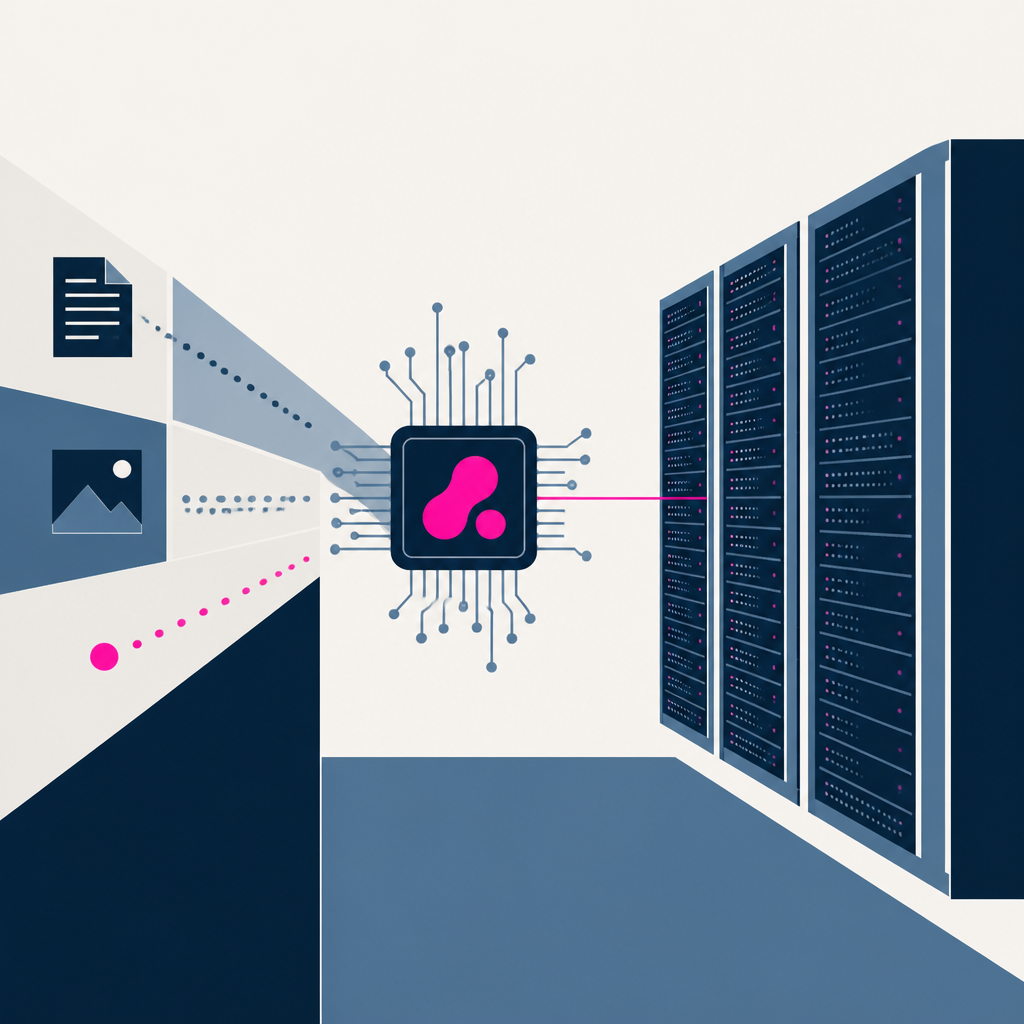
Liquid AI launched d1-ultra, a model that answers with probabilities instead of chatty text. That makes it handy for routing, moderation, and other yes-or-no jobs.
Based on reporting by MarkTechPost, Asif Razzaq — read the original for the full story.
Summary, retelling and take written by AI under human oversight; images are AI-generated illustrations. How we work · Report an error
Liquid AI has released d1-ultra, its most capable decision model so far. It can take text, images, or both, then answer typed questions with probabilities instead of generating free-form text. The model does the whole thing in a single forward pass and returns no output tokens, which is a neat fit for classification, scoring, routing, and similar chores where prose would just add cost and delay.
The company is pitching this as a multimodal decision engine for messy, real-world cases. One example is checking whether a circuit board matches a spec. Another is judging a damage claim against a customer photo. That is a different job from summarization or code generation, which Liquid says still belong to a language model.
Liquid’s docs break the system into three question styles: yes-or-no, one choice from a list, and ordered scoring. Each question gets a probability answer, and the model evaluates all of them against the same input in one call. In the API reference, output_tokens stay at zero, which is the whole point: you are paying for input processing, not for generated text you do not need.
On Liquid’s own benchmark suite, d1-ultra leads all 8 categories across 112 evaluations, according to the company. Liquid also says it scores 65 on the Artificial Analysis Decision Index, putting it at number one in that ranking. The source does not disclose the parameter count or context length, and the weights remain API-only for now.
Pricing starts at $0.042 per million input tokens on the Liquid API. Images are billed as patches, with each 32×32 patch counting as 1.5 tokens; a 1024×1024 image comes out to 1,536 tokens. Each question is billed separately, including its own text and images, so repeated questions on the same image get charged again. The endpoint also has hard limits: up to 8 images, up to 10,000 image patches, and a full JSON body under 4.5 MB.
My take — AI-written commentary, not fact-checked reporting
This is the kind of AI that actually sounds useful: fewer speeches, more answers with odds attached. The industry could use more systems that know when to stop talking. The obsession with bigger chatbots has been loud; quiet decision models may turn out to be the boring part that matters.
Read more about this at: MarkTechPost
Related stories
 Liquid AI Releases Open-Weight d1-3B and d1-omni-600M: Multimodal Decision Models With Zero Output Tokens
MarkTechPost · 1 week ago ·
39
Liquid AI Releases Open-Weight d1-3B and d1-omni-600M: Multimodal Decision Models With Zero Output Tokens
MarkTechPost · 1 week ago ·
39
 Liquid AI Releases d1: A Decision Model That Returns Calibrated Probabilities With Zero Output Tokens
MarkTechPost · 2 weeks ago ·
5
Multimodal open d1 decision models for the edge
Hugging Face · 1 week ago ·
45
Liquid AI Releases d1: A Decision Model That Returns Calibrated Probabilities With Zero Output Tokens
MarkTechPost · 2 weeks ago ·
5
Multimodal open d1 decision models for the edge
Hugging Face · 1 week ago ·
45