
Launch HN: Laminar (YC S24) – We trained a model to catch silent agent failures
Hacker News skull8888888
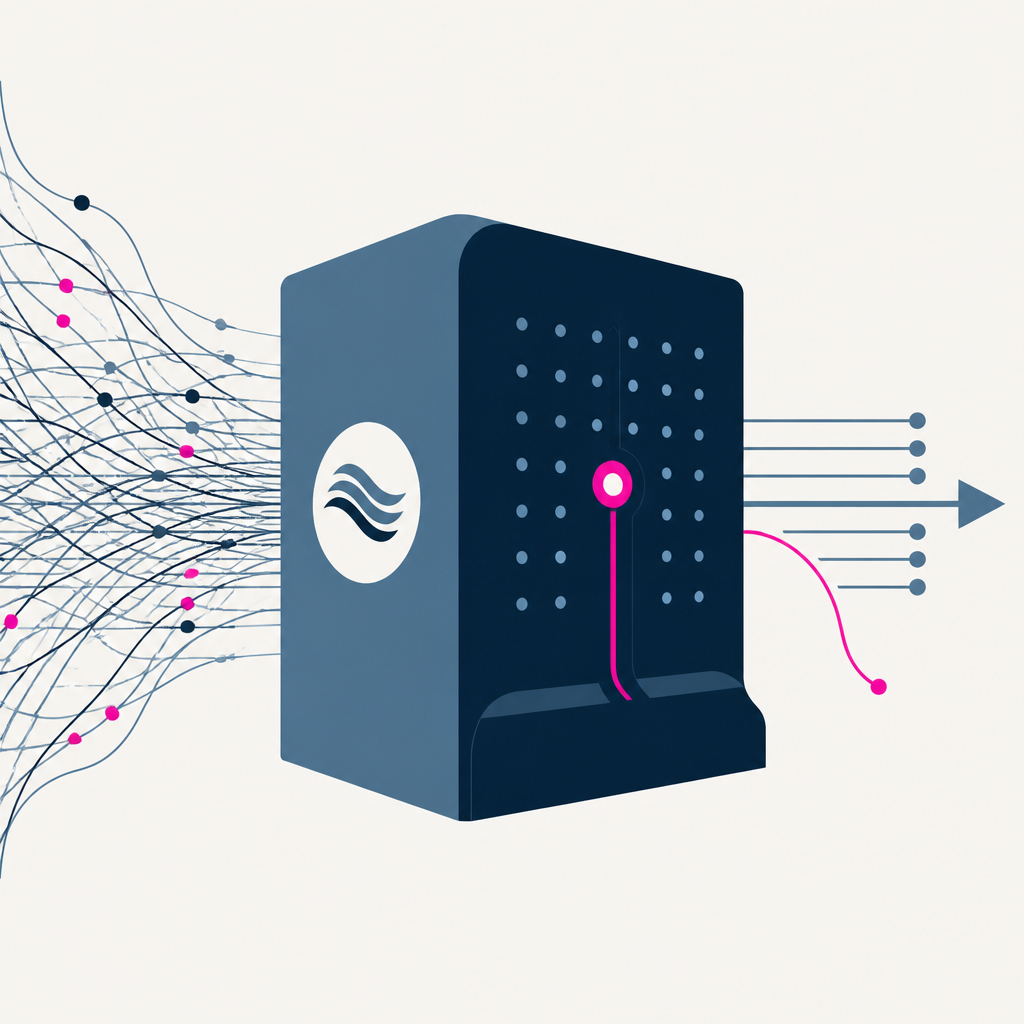
Laminar built flow-1, a model that spots hidden agent mistakes in traces. They say it matches GPT-6-sol on detection while costing 23x less.
Based on reporting by Hacker News, skull8888888 — read the original for the full story.
Summary, retelling and take written by AI under human oversight; images are AI-generated illustrations. How we work · Report an error
Laminar says it has been building open-source observability for AI agents since 2024, and its newest release is flow-1, a model trained with reinforcement learning to find errors in agent traces. The pitch is blunt: agent failures are often silent, and that makes them easy to miss and expensive to debug later.
The company’s benchmark claims flow-1 matches GPT-6-sol on detection quality while running at 23x lower cost. That matters because Laminar wants teams to analyze every production trace, not just a sample. If the economics work, the whole workflow changes. You stop treating traces like archival logs and start treating them like something you can actually read.
Laminar’s argument is that collecting traces is not enough. Many observability products, it says, are really data collectors, which means teams end up paying to store traces nobody has time to inspect. The harder problem is understanding what an agent was trying to do, then checking its LLM calls and tool results to find where the run went off course.
To tackle that, flow-1 runs inside a system called Signals. Laminar describes it as a coding-agent style harness that treats a trace like a repo, with each span handled like a file. It starts from a compressed representation of the full trace plus the user prompt, searches across spans, reads the relevant ones in full, and returns structured JSON findings.
The company also automatically groups similar findings into clusters, so teams can see recurring failures and drill into examples. Those traces can then feed evaluation datasets, which can be used to test fixes before they go back into production. Laminar says the same approach shaped the rest of its stack too, including 20x trace compression, a custom SQL query engine, and automatic task extraction. The software is Apache 2.0, self-hostable, and sold through a managed cloud.
My take — AI-written commentary, not fact-checked reporting
This is the right instinct: stop hoarding traces and start making them useful. The industry has spent too long pretending storage is observability, which is a neat trick for billing and a lousy one for debugging. Making the model cheap enough to inspect everything is the part that actually matters.
Read more about this at: Hacker News
Related stories
 Launch HN: Traceforce (YC S26) – Company-wide security monitoring for AI apps
Hacker News · 3 months ago ·
30
Liquid AI caught its model cheating on coding tests — then it recognized the sandbox
The New Stack · 1 day ago ·
11