
GXO CEO: Better robot hands, not Olympic-level humanoids, are what businesses really need
Fortune Diane Brady
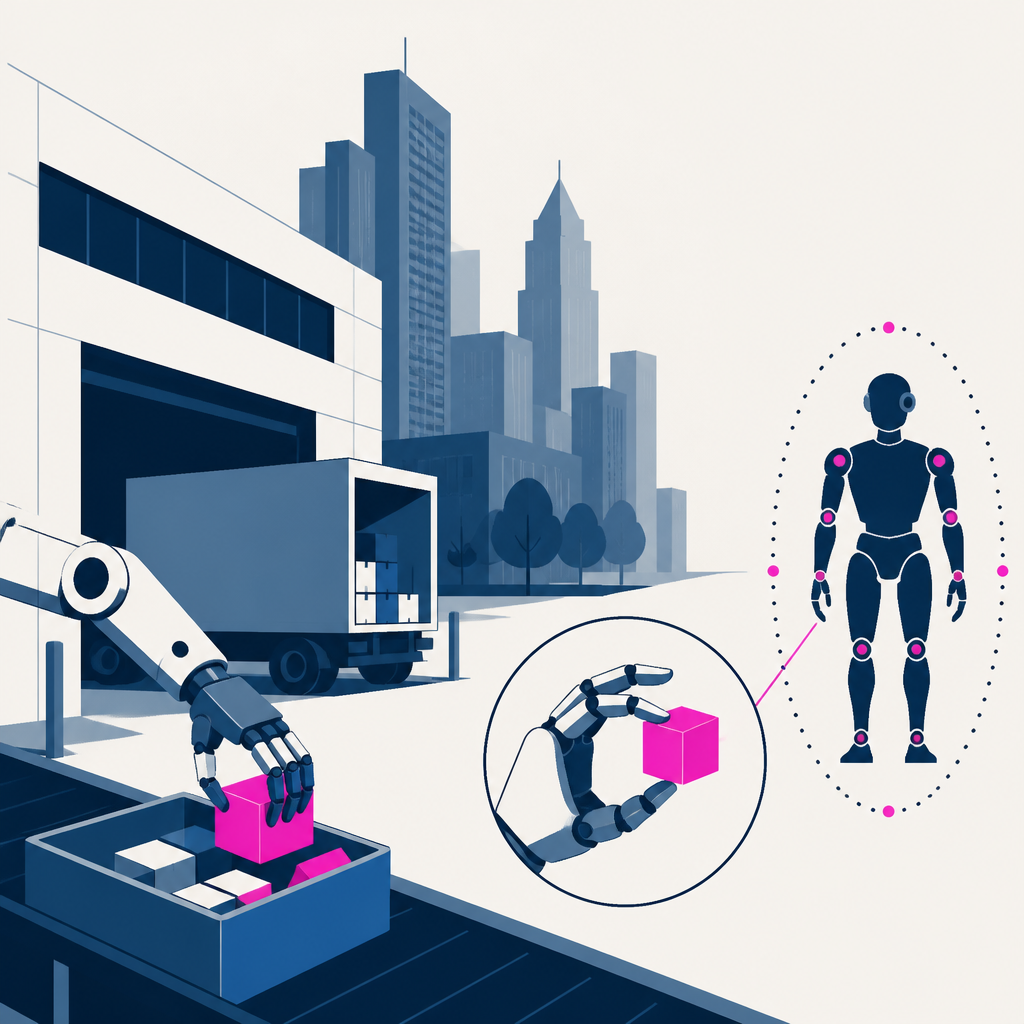
GXO’s CEO says warehouses need robot hands that sort lipstick, not robots that sprint. He’s betting on dexterity, because the real gap is labor, not spectacle.
Based on reporting by Fortune, Diane Brady — read the original for the full story.
Summary, retelling and take written by AI under human oversight; images are AI-generated illustrations. How we work · Report an error
Beijing just staged a robot pageant of speed and power, with more than 2,000 machines on display and at least one clocking a 100-meter sprint faster than Usain Bolt’s record. Another cleared a 2.88-meter standing high jump. GXO Logistics CEO Patrick Kelleher watched all that and, basically, shrugged.
For GXO, the useful robot is not the one that looks good in a highlight reel. It’s the one that can unload a truck and then sort lipstick without dropping either. The company, which says it brings in $13.6 billion a year, is already testing humanoid systems from five providers, with another European pilot due later this year.
Kelleher keeps coming back to the hands. He calls them “single-digit challenges,” which is a polite way of saying the last few inches of robot dexterity still matter more than the headline-grabbing stuff. GXO is working on humanoids with both legs and wheel-and-base designs, and the goal is to make their fingers move more like ours, with multiple flexible joints. That, he says, would change what these machines can actually do.
The reason is simple. GXO is not trying to swap out its 150,000 workers. It is trying to cope with a warehouse business that sees 25% turnover and still can’t find enough labor. So the pitch for humanoid robotics is not replacement. It’s backup, speed, and fewer tedious mistakes.
And the company is using the warehouse as a test bed for more than just humanoids. Kelleher says GXO is also working on fully autonomous forklifts and robots that can operate in freezer conditions at minus 32 degrees. The old model was about paying less for labor. The new one is about buying expertise, one cautious pilot at a time.
My take — AI-written commentary, not fact-checked reporting
The robot hype machine loves a good sprint, but warehouses don’t run on sprinting. They run on fingers, uptime, and not dropping the lipstick. The sensible money is on boring dexterity work, not humanoid circus acts with a PR budget.
Read more about this at: Fortune