Home robots already walk. 1X's new hands try to solve the part that actually matters
TNW
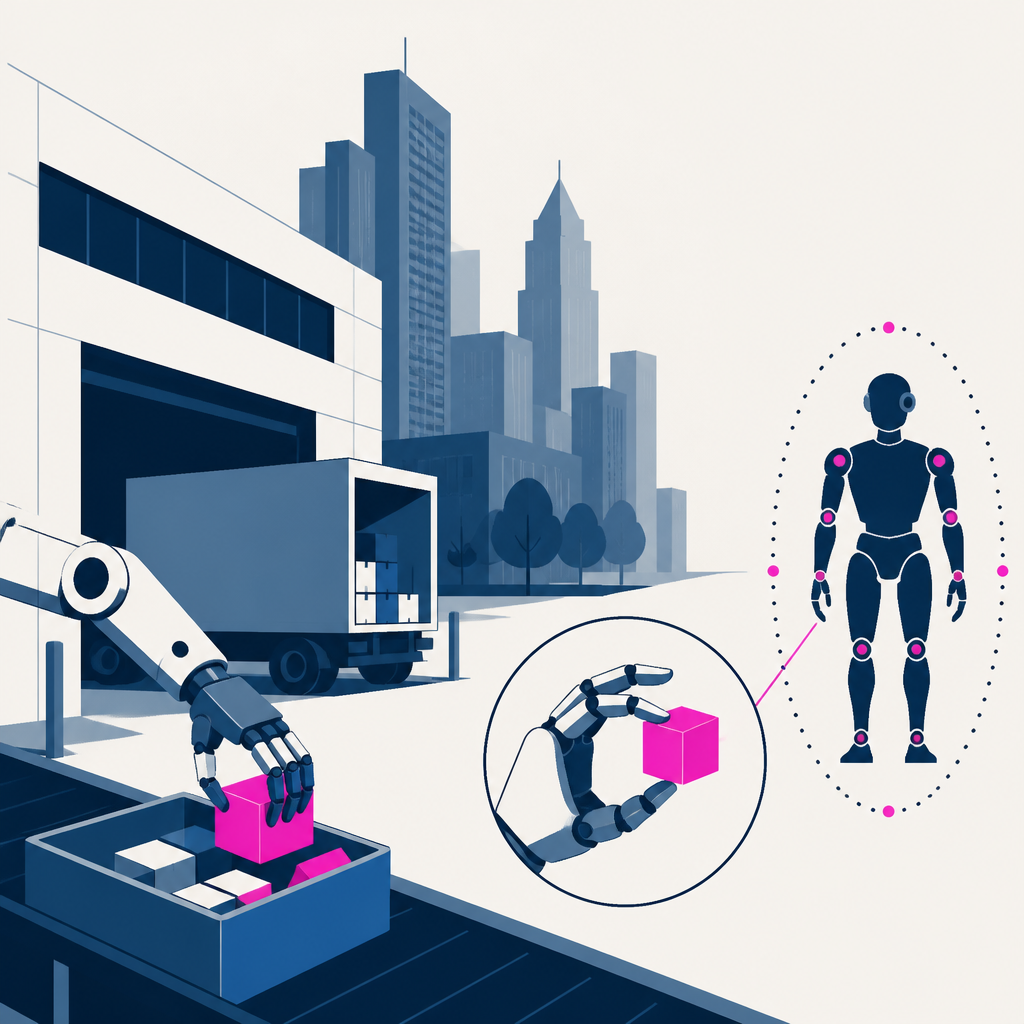
1X gave its NEO home robot new hands with 25 joints and a sense of touch per hand. Walking's solved — grabbing a wet glass without dropping it is the actual hard problem.
Based on reporting by TNW — read the original for the full story.
Summary, retelling and take written by AI under human oversight; images are AI-generated illustrations. How we work · Report an error
Humanoid robots have been able to walk for years now. The real bottleneck was always the hand. 1X just put new ones on its NEO home robot, and they're the most interesting part of the whole machine. You can stride across a stage all day and still be worthless in a kitchen if you can't pick up a plate without either dropping it or crushing it.
The numbers here are specific enough to matter. Each NEO hand has 25 degrees of freedom, 22 spread across the fingers and palm plus three in the wrist, and the joints are backdrivable, meaning they yield when pushed instead of locking up and fighting back. That's a small mechanical detail with a big practical payoff: a bump doesn't turn into a standoff. The bigger deal, though, is the skin. Tactile sensors read pressure and sideways slip across the fingers, so the hand can catch a glass starting to slide and firm up its grip before gravity wins. Wired called the fingers "freaky fast" after an early look, and that's the clip everyone will share, but speed was never the question. Feel was.
Factories solved gripping a long time ago, except they cheated — the part is always in the same spot, every time, forever. Homes don't work that way. Objects show up wet, oddly shaped, half-buried under something else, weighing nothing like you'd guess. 1X rated the hands IP68 and built them from food-safe materials, which tracks for something meant to hang around sinks and dinner plates, and the fingers bend past what a human hand can do to wrap around awkward shapes. On spec sheet alone, this looks like hardware ready for actual chores.
But hardware isn't the whole job. NEO still has to spot an object, decide on a grip, and do it correctly over and over in a room that isn't staged for it, with nobody standing by to help. A single smooth demo proves none of that. And there's a catch nobody puts in the highlight reel: for tasks NEO hasn't learned, 1X falls back on "Expert Mode," where a remote human operator drives the robot directly. Handy for running a fleet, sure. Also means a camera-equipped machine in your living room might occasionally be steered by a stranger you've never met.
1X started life in Norway as Halodi Robotics before relocating to Palo Alto, which puts it in a crowded field that includes other European humanoid bets, wheeled competitors who think legs are a waste of engineering, and skeptics who think the entire category is hype running ahead of usefulness. NEO is real enough that you can put down a $200 deposit today. The hands are genuinely the strongest part of the pitch. What would actually convince me is a demo that skips the finger-wiggling and shows the thing finishing one ordinary chore, unassisted, start to finish.
My take — AI-written commentary, not fact-checked reporting
The hand stuff is legitimately impressive engineering, but
Read more about this at: TNW