
Google’s new forecasting model beats everyone. You can’t use it at work (yet).
The New Stack Frederic Lardinois ● Covered by 3 sources
Google launched TimesFM-3, a forecasting model that beats rivals on benchmarks. But the best weights are non-commercial, so companies can’t use them in production yet.
Based on reporting by The New Stack, Frederic Lardinois — read the original for the full story.
Summary, retelling and take written by AI under human oversight; images are AI-generated illustrations. How we work · Report an error
Google rolled out TimesFM-3 on Monday, and the headline is simple: its new forecasting model beat the rest of the field in the benchmarks the company chose to share. It has 330 million parameters and was trained on more than a trillion real-world and synthetic data points. It is also on Hugging Face, but the weights come with a non-commercial license.
The pitch here is not just that it predicts the next point in a line. Google’s researchers are pushing the idea that real business forecasting is messy and multivariate, with sales, related products, foot traffic, weather, promotions, and holidays all tugging on the answer. TimesFM-3 is the company’s first model that was pre-trained from the start to handle multiple time series and do zero-shot generalization. It can also forecast related series in parallel and use historical signals like past foot traffic.
On the benchmark side, Google says TimesFM-3 came out ahead on Salesforce’s Gift-Eval, Amazon/AutoGluon’s FEV-Bench, and Time. The sharpest contrast is internal: TimesFM-2.5, which Google says was state of the art when it launched in September 2025, now sits at the bottom of those results. This field is moving fast enough to make yesterday’s winner look old before the paint dries.
Under the hood, TimesFM-3 is still a decoder-only transformer, but it now chops time series into patches of 32 data points and runs them through two alternating attention styles. One stays causal and looks backward within a single series. The other looks across series at the same moment, so a promotion in one product line can help shape another forecast. Google also changed decoding: instead of generating one patch at a time, it puts masked placeholders over the whole forecast horizon and fills them in with a single forward pass.
The catch is the license. TimesFM-3’s pretrained weights are restricted to non-commercial, non-production use, while the source code stays under Apache. Google says TimesFM-2.5 still shipped under Apache 2.0, as do Toto 2.0 and Chronos-2. But the company is also set to replace TimesFM-2.5 in BitQuery’s AI.FORECAST command, which makes the message pretty plain: use the public model, or pay to get into the commercial lane.
My take — AI-written commentary, not fact-checked reporting
This is the modern model playbook in one neat bundle: publish the paper, release the code, fence off the weights, then sell the route around the fence. Open enough for applause, closed enough for a business plan. Anyone still pretending licensing is a side issue in AI is missing where the leverage sits.
Read more about this at: The New Stack
Related stories
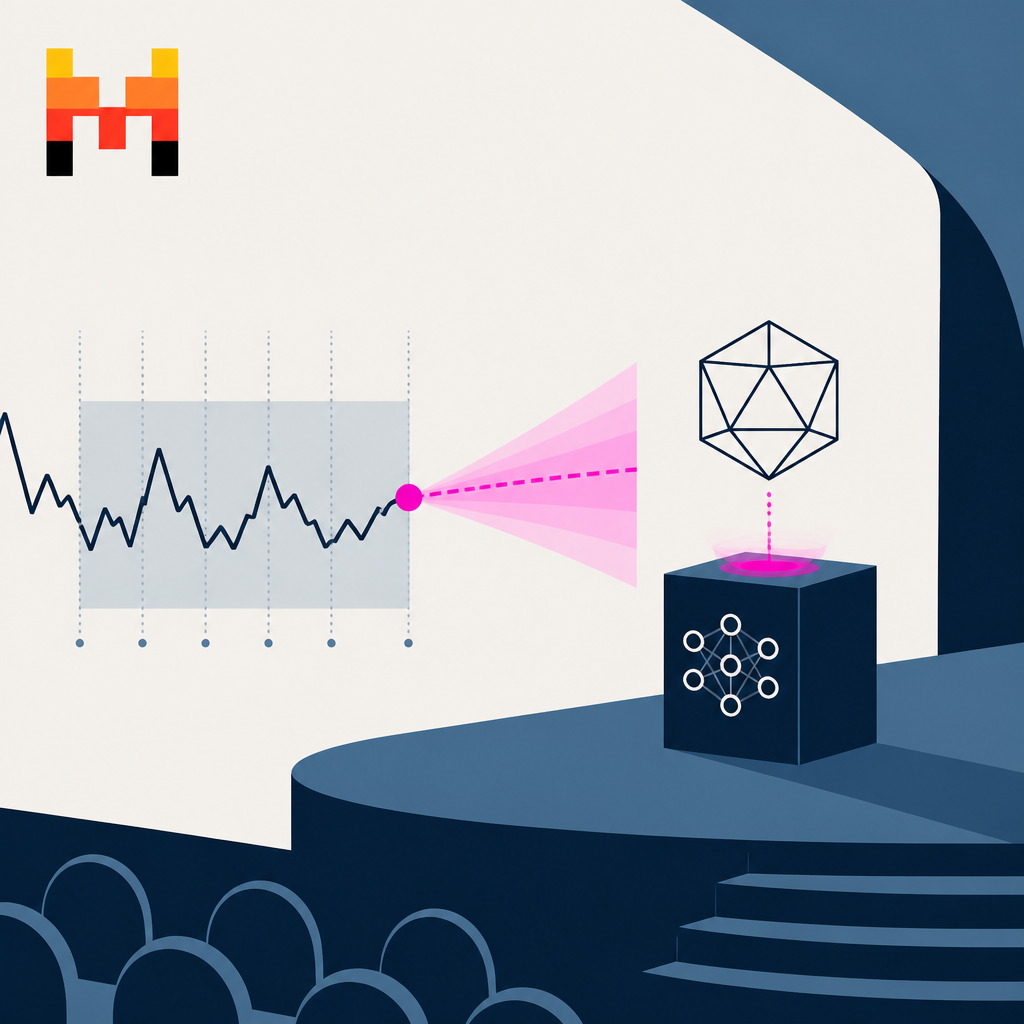 Mistral AI Releases Timestral: A 209M Forecasting Model Family That Outperforms Google’s TimesFM-3
MarkTechPost · 15 hours ago ·
39
WeatherNext 2: Our most advanced weather forecasting model
Google DeepMind · 11 months ago ·
6
Google’s latest AI weather model gives you no excuse to forget your umbrella
TechCrunch · 1 month ago ·
44
Mistral AI Releases Timestral: A 209M Forecasting Model Family That Outperforms Google’s TimesFM-3
MarkTechPost · 15 hours ago ·
39
WeatherNext 2: Our most advanced weather forecasting model
Google DeepMind · 11 months ago ·
6
Google’s latest AI weather model gives you no excuse to forget your umbrella
TechCrunch · 1 month ago ·
44