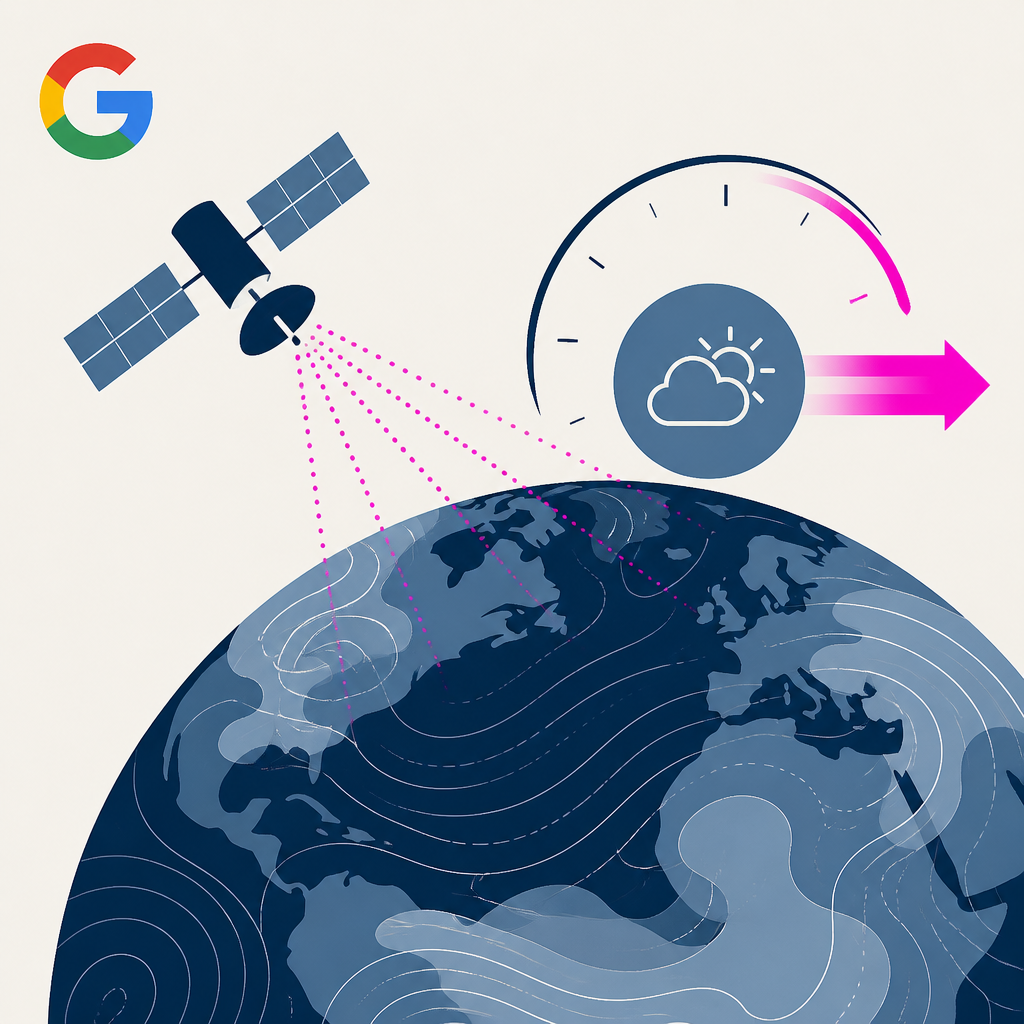
Google says its AI weather model is getting better
The Verge Justine Calma ● Covered by 5 sources
Google rolled out a newer AI weather model that's better at rain and snow forecasts. It says the new version makes global forecasts five times sharper than before.
Based on reporting by The Verge, Justine Calma — read the original for the full story.
Summary, retelling and take written by AI under human oversight; images are AI-generated illustrations. How we work · Report an error
Google says its latest AI weather model is built to do a better job with the messy parts of forecasting, especially rain and snowfall. The company rolled out WeatherNext 3 today and says it can now produce forecasts with what it calls “unprecedented resolution.”
The headline claim is simple: the model can make a global picture that is five times sharper than Google’s previous version. Google says that comes from training on real-time weather observations, which gives the system more current information to work with.
That matters because weather models are only useful if they can catch local detail, not just broad trends. Rain is patchy. Snow is even trickier. A model that sees more of that fine structure is aiming at the part of forecasting people actually feel.
Google Research research engineer Samier Merchant says one of the main changes is that WeatherNext 3 goes beyond the data most global AI models are trained on. The company’s pitch is that this broader input should make the model more capable than the usual batch of weather systems that stop at the same old training set.
My take — AI-written commentary, not fact-checked reporting
Weather AI is where the hype usually has to meet puddles. Better resolution is nice, but the real test is whether the forecast gets the local rain right when someone’s standing under a grey sky, not whether a demo looks clever in a blog post. Google is doing the right thing by pushing for sharper models; now it has to prove the machine can beat the weather, which is a famously rude opponent.
Read more about this at: The Verge